
What Are the Key Ingredients to Look for in a Lifting Serum?
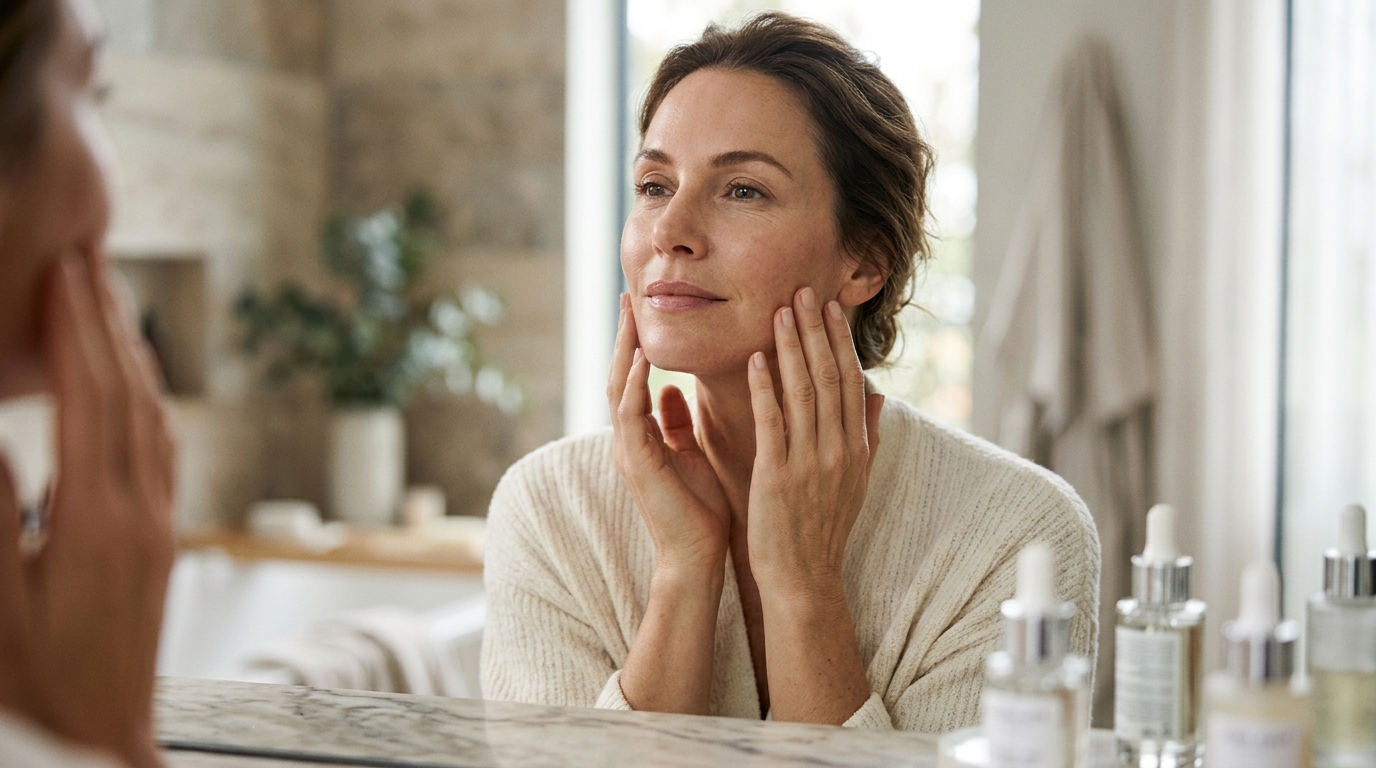
Sagging skin, softening jawlines, and loss of facial definition are among the most common concerns that drive people toward lifting serums. But not every serum labeled "firming" or "lifting" actually contains ingredients proven to deliver results. This guide breaks down the specific actives dermatologists and cosmetic chemists recommend—so you can read a label with confidence.
Why Lifting Serums Work Differently Than Moisturizers
A face serum is a lightweight yet concentrated formula designed to deliver active ingredients deep into the skin's surface. Unlike heavier creams, serums absorb quickly and carry higher concentrations of actives, making them ideal for targeted concerns like laxity and loss of elasticity.
As we age, our skin loses collagen and elastin—the structural proteins responsible for firmness and bounce. A well-formulated lifting serum addresses this at the cellular level through ingredients that stimulate collagen synthesis, tighten the skin's surface, or both.
1. Peptides: The Collagen Messengers
Peptides are short chains of amino acids that act as signaling molecules, telling your skin to produce more collagen and elastin. In lifting serums, you will encounter several peptide families:
- Tripeptide complexes — Often combined with vitamin C and hyaluronic acid to improve firmness and enhance elasticity for a more lifted look.
- Hexapeptide-8 (Argireline) — A well-studied peptide clinically shown to reduce wrinkle depth while helping improve skin firmness and elasticity.
- Copper peptides — These support the health of collagen and elastin, promoting visibly firmer skin. They also aid wound healing and skin regeneration.
When scanning a label, look for terms like palmitoyl tripeptide, acetyl hexapeptide, or copper tripeptide-1 in the first third of the ingredient list for meaningful concentrations.
2. Retinol and Retinoids
Retinol remains a dermatologist-favorite ingredient for addressing deep lines and sagging. According to the Cleveland Clinic, retinol and related vitamin A derivatives accelerate skin cell turnover and support collagen production, improving the appearance of wrinkles, uneven texture, and dullness.
For a lifting serum specifically, retinol works over weeks and months to restructure skin from within—thickening the dermis and reducing fine crepe-like texture along the jawline and neck.
Practical Tips for Retinol in a Lifting Serum
- Start with concentrations between 0.25%–0.5% if you are new to retinol.
- Apply to dry skin at night to minimize potential irritation.
- Always pair with SPF the following morning—using retinol without sunscreen is counterproductive.
- If retinol causes sensitivity, consider bakuchiol, a plant-based alternative that offers similar collagen-boosting benefits without irritation.
3. DMAE (Dimethylaminoethanol): The Instant Firmer
DMAE is one of the most distinctive ingredients in lifting serums because it provides visible tightening almost immediately after application—a rarity in skincare. DMAE is a naturally occurring compound found in fatty fish like salmon and sardines and is also produced in small quantities by the human brain.
Topically, DMAE enhances facial muscle tone by stimulating acetylcholine production, a neurotransmitter that activates muscle contraction and leads to visibly tighter skin. It also strengthens the skin barrier by reducing transepidermal water loss.
What Concentration Should You Look For?
Studies suggest that DMAE in concentrations between 2–5% can meaningfully improve skin firmness and reduce the appearance of fine lines, particularly in areas prone to sagging like the neck and jawline. DMAE pairs exceptionally well with antioxidants such as vitamin C and with retinol for amplified firming effects.
4. Vitamin C
Vitamin C is an antioxidant powerhouse that protects against damage from UV radiation and pollution while simultaneously stimulating collagen production and brightening the complexion. In a lifting serum, vitamin C adds a dual benefit: structural support from collagen stimulation and protection from the environmental stressors that break down existing collagen.
Look for stable forms such as L-ascorbic acid (most potent, best at pH 2.5–3.5), tetrahexyldecyl ascorbate (oil-soluble, gentler), or ascorbyl glucoside (stable and suited to sensitive skin).
5. Hyaluronic Acid
While hyaluronic acid does not directly lift skin, it is a critical supporting ingredient in any firming formula. By drawing moisture into the skin, hyaluronic acid plumps the surface, which visually reduces sagging and softens fine lines. Clinical studies have demonstrated that twice-daily application of hyaluronic acid serum provides excellent skin hydration, leading to plumper, firmer-feeling skin.
Multi-weight hyaluronic acid formulas—combining low, medium, and high molecular weights—deliver hydration at multiple depths for a more pronounced plumping effect.
6. Resveratrol
Resveratrol is a plant-based polyphenol that has emerged as a standout antioxidant for lifting serums. Board-certified dermatologist Dr. Michelle Henry describes resveratrol as potent for protecting collagen from free-radical damage. Unlike retinoids, resveratrol is well tolerated even by sensitive skin types, making it an excellent daytime active.
Dermatologists recommend using resveratrol in the morning underneath sunscreen and pairing it with retinoids at night—both work to encourage collagen production through complementary pathways.
7. Copper Peptides
Copper peptides deserve their own spotlight beyond the general peptide category. They support the body's collagen and elastin health while also offering antioxidant protection. In lifting formulas, copper peptides are frequently paired with DMAE and resveratrol to create a comprehensive firming complex that addresses both immediate tightening and long-term structural repair.
On ingredient labels, look for copper tripeptide-1 or copper PCA.
8. Niacinamide (Vitamin B3)
Niacinamide is a versatile antioxidant that addresses multiple skin concerns—from redness and dullness to loss of firmness. In a lifting serum, niacinamide strengthens the skin barrier, supports ceramide production, and improves overall radiance. It is gentle enough to combine with virtually every other active on this list, making it an ideal team player in multi-ingredient formulations.
How to Layer a Lifting Serum Into Your Routine
- Cleanse — Start with clean skin using a gentle, non-stripping cleanser.
- Tone (optional) — Apply a hydrating toner to damp skin.
- Serum — Dispense 3–4 drops of your lifting serum and press gently into the face, neck, and décolleté using upward strokes.
- Eye cream — Use a dedicated eye product for the orbital area.
- Moisturize — Seal in the serum with a moisturizer suited to your skin type.
- SPF (morning) — Finish with broad-spectrum SPF 30 or higher every morning.
Pro tip: If you use a retinol-based lifting serum, reserve it for your nighttime routine and opt for a vitamin C or resveratrol serum in the morning.
Key Takeaways
- Peptides (tripeptides, hexapeptide-8, copper peptides) signal your skin to rebuild collagen and elastin.
- Retinol restructures the dermis over time, improving thickness and resilience.
- DMAE provides near-instant visible firming by enhancing muscle tone and stabilizing cell membranes.
- Vitamin C stimulates collagen while shielding existing collagen from oxidative damage.
- Hyaluronic acid plumps and hydrates, creating a visually firmer surface.
- Resveratrol protects collagen from free radicals and is gentle enough for sensitive skin.
- Niacinamide strengthens the barrier and complements every other active on this list.
- A well-formulated lifting serum typically combines two or more of these actives for synergistic results.
Frequently Asked Questions
What is the single most effective ingredient in a lifting serum?
There is no single winner—it depends on your primary concern. For immediate visible tightening, DMAE stands out. For long-term collagen remodeling, retinol is considered the gold standard. The most effective lifting serums combine multiple complementary actives.
Can I use a lifting serum if I have sensitive skin?
Yes. Look for formulas built around resveratrol, peptides, and hyaluronic acid rather than retinol. Resveratrol is much better tolerated than retinoids and is suitable for all skin types. Always patch test a new product before full application.
At what age should I start using a lifting serum?
Most dermatologists recommend starting a basic anti-aging routine—including sunscreen—in your early 20s. Targeted lifting serums can be introduced whenever signs of laxity appear, typically in the mid-30s to 40s, though there is no strict age rule.
How long before I see results from a lifting serum?
DMAE-based serums can deliver a visible tightening effect within minutes. Peptide and retinol serums generally require 4–12 weeks of consistent use before noticeable improvements in firmness and wrinkle depth appear.
Can I combine a lifting serum with other treatments?
Absolutely. Lifting serums pair well with moisturizers, SPF, and professional treatments. Avoid layering multiple strong actives (such as retinol and glycolic acid) at the same time to minimize irritation risk. When in doubt, alternate actives between morning and evening routines.