

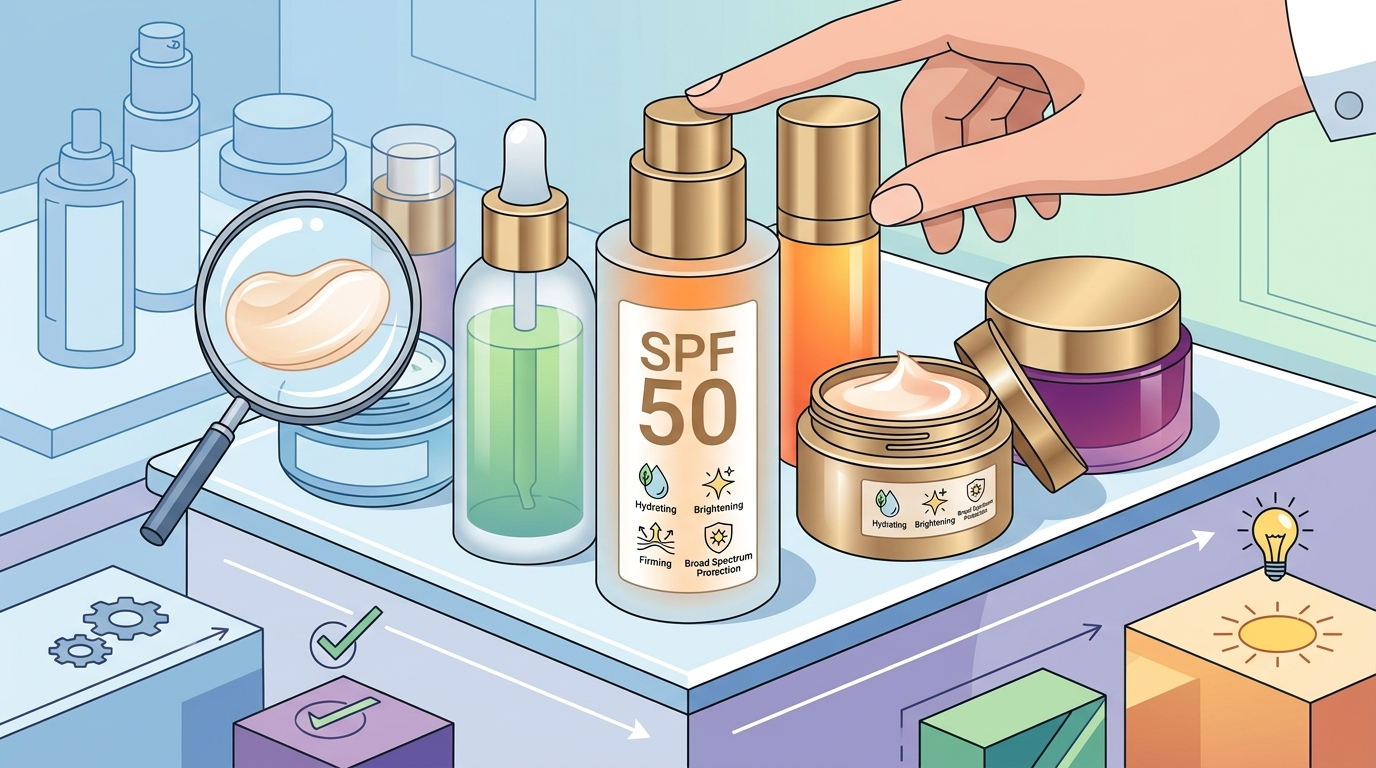
Gone are the days when sunscreen was a greasy afterthought slathered on at the beach. Today's best SPF 50 products double as full-fledged skincare treatments — hydrating, brightening, firming, and protecting in a single step. But with hundreds of options lining shelves and filling feeds, how do you separate the genuinely effective formulas from the marketing noise?
This step-by-step tutorial shows you exactly what to look for, which ingredients matter most, and how to match an SPF 50 product to your unique skin type and concerns.
Step 1 — Understand Why SPF 50 Is the Gold Standard
Before you start shopping, it helps to understand what SPF 50 actually delivers. SPF stands for Sun Protection Factor and measures how effectively a product shields against UVB rays, the wavelengths responsible for sunburn and DNA damage. SPF 50 blocks approximately 98 per cent of UVB rays, compared to roughly 97 per cent for SPF 30. That one-percentage-point gap may sound trivial, but it matters significantly for people who are fair-skinned, sun-sensitive, or recovering from dermatological treatments.
Beyond burn prevention, broad-spectrum SPF 50 formulas also defend against UVA rays, which penetrate deeper into the dermis and drive premature ageing, hyperpigmentation, and collagen breakdown. In short, choosing a broad-spectrum SPF 50 product is one of the most impactful anti-ageing decisions you can make every morning.
Step 2 — Learn the Skincare Ingredients That Belong in Your SPF
A sunscreen earns its “skincare benefits” label when it includes active compounds that treat and nourish the skin — not just protect it. Here are the ingredients dermatologists and cosmetic chemists prioritise:
Hyaluronic Acid
A humectant that draws moisture into the skin without heaviness. Many modern SPF 50 products use multiple molecular weights of hyaluronic acid to deliver hydration at varying depths. Look for formulations that list sodium hyaluronate or hyaluronic acid within the first third of the ingredient list for meaningful concentration.
Niacinamide (Vitamin B3)
A versatile brightener that helps even skin tone, minimise pores, and strengthen the moisture barrier. Products that pair niacinamide with broad-spectrum SPF 50 can simultaneously address hyperpigmentation while preventing new dark spots from forming.
Ceramides
Lipid molecules that act as the structural glue holding skin cells together. Ceramide-infused sunscreens restore and reinforce the skin barrier, making them ideal for dry, sensitive, or compromised skin.
Antioxidants — Vitamin C, Vitamin E, and Beyond
Antioxidants neutralise free radicals generated by UV exposure, pollution, and blue light. Some advanced formulas incorporate ectoin, astaxanthin-rich micro-algae, or ferulic acid alongside traditional vitamins for layered environmental defence.
Peptides
Short chains of amino acids that signal the skin to produce more collagen. SPF 50 products containing peptides can actively target firmness loss and fine lines while blocking the UV damage that accelerates them.
Soothing Botanicals
Centella asiatica (cica), aloe vera, allantoin, and bisabolol calm inflammation and support skin repair — especially valuable when your sunscreen is worn over actives like retinol or exfoliating acids.
Step 3 — Decide Between Mineral, Chemical, and Hybrid Filters
The UV filter system inside your sunscreen affects texture, finish, and compatibility with your skincare routine. Understanding the three categories helps you shop smarter.
Mineral (Physical) Filters
Zinc oxide and titanium dioxide sit on top of the skin and reflect UV rays. Mineral formulas are generally gentler on sensitive and reactive skin. The trade-off has historically been a white cast, but newer micronised and tinted formulas have largely solved that problem.
Chemical (Organic) Filters
Ingredients like avobenzone, homosalate, octisalate, and octocrylene absorb UV energy and convert it to heat. Chemical sunscreens typically feel lighter and more cosmetically elegant. Korean beauty brands, in particular, have long had access to next-generation chemical filters that deliver exceptional textures.
Hybrid Formulas
A growing category that combines mineral and chemical filters. Hybrid sunscreens aim to deliver the gentleness and broad-spectrum reliability of mineral protection with the lightweight elegance of chemical filters — often the best of both worlds.
Step 4 — Match the Product to Your Skin Type
No single SPF 50 product works for everyone. Use this framework to narrow your search:
| Skin Type | Ideal Texture | Key Ingredients to Prioritise | Ingredients to Avoid |
|---|---|---|---|
| Oily / Acne-Prone | Gel, fluid, or water-burst | Niacinamide, zinc oxide, oil-absorbing botanicals | Heavy emollients, coconut oil derivatives |
| Dry / Dehydrated | Cream or lotion | Ceramides, hyaluronic acid, squalane | Alcohol denat. in high concentrations |
| Sensitive / Reactive | Fragrance-free mineral or hybrid | Centella asiatica, allantoin, bisabolol | Fragrance, essential oils, oxybenzone |
| Mature / Anti-Ageing | Serum-sunscreen or rich cream | Peptides, vitamin C, antioxidants | Drying alcohols, harsh preservatives |
| Combination | Lightweight lotion or hybrid fluid | Niacinamide, lightweight hyaluronic acid | Excessively occlusive waxes |
Step 5 — Read the Label Like a Pro
Knowing what to look for on the packaging saves time and prevents buyer's remorse. Run through this checklist before any purchase:
- Broad Spectrum — Confirms protection against both UVA and UVB. Without this label, even SPF 50 only guards against sunburn, not deep-skin ageing damage.
- SPF 50 or SPF 50+ — Verify the number rather than relying on vague “high protection” claims.
- Active Ingredient Panel — In the US, UV filters must be listed separately as active ingredients with exact percentages. This is the most trustworthy part of the label.
- Non-Comedogenic — Important for anyone prone to breakouts; it means the formula has been tested to not clog pores.
- Dermatologist-Tested or Clinically Tested — Not a guarantee of efficacy, but it signals a baseline level of safety evaluation.
- Expiry Date — Sunscreen loses efficacy over time. Always check the expiration before purchasing and discard expired products.
Step 6 — Apply Correctly to Maximise Both SPF and Skincare Benefits
Even the best formula under-delivers if applied incorrectly. Follow these evidence-based practices:
- Use enough product. Most people significantly under-apply sunscreen, meaning the actual SPF they receive is a fraction of what is on the label. For the face and neck, use roughly half a teaspoon or five pumps of a fluid formula.
- Apply as the last skincare step. After cleansing, toning, and serums, sunscreen goes on top. If you wear makeup, apply it after the SPF has fully absorbed.
- Wait before sun exposure. Apply at least 15 minutes before heading outdoors so the formula can bind to the skin and begin providing protection.
- Reapply every two hours. No matter how high the SPF or how premium the skincare ingredients, UV filters degrade with time and exposure. Reapply after sweating, swimming, or towel-drying.
Step 7 — Evaluate Real-World Product Categories
Understanding the broad categories of SPF 50 skincare hybrids on the market helps you shop with intention rather than impulse.
SPF Moisturisers
These combine a full moisturiser base with broad-spectrum SPF 50. They are best for people who want a streamlined morning routine. Look for formulas with ceramides and sustained-release hydration technology for all-day comfort.
Sunscreen Serums
Lightweight, water-burst textures that feel more like a serum than a traditional sunscreen. These are excellent for oily and combination skin and layer beautifully under makeup.
Tinted SPF Products
Tinted formulas add a layer of visible-light protection (thanks to iron oxides) plus light coverage that can replace a foundation. They are particularly beneficial for melasma-prone skin.
Anti-Ageing SPF Creams
Richer formulas that incorporate peptides, antioxidants, and firming complexes alongside SPF 50. Ideal for mature skin seeking multi-targeted benefits in one jar.
Key Takeaways
- SPF 50 blocks roughly 98 per cent of UVB rays and, when broad-spectrum, also defends against UVA-driven ageing and pigmentation.
- The most effective dual-purpose formulas contain active skincare ingredients — hyaluronic acid, niacinamide, ceramides, peptides, or antioxidants — at meaningful concentrations.
- Your skin type should dictate the texture, filter system, and supporting ingredients you choose.
- Correct application (adequate amount, last skincare step, reapply every two hours) is non-negotiable for full protection.
- Always verify the “Broad Spectrum” label, check the active ingredient panel, and confirm the expiry date before buying.
Frequently Asked Questions
- Is SPF 50 safe for sensitive skin?
- Yes, particularly when the formula uses mineral filters like zinc oxide or titanium dioxide and is free of fragrance, alcohol, and common irritants. Look for labels that say “dermatologist-tested” and “non-comedogenic.”
- How often should I reapply SPF 50 sunscreen?
- Every two hours during continuous sun exposure, or immediately after sweating, swimming, or towel-drying. Even water-resistant formulas lose effectiveness over time.
- Can an SPF 50 moisturiser replace my regular moisturiser?
- Many SPF 50 moisturisers are formulated with enough hydrating and barrier-supporting ingredients to serve as your sole daytime moisturiser. However, if your skin is very dry, you may benefit from layering a hydrating serum underneath.
- Does sunscreen with skincare ingredients expire faster?
- Not necessarily. Expiry is determined by the stability of the UV filters and the overall formulation. Always follow the expiration date printed on the packaging and store the product away from excessive heat and direct sunlight.
- What is the difference between mineral and chemical SPF 50?
- Mineral sunscreens use physical blockers like zinc oxide and titanium dioxide to reflect UV rays, while chemical sunscreens use organic compounds to absorb UV energy. Hybrid formulas combine both for broad-spectrum protection with a lighter texture. Neither type is inherently superior — the best choice depends on your skin type and preferences.
- Should I apply SPF 50 sunscreen under or over makeup?
- Sunscreen should always be the last step in your skincare routine, applied before makeup. Allow the SPF to fully absorb before layering on foundation or other cosmetics to prevent pilling and ensure even coverage.