

Radiant, youthful skin isn't the product of a single miracle jar. It comes from layering a handful of proven steps in the right order, protecting your skin barrier, and reinforcing the routine with smart lifestyle habits. This guide walks you through every stage—morning and night—so you can build a regimen that delivers visible results at any age.
Why Skin Loses Its Glow Over Time
Understanding what happens beneath the surface helps you choose the right interventions. From your mid-twenties onward, the body produces less collagen, less elastin, and less hyaluronic acid—a gradual shift that leads to reduced firmness, deeper expression lines, and an uneven skin surface. Meanwhile, aging skin can lose some of its youthful glow because the process of shedding old skin cells slows down. Oil glands also produce less sebum, making the complexion feel dry and rough.
External factors accelerate these changes. UV radiation, pollution, smoking, chronic stress, and poor sleep generate free radicals—unstable molecules that damage proteins, lipids, and cellular DNA. When free radicals outpace your antioxidant defences, the skin ages faster. As much as 90 percent of visible skin aging is attributed to cumulative UV exposure, underscoring why sun protection sits at the foundation of every effective routine.
The Five Pillars of a Glow-Boosting Routine
Before diving into morning and evening steps, internalise the five non-negotiable pillars that every dermatologist-backed routine shares:
- Gentle cleansing — removes impurities without stripping the barrier.
- Targeted treatment — serums with actives like vitamin C, retinol, or niacinamide address specific concerns.
- Hydration — hyaluronic acid and ceramides replenish moisture from within.
- Moisturisation — seals hydration and reinforces the barrier.
- Sun protection — broad-spectrum SPF 30+ prevents photoaging every single day.
A consistent routine built on the basics—cleanser, moisturiser, and sunscreen—is the foundation of healthy skin. Add targeted treatments only after these essentials are firmly in place.
Your Optimized Morning Routine
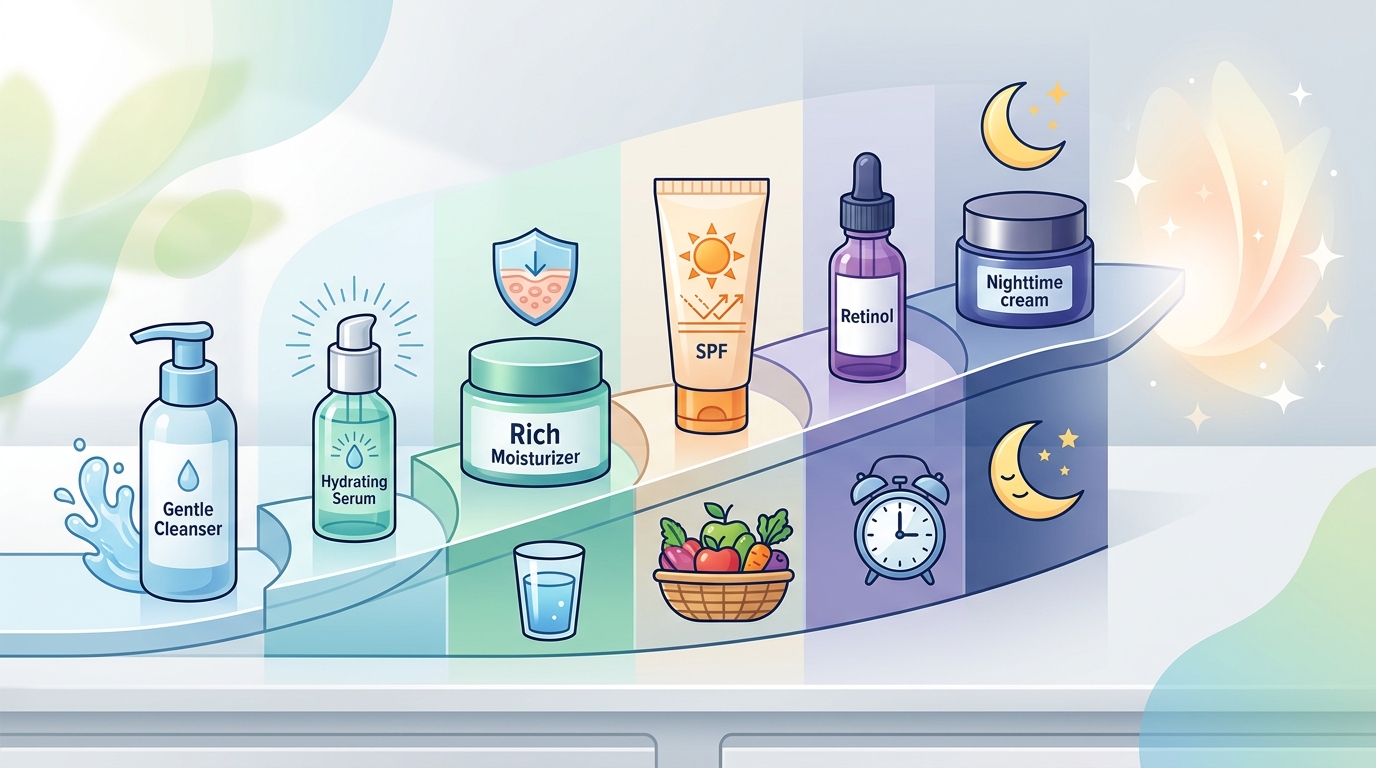
Step 1 — Cleanse With a Gentle Formula
Start the day by removing overnight sebum and product residue. Choose a sulphate-free cleanser matched to your skin type: cream-based for dry skin, gel-based for oily or combination skin. Cleansing aids in cell turnover and promotes a fresh, revitalised complexion, but only if the formula is gentle enough to leave the barrier intact.
Step 2 — Apply a Vitamin C Serum
Vitamin C is a powerhouse antioxidant that neutralises free radicals from pollution, stress, and UV damage. Applying a vitamin C serum in the morning helps brighten and even out your skin tone, providing a radiant glow. Look for formulations containing 10–20 percent L-ascorbic acid, or gentler derivatives such as sodium ascorbyl phosphate if your skin is sensitive. The antioxidants in vitamin C may also boost the amount of collagen your body makes and minimise fine lines, wrinkles, and scars.
Step 3 — Layer Hydration
A hyaluronic acid serum applied to slightly damp skin draws moisture into the upper layers of your epidermis. Hyaluronic acid is naturally found in the skin and is capable of holding up to 1,000 times its weight in water. Replacing hyaluronic acid through topical serums or moisturisers may help boost overall skin hydration and even improve the appearance of wrinkles and skin firmness.
Step 4 — Moisturise
Lock everything in with a lightweight, non-comedogenic moisturiser. Products containing ceramides help reinforce the lipid barrier, while those with niacinamide offer additional benefits: a clinical study showed that topical niacinamide at 5 percent concentration reduced freckles and sun spots in as soon as four weeks and improved skin redness and sallowness.
Step 5 — Sunscreen (the Most Powerful Anti-Aging Step)
Sunscreen is often described as the single most powerful anti-aging step in any routine. Use a broad-spectrum SPF 30 or higher every morning, rain or shine. Reapply every two hours when outdoors. Cumulative sun exposure leads to wrinkles, pigmentation, and laxity, and there is evidence that consistent sunscreen use can slow aging or even reduce existing damage.
Your Optimized Evening Routine
Step 1 — Double Cleanse
At night, start with an oil-based cleanser or micellar water to dissolve sunscreen and makeup, then follow with your water-based cleanser. This two-step method ensures a thoroughly clean canvas without over-stripping.
Step 2 — Exfoliate (Two to Three Nights per Week)
Gentle chemical exfoliation with AHAs (alpha hydroxy acids) or BHAs (beta hydroxy acids) removes dead cells and unclogs pores. Alpha-hydroxy acids like glycolic acid break down bonds between cells in the top layer of skin, producing smoother skin in as little as 24 hours. Over time, regular use may also improve fine lines, skin yellowing, blotchiness, and dark spots. Limit exfoliation to two or three nights per week to avoid over-exfoliating—a common pitfall that can damage the protective skin barrier, leaving you with raw and irritated skin.
Step 3 — Apply Retinol (On Alternate Nights)
Retinol remains the gold standard in anti-aging. This vitamin A derivative boosts the amount of collagen your body makes, plumps out skin, and improves skin tone and colour. If you are new to retinol, introduce it slowly—start with a low concentration two nights per week and increase as tolerated. Apply a pea-sized amount 20 to 30 minutes after cleansing. If dryness occurs, layer a hydrating moisturiser underneath as a buffer.
Step 4 — Nourish and Seal
Finish with a richer night cream or facial oil. Ingredients like peptides encourage your skin to produce more collagen and improve overall skin structure, making them ideal nighttime companions alongside retinol. A barrier-repair cream enriched with ceramides and squalane helps the skin recover while you sleep.
Why Skin-Barrier Health Is Non-Negotiable
Your skin barrier is the outermost shield that locks in moisture and blocks irritants. Dermatologist Jenny Liu explains that a compromised skin barrier accelerates visible aging, while a healthy barrier protects the skin and locks in moisture, keeping it plump and glowing. Supporting hydration and the barrier enhances glow, plumps fine lines, and prevents inflammatory aging, which can accelerate collagen loss.
To protect your barrier:
- Avoid layering too many actives at once—especially retinol and AHAs on the same night.
- Always follow exfoliation with a hydrating, ceramide-rich moisturiser.
- Cut back on any product that causes stinging, flaking, or persistent redness.
Lifestyle Factors That Amplify (or Undo) Your Efforts
Products applied topically are only part of the picture. Lifestyle habits play a major role in preserving collagen and elastin. Here is what the evidence supports:
- Sleep: Chronic poor sleep elevates cortisol and inflammatory cytokines that degrade skin quality. Aim for seven to nine hours per night.
- Nutrition: Protein, omega-3 fatty acids, and antioxidant-rich foods support collagen and help reduce inflammation internally. A low-glycemic diet may also improve acne and skin clarity.
- Hydration: Drinking plenty of water supports overall skin function and visible plumpness.
- Stress management: Facial exercises, deep breathing, and regular breaks help reduce the silent inflammation that ages skin.
- Avoid smoking and excessive alcohol: Both impair the dermis's ability to repair itself and accelerate collagen breakdown.
Common Mistakes That Sabotage Your Glow
| Mistake | Why It Hurts | Fix |
|---|---|---|
| Over-exfoliating | Damages the barrier, causing redness and sensitivity | Limit chemical exfoliation to 2–3 times per week |
| Skipping sunscreen indoors | UVA penetrates windows and degrades collagen | Apply SPF 30+ every morning, regardless of plans |
| Layering too many actives | Causes irritation and diminishes each product's efficacy | Alternate actives on different nights |
| Ignoring the neck and hands | These areas often show the first signs of aging | Extend every step of your routine beyond the jawline |
| Chasing social-media trends | Unvetted trends can do more harm than good | Follow advice from board-certified dermatologists |
Key Takeaways
- Simplicity wins. A streamlined routine of cleanser, treatment serum, moisturiser, and sunscreen outperforms a complicated 12-step regimen.
- SPF is king. No anti-aging ingredient matters if UV damage goes unchecked.
- Vitamin C in the morning, retinol at night. This pairing covers antioxidant defence during the day and cellular renewal overnight.
- Guard your barrier. Ceramides, hyaluronic acid, and niacinamide keep the skin's protective layer strong and resilient.
- Lifestyle counts. Sleep, nutrition, hydration, and stress management visibly impact how your skin looks and feels.
- Be patient. Most people notice visible changes within four to eight weeks of consistent use. Long-term commitment yields the best results.
Frequently Asked Questions
What order should I apply skincare products for the best glow?
In the morning, work from thinnest to thickest: cleanser → vitamin C serum → hyaluronic acid serum → moisturiser → sunscreen. At night, follow cleanser → exfoliant or retinol → peptide serum → night cream. This sequence ensures each layer absorbs fully before the next is applied.
Can I use retinol and vitamin C together?
It is generally best to separate them. Use vitamin C in your morning routine for antioxidant protection and retinol in the evening for cell renewal. Applying both at the same time can cause irritation for many skin types, especially beginners.
How long does it take to see results from a new skincare routine?
With consistent use, most people notice visible improvements within four to eight weeks. Some ingredients, such as alpha-hydroxy acids, can produce smoother skin in as little as 24 hours, but cumulative benefits like reduced wrinkles and more even tone develop over months.
Do I really need sunscreen every day, even if I stay indoors?
Yes. UVA rays penetrate glass, so even indoor exposure contributes to photoaging. Dermatologists recommend applying broad-spectrum SPF 30 or higher every morning as the most important anti-aging step in your routine.
What is the single most important ingredient for youthful skin?
While no single ingredient does everything, sunscreen is consistently ranked as the most impactful anti-aging product because it prevents the UV damage responsible for up to 90 percent of visible skin aging. Beyond protection, retinol and vitamin C are the two most evidence-backed treatment ingredients for renewal and radiance.
Is an expensive skincare routine necessary for glowing skin?
Not at all. Science-backed ingredients like retinol, niacinamide, glycolic acid, and hyaluronic acid are widely available in affordable drugstore products. The key is consistency and choosing formulations appropriate for your skin type rather than chasing premium price tags.