

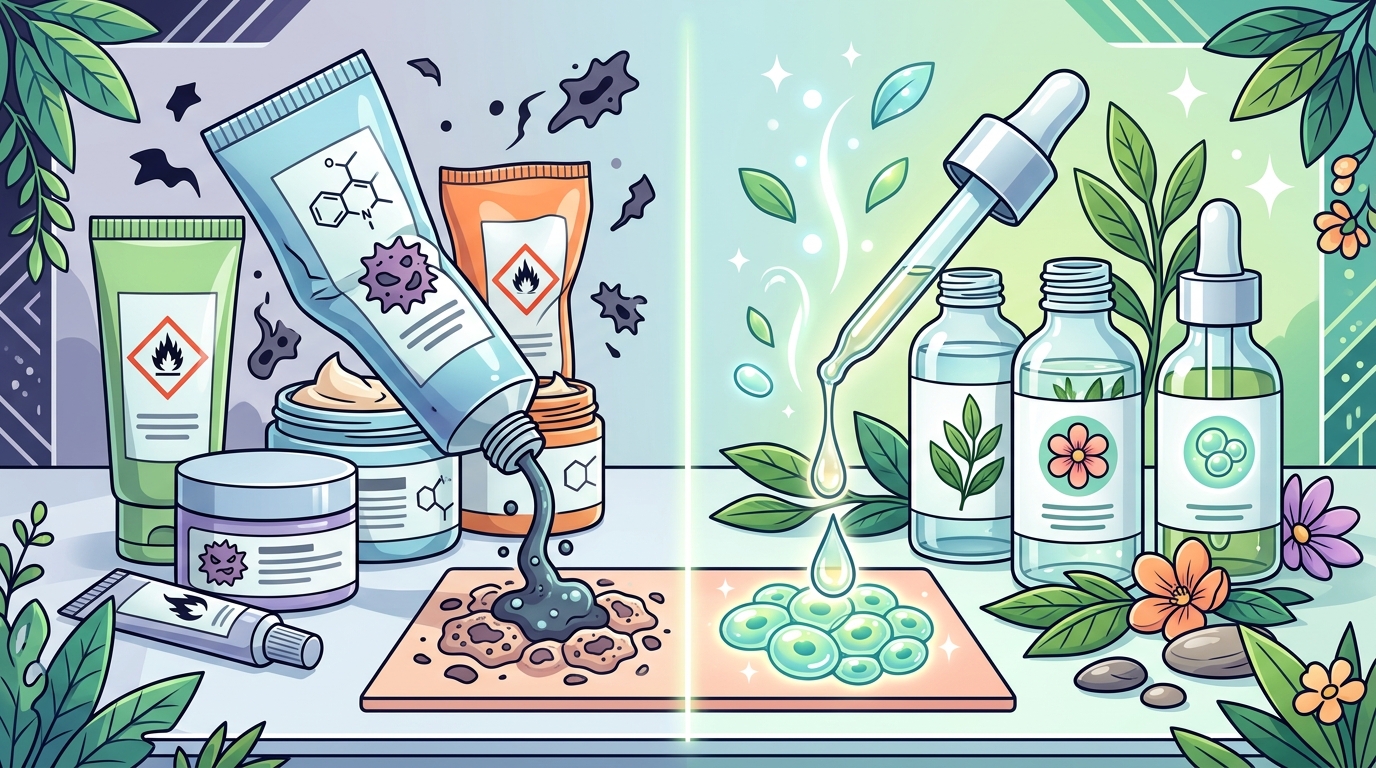
Conventional skincare shelves are loaded with synthetic preservatives, hormone disruptors, and irritants that can undermine the very skin cells they claim to help. This ultimate guide maps out the specific toxic culprits to eliminate, the plant-based and biotech-driven alternatives that genuinely support skin at the cellular level, and a practical routine you can start today.
Toxic Ingredients That Damage Skin Cells
Before choosing alternatives, you need to know exactly which synthetic compounds to drop. Many conventional products contain ingredients linked to hormonal disruption, chronic inflammation, and impaired cellular turnover.
Parabens
Parabens (methylparaben, propylparaben, butylparaben) are preservatives used to extend shelf life. They mimic estrogen in the body and have been associated with health concerns including infertility and cancer.
Phthalates
Often hidden inside the generic term "fragrance," phthalates are dissolving agents linked to hormonal disruption and decreased sperm quality.
Sulfates (SLS & SLES)
Sodium lauryl sulfate and sodium laureth sulfate are aggressive cleansing agents that strip the skin of its natural oils, leaving it dry and irritated—undermining barrier function at the cellular level.
Formaldehyde Releasers
Ingredients such as DMDM hydantoin slowly release formaldehyde, a potential carcinogen, over the product's lifespan.
PFAS ("Forever Chemicals")
Per- and poly-fluoroalkyl substances are hormone-disrupting chemicals that can affect sleep, blood pressure, and metabolism. They persist in the body and the environment for decades.
Why Cellular Health Matters More Than Surface Fixes
Modern skincare science is shifting from cosmetic concealment to genuine cellular support. Anti-ageing is evolving into "longevity" science, focusing not on masking damage but on maintaining the vitality and youthful function of skin cells. One major target is cell senescence—the state where damaged cells stop dividing but refuse to die, becoming "zombie cells" that secrete inflammatory compounds and damage surrounding healthy tissue.
At the same time, plant extracts have been shown to support normal repair systems of the skin through mechanisms including effects on keratinocyte migration and proliferation, modulation of growth factors and cytokines, increased capillary vessel formation, and boosted fibroblast activity. Choosing ingredients that work at these biological levels delivers results that superficial products simply cannot match.
Seven Botanical Alternatives Backed by Research
1. Green Tea (EGCG)
The polyphenol EGCG found in Camellia sinensis has been shown to promote DNA repair in skin cells, making it an invaluable addition to any anti-ageing routine. It also reduces sebum production and provides antibacterial benefits.
2. Bakuchiol
Derived from the babchi plant, bakuchiol delivers retinol-like results—smoother skin, fewer wrinkles, more even tone—without the irritation. It is gentle on sensitive skin and works well in organic formulations.
3. Rosehip Oil
Cold-pressed rosehip oil is rich in essential fatty acids, vitamins A and C, and antioxidants. Research shows it supports skin elasticity and can help reduce the appearance of scars and fine lines. Cold-pressing preserves nutrients that heat-extraction destroys.
4. Chamomile
Chamomile contains anti-inflammatory compounds small enough to penetrate deep into the skin. Its polyphenols and phytochemicals hasten cell regeneration, reducing the appearance of scars and fine lines. Topical chamomile has been found to be roughly 60% as effective as hydrocortisone cream for treating skin inflammation—without the side effects.
5. Bio-Fermented Botanicals
Fermenting ingredients such as rice, kombucha, or algae unlocks nutrients that are more bioavailable, meaning skin cells absorb and use them more effectively. Bio-ferments also naturally support the skin microbiome, a critical factor in barrier health.
6. Plant-Derived Peptides
Amino acid chains sourced from rice, soy, lupine, and quinoa signal skin cells to produce collagen, elastin, and other structural proteins. These plant peptides provide benefits comparable to synthetic counterparts—improving firmness and reducing wrinkle depth—while offering additional nutritive value from their botanical source.
7. Adaptogenic Herbs (Ashwagandha, Gotu Kola, Schisandra)
Adaptogens are traditionally known for whole-body wellness, but they are equally powerful in skincare. They help skin cells cope with environmental stress, reduce cortisol-driven inflammation, and support long-term resilience.
The Biotech Frontier: Exosomes, Plant PDRN, and Senolytics
Natural skincare is no longer limited to herbal infusions. Cutting-edge technologies like bio-fermentation, blue biotechnology, and advanced encapsulation are redefining what "natural" truly means.
Plant Exosomes
These tiny extracellular vesicles act as messengers, delivering nutrients directly to skin cells for targeted repair and regeneration. They are a game-changer for anti-ageing and repair-focused formulations.
Plant-Based PDRN
Polydeoxyribonucleotide (PDRN) was originally derived from salmon DNA and used in wound healing. Scientists have now developed plant-based PDRN analogues using fermentation and extraction from ginseng, yeast, or rice DNA. These vegan alternatives stimulate fibroblast activity, promote blood-vessel formation, and protect the skin's extracellular matrix—all validated in peer-reviewed research.
Senolytic Actives
Bio-engineered plant extracts are being developed to selectively target and eliminate senescent "zombie cells," clearing the way for healthy cell turnover. This represents a shift from surface-level solutions to supporting the skin's inherent biological processes.
NAD+ Precursors
NAD+ supports cellular regeneration, improves skin vitality, and promotes a healthier complexion. As interest in longevity and cellular health grows, NAD+ is becoming a sought-after ingredient in forward-thinking skincare formulations.
Building a Non-Toxic Routine Step by Step
Step 1: Gentle Plant-Based Cleanser
Choose a sulfate-free cleanser featuring soothing botanicals like chamomile or green tea. This removes impurities without stripping the skin's lipid barrier.
Step 2: Antioxidant Serum
Apply a serum rich in vitamin C, EGCG, or bio-fermented actives. These defend cells against free-radical damage and support collagen synthesis.
Step 3: Targeted Treatment
Use bakuchiol at night as a retinol alternative, or a plant-peptide concentrate for firming. If you are addressing scars or uneven tone, rosehip oil makes an excellent treatment layer.
Step 4: Barrier-Repair Moisturiser
Look for ceramides, plant-based squalane, and hyaluronic acid. Jojoba oil works well for oily skin types, while richer oils like marula suit dry or sensitive skin.
Step 5: Mineral Sunscreen
Zinc-oxide or titanium-dioxide sunscreen protects without the hormone-disrupting chemicals found in many chemical sunscreens. UV radiation triggers reactive oxygen species production and pro-inflammatory cytokines—mineral protection is non-negotiable.
How to Read Labels and Spot Greenwashing
A 2023 study found that more than 94% of products marketed as "natural" or "clean" contained at least one agent known to cause contact dermatitis. Terms like "non-toxic" and "clean" are essentially unregulated marketing language. Focus instead on these strategies:
- Use the EWG Skin Deep database. Each product is rated on factors calculated from nearly 60 integrated toxicity, regulatory, and study-availability databases.
- Look for third-party certifications: MADE SAFE, EWG VERIFIED, USDA Certified Organic, Leaping Bunny.
- Read the full INCI list. Skip products where "fragrance" or "parfum" appears without disclosure of specific compounds.
- Prioritise short ingredient lists. Fewer ingredients mean fewer potential irritants and easier traceability.
Key Takeaways
- Parabens, phthalates, sulfates, formaldehyde releasers, and PFAS are the five major toxic categories to eliminate from your routine.
- True skin improvement happens at the cellular level—look for ingredients that support fibroblast activity, collagen synthesis, and barrier repair.
- EGCG (green tea), bakuchiol, rosehip oil, chamomile, bio-ferments, plant peptides, and adaptogens are seven research-backed botanical alternatives.
- Emerging biotech ingredients—plant exosomes, vegan PDRN, senolytics, and NAD+ precursors—represent the next generation of cellular skincare.
- Never trust marketing terms alone; verify with third-party databases and certifications.
Frequently Asked Questions
What are the most harmful chemicals in conventional skincare?
The most commonly cited harmful chemicals include parabens (hormone disruptors), phthalates (often hidden in fragrances), sulfates like SLS and SLES (which strip natural oils), formaldehyde-releasing preservatives (potential carcinogens), and PFAS or "forever chemicals" that affect metabolism and hormonal balance.
Is bakuchiol really as effective as retinol?
Clinical studies show that bakuchiol delivers comparable anti-wrinkle and skin-smoothing results to retinol but without the dryness, peeling, and photosensitivity. Derived from the babchi plant, it is suitable for sensitive skin and safe for use during the day.
What does "cellular health" mean in skincare?
Cellular health in skincare refers to supporting the biological functions of skin cells—including collagen production by fibroblasts, healthy cell turnover, DNA repair, and elimination of senescent "zombie cells." Ingredients that work at this level provide longer-lasting, deeper results than purely cosmetic products.
Are "natural" skincare products always safe?
Not necessarily. A 2023 study of nearly 1,700 products marketed as natural or clean found that over 94% contained ingredients known to trigger contact dermatitis. Always verify claims by reading the full ingredient list and checking third-party certifications like EWG VERIFIED or MADE SAFE.
What are plant exosomes in skincare?
Plant exosomes are tiny extracellular vesicles that act as biological messengers, delivering nutrients directly to skin cells for targeted repair and regeneration. They are an emerging technology in anti-ageing serums and are considered a frontier ingredient in clean skincare biotechnology.
How can I verify that a skincare product is truly non-toxic?
Use the EWG Skin Deep database to check individual product ratings. Look for certifications such as MADE SAFE (screens against 5,000+ toxic chemicals), EWG VERIFIED, or USDA Certified Organic. Avoid products that list "fragrance" without disclosing specific compounds.