
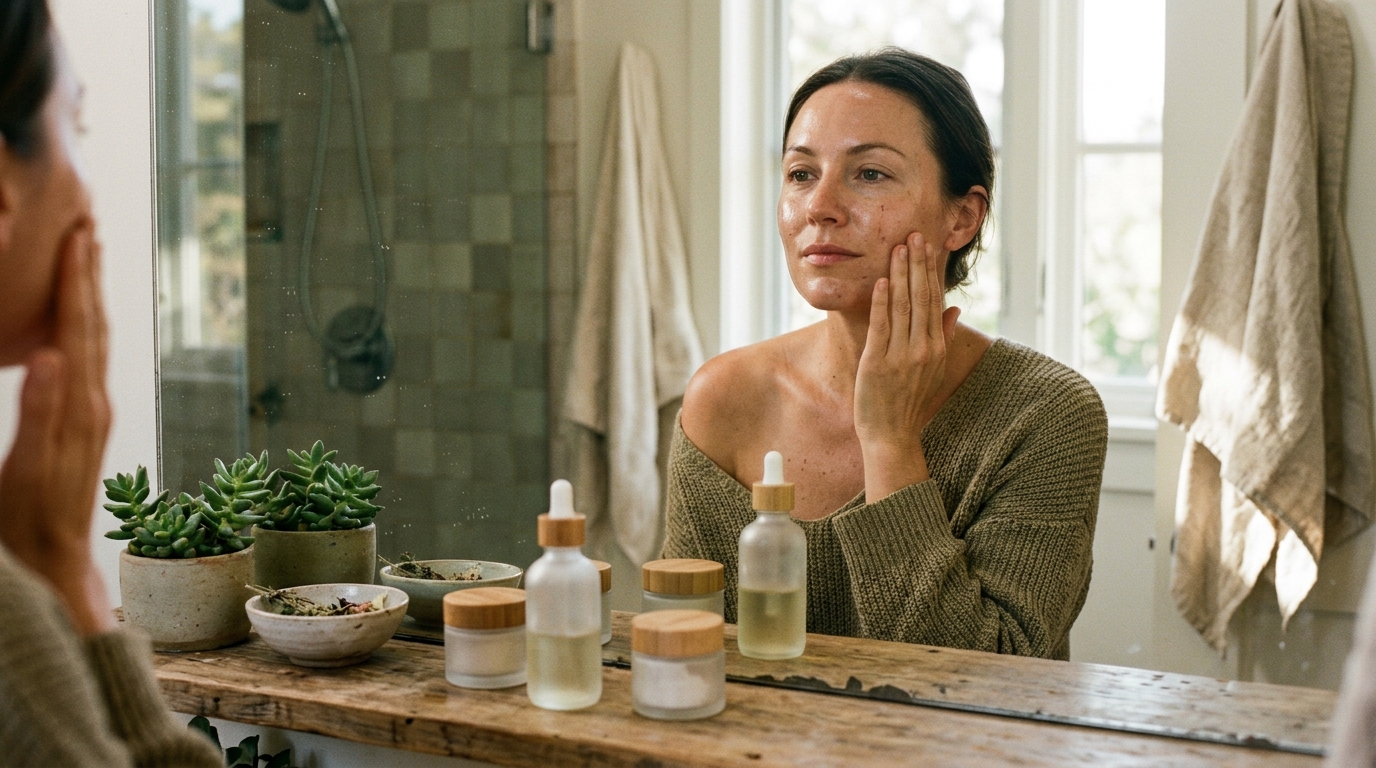
Non-toxic skincare has become one of the most searched terms in the beauty industry, yet it remains one of the most misunderstood. Consumers are flooded with buzzwords like "clean," "green," and "chemical-free" that sound reassuring but often lack regulatory backing. The result is confusion, wasted money, and sometimes irritated skin. In this guide, we break down seven of the most common misconceptions about non-toxic skincare so you can make smarter, science-informed decisions and build a routine that actually works for your skin.
1. "Natural" Always Means Safe
This is arguably the most widespread misconception in skincare today. Many shoppers assume that because an ingredient comes from nature, it must be gentle and harmless. In reality, natural ingredients can be irritating or allergenic for some skin types. Poison ivy is natural, but nobody would want it in a face cream.
A 2023 study highlighted by Cleveland Clinic found that more than 94% of products marketed as "all-natural" contained at least one known contact-dermatitis trigger. That statistic alone should encourage every consumer to read beyond the front label.
What to Do Instead
Evaluate each ingredient on its own merit. Look for brands like Forever Bloom that pair natural extracts with rigorous scientific research, so efficacy and safety are validated rather than assumed.
2. Non-Toxic Means Chemical-Free
"Chemical-free" is a phrase that sounds comforting but is scientifically impossible. Every substance, including water, is made up of chemicals. The term confuses consumers into thinking that all synthetic molecules are dangerous, which is simply untrue.
Toxicity is a matter of dosage and formulation, not origin. Some synthetic ingredients are carefully engineered to be more effective or safer than their natural counterparts. A truly non-toxic approach focuses on excluding ingredients shown to cause harm at typical exposure levels while including actives that deliver measurable results.
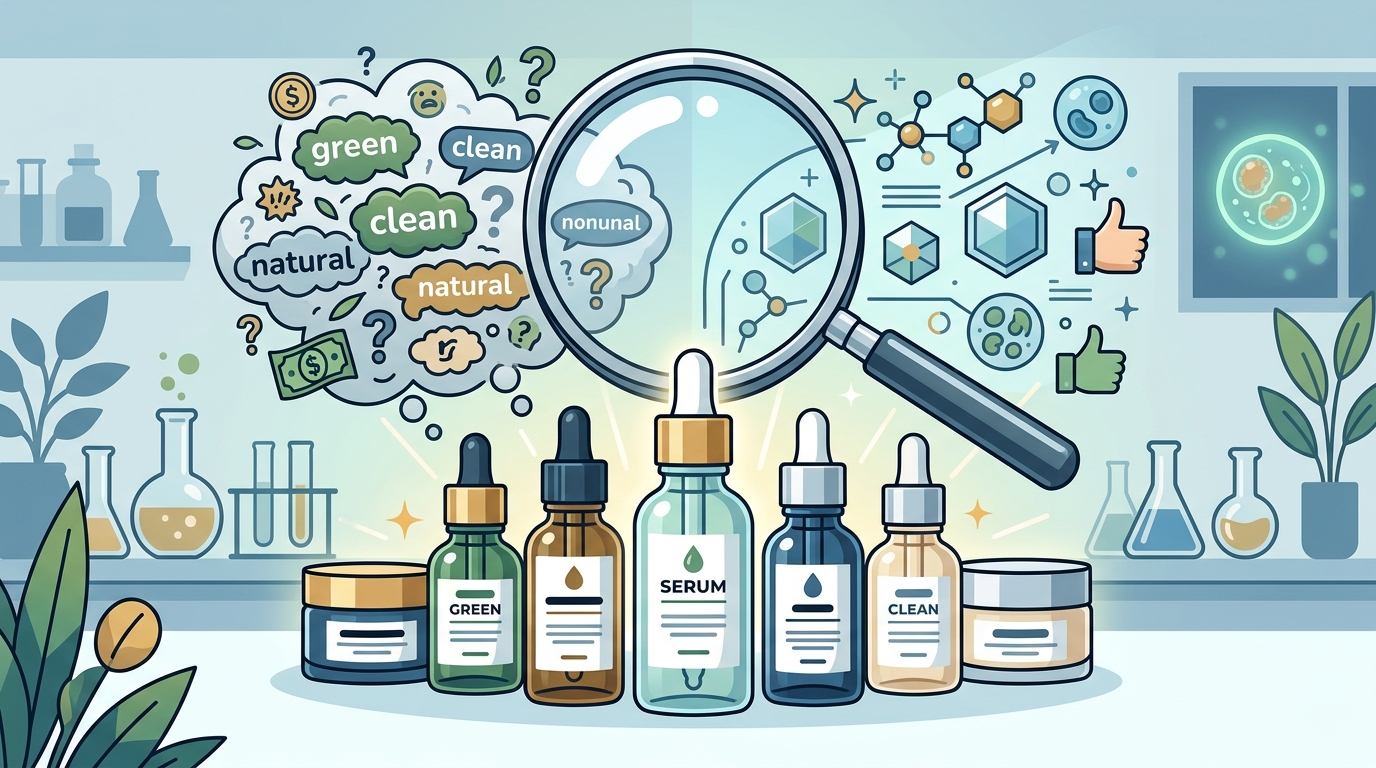
Science-Backed Formulation Matters
Forever Bloom's de-aging collection exemplifies this principle by combining advanced peptide biomimic research with non-toxic formulas validated by their in-house BRITE research lab.
3. Preservatives Are Always Harmful
Preservatives are ingredients added to skincare products to prevent bacterial growth and extend shelf life. Without them, your favorite serum could become a breeding ground for mold and harmful microbes within days of opening.
The misconception that all preservatives are toxic has led some consumers to seek preservative-free products, paradoxically increasing their risk of skin infections. The key is distinguishing between problematic preservatives, such as certain parabens at high concentrations, and safe alternatives that keep formulas stable without compromising skin health.
4. No Immediate Reaction Equals Non-Toxic
Just because a product does not cause redness or stinging on first use does not mean it is free from potentially harmful ingredients. Some compounds accumulate over time and may contribute to long-term concerns like hormonal disruption or sensitization without any visible short-term reaction.
Ingredients such as phthalates and certain PFAS can affect hormonal balance and metabolic health without producing an obvious skin response. Always review the full ingredient list rather than relying on how a product feels in the first few minutes.
Patch Testing Is Not Enough
While a patch test catches acute irritants, it cannot reveal cumulative chemical exposure. Pair testing with ingredient research and choose brands that publish transparent formulations, like the Biomimic Foundation, which is fragrance-free, paraben-free, and non-comedogenic.
5. Non-Toxic Automatically Means Cruelty-Free
Cruelty-free skincare is a designation indicating that no animal testing was conducted during product development. Non-toxic skincare, by contrast, refers to the ingredient safety profile of the product itself. These are two distinct qualities, and one does not guarantee the other.
To verify cruelty-free status, look for third-party certifications such as Leaping Bunny or the EWG Verified mark. Do not assume a product is ethically produced simply because its label says "non-toxic."
6. Non-Toxic Skincare Is Always Expensive
Price is often confused with purity. While some luxury non-toxic brands carry high price tags driven by premium packaging and marketing, many effective options exist across a range of budgets. Prices tend to reflect marketing, packaging, and ingredient quality rather than toxicity status alone.
| Factor | Influences Price? | Influences Safety? |
|---|---|---|
| Marketing budget | Yes | No |
| Ingredient sourcing | Yes | Yes |
| Third-party certifications | Slightly | Yes |
| Packaging design | Yes | No |
| Scientific R&D and testing | Yes | Yes |
Forever Bloom offers science-backed products like the Vitamin C Bloom Cream at accessible price points, proving that safety and affordability are not mutually exclusive.
7. Green Packaging Guarantees a Green Product
Greenwashing is a marketing strategy where companies mislead consumers about the environmental practices or safety of a product. Earthy tones, leaf imagery, and words like "pure" on a label do not equate to a genuinely non-toxic formula.
Because the FDA does not regulate terms like "natural" or "non-toxic" on cosmetic labels, brands can use these words freely. Your best defense is reading the actual ingredient list, seeking third-party verification, and choosing companies with transparent research practices.
How to Choose Truly Non-Toxic Products
Building a genuinely non-toxic routine comes down to three habits: read ingredient lists, verify claims through independent databases like the EWG Skin Deep database, and support brands that invest in real scientific research rather than marketing slogans.
Look for Transparency
Brands that maintain in-house research labs and publish their ingredient philosophy signal a commitment to safety. Forever Bloom's BRITE lab develops every formula based on peptide biomimic technology and publishes its mission and research approach openly.
Prioritize Multi-Benefit Formulas
Fewer products in your routine means fewer potential irritants. The Biomimic Foundation Light Spectrum combines SPF 50, hydration, and color-matching coverage in a single step, reducing the number of products your skin contacts daily.
Consult Professionals
A board-certified dermatologist can evaluate your skin type and recommend ingredients tailored to your needs, cutting through marketing noise far more effectively than any label claim.
Key Takeaways
- "Natural" does not automatically mean safe; over 94% of so-called natural products contain known allergens.
- "Chemical-free" skincare is scientifically impossible because every substance is a chemical.
- Preservatives protect product integrity and are essential for safety when used responsibly.
- Lack of an immediate skin reaction does not confirm a product is non-toxic long-term.
- Non-toxic and cruelty-free are separate designations; always verify each independently.
- Price does not determine a product's safety profile; research and ingredient sourcing do.
- Greenwashing is rampant; read ingredient lists and seek third-party certifications instead of trusting packaging aesthetics.
Frequently Asked Questions
What does non-toxic skincare actually mean?
Non-toxic skincare refers to products formulated without ingredients known to cause adverse health effects at the concentrations used. However, this term has no standardized regulatory definition, so consumers should verify claims independently.
Is "clean beauty" the same as non-toxic?
Not exactly. Clean beauty is a broader marketing term that suggests a product avoids certain controversial ingredients, but it lacks a universal legal standard. A product labeled "clean" may or may not meet your personal safety criteria.
Are all synthetic ingredients bad for skin?
No. Many synthetic ingredients are engineered to be more stable, effective, and gentle than their natural equivalents. Safety depends on the specific ingredient, its concentration, and how it interacts with other formula components.
How can I spot greenwashing on skincare labels?
Look beyond front-of-package claims. Check the full ingredient list, search for third-party certifications like EWG Verified, and research the brand's transparency practices. Vague terms like "pure" or "green" without supporting evidence are red flags.
Do non-toxic products work as well as conventional ones?
Yes. Advances in biotechnology and formulation science mean that non-toxic products can match or exceed the performance of conventional alternatives. Brands investing in R&D, such as Forever Bloom with its Regeneration collection, demonstrate that safety and efficacy coexist.
Should I avoid all parabens?
Not necessarily. Regulatory bodies like the FDA maintain that parabens at regulated levels are safe in cosmetics. However, if you prefer paraben-free options, many effective alternatives exist. Forever Bloom's foundations, for instance, are formulated fragrance- and paraben-free.
What is Biomimic technology in skincare?
Biomimic technology is a formulation approach developed by Forever Bloom that uses peptide-based compounds designed to mimic natural cellular processes. It aims to support skin regeneration and de-aging through science-backed, non-toxic ingredients.
Where can I learn more about ingredient safety?
The EWG Skin Deep database, Cleveland Clinic's dermatology resources, and peer-reviewed journals are reliable starting points. Always cross-reference multiple sources before drawing conclusions about any single ingredient.
Start Your Non-Toxic Skincare Journey
Ready to swap confusion for confidence? Explore Forever Bloom's full collection of science-backed, non-toxic skincare and makeup. Every product is developed in the BRITE research lab with transparent ingredients and real results. Find your perfect match today.