
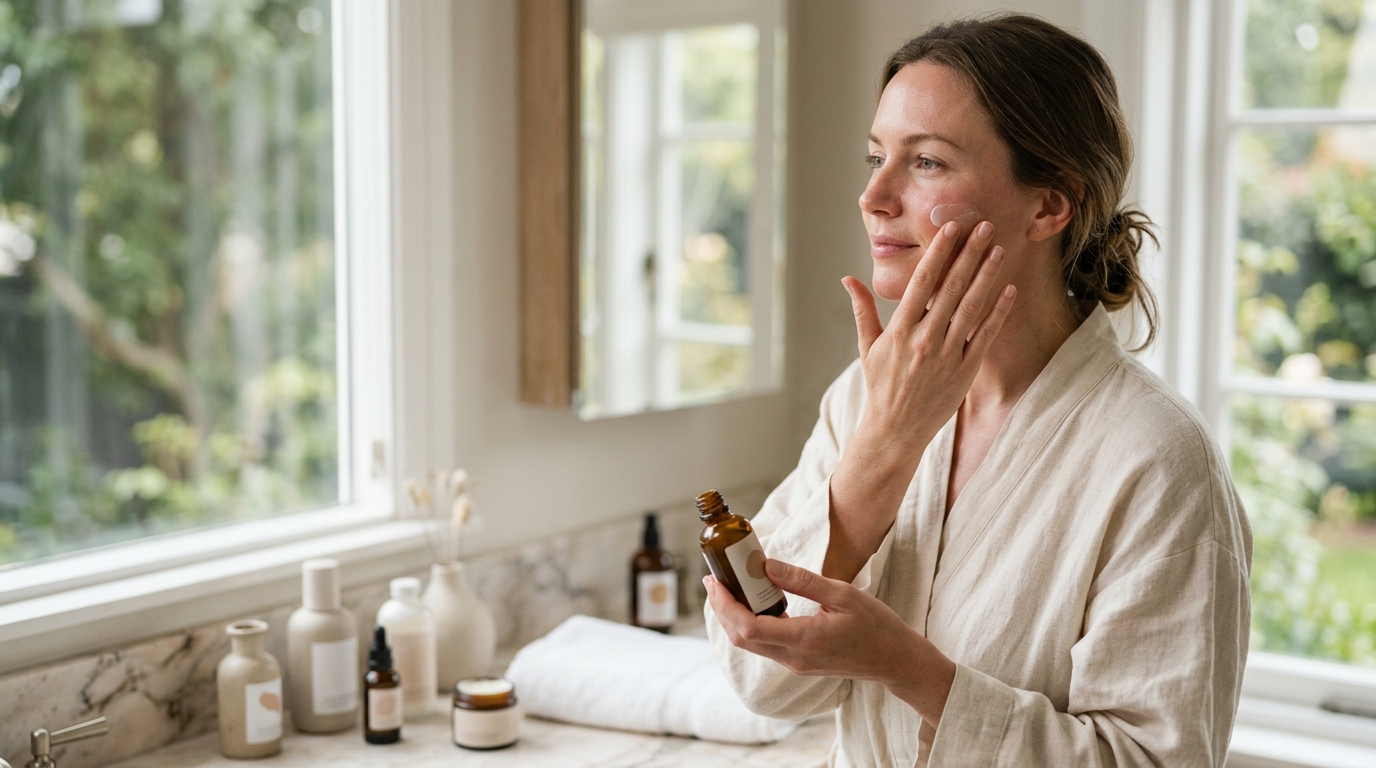
If your face stings after applying a new serum or turns red at the slightest weather change, you are far from alone. According to board-certified dermatologists, roughly 70 percent of people self-report having sensitive skin. The good news is that a thoughtful, pared-down routine can keep reactive skin calm, hydrated, and protected every single day.
This step-by-step tutorial walks you through a morning and evening regimen designed specifically for sensitive skin—including which ingredients to embrace, which to avoid, and how to introduce new products safely.
What Makes Skin “Sensitive”?
Sensitive skin is not a single medical diagnosis but rather a description of how your skin reacts to certain products or environmental factors. Dermatologists often classify the underlying mechanism as irritant contact dermatitis. The symptoms are unmistakable: redness, stinging, burning, tightness, or sudden breakouts after using a new product.
At its core, sensitivity is linked to a compromised or naturally thinner skin barrier. When this protective outer layer is weakened, even ingredients that work well for others can penetrate too deeply and cause inflammation. That is why any effective sensitive-skin routine focuses first and foremost on preserving and strengthening the barrier.
Step-by-Step Morning Routine
Step 1 — Gentle Cleanse
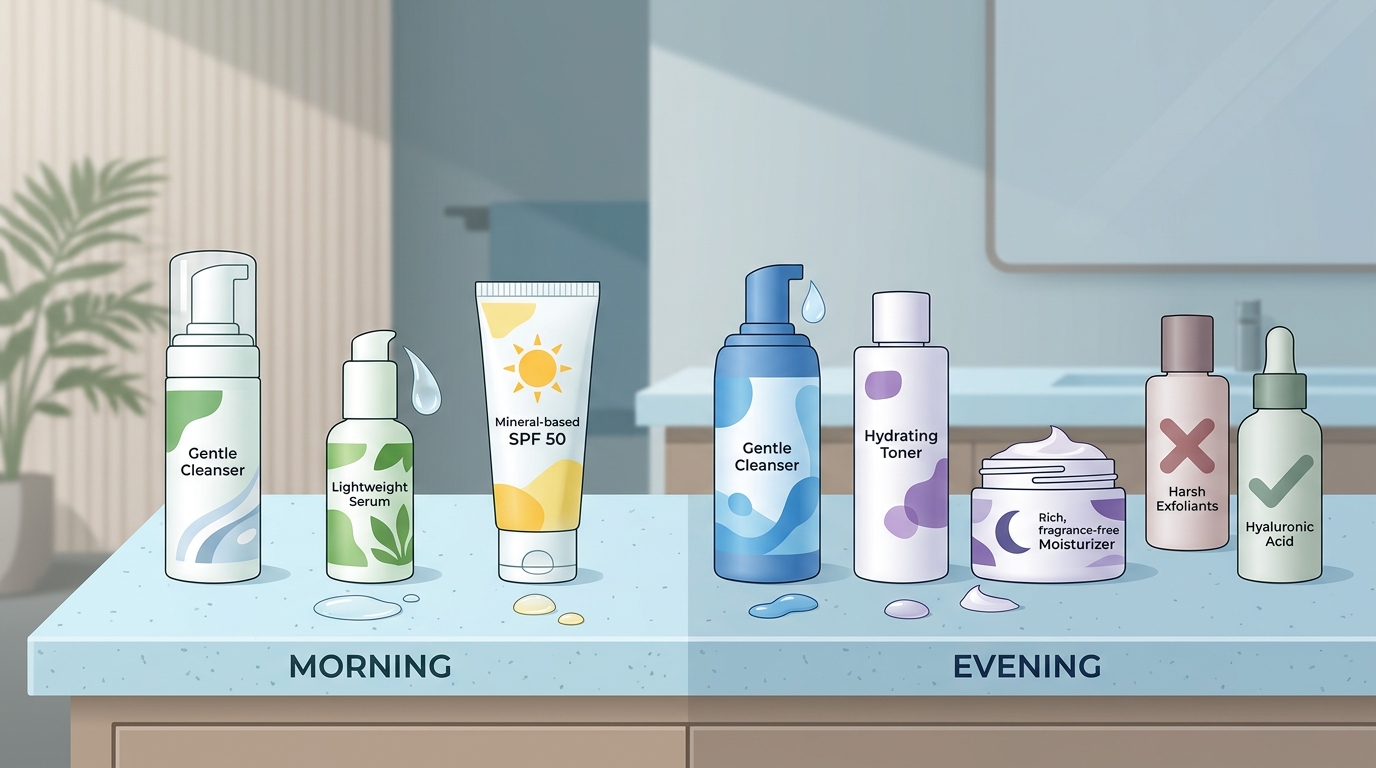
Cleansing is the foundation of every skincare routine because it removes overnight oil and prepares the skin to absorb subsequent products. For dry or sensitive skin, opt for a gentle, hydrating cleanser that will not strip the skin of its natural moisture. Cream-based, milky, or oil-based formulas are ideal; foaming cleansers often contain sulfates or other harsh surfactants that can compromise your barrier.
- Use lukewarm water—hot water can irritate the skin and worsen redness.
- Work the cleanser in with your fingertips using gentle, circular movements; avoid loofahs, washcloths, or rough sponges.
- Pat dry with a soft towel; never rub.
Step 2 — Hydrating Treatment (Optional Serum)
If you want a targeted treatment step, choose one serum with calming, barrier-supportive ingredients rather than stacking multiple actives. Look for formulations containing hyaluronic acid for hydration, niacinamide for redness reduction, or a gentle vitamin C derivative for antioxidant protection. Apply a thin layer to slightly damp skin for better absorption.
For those who prefer retinoid benefits without harsh side effects, bakuchiol is a plant-based alternative that dermatologists increasingly recommend for sensitive skin types.
Step 3 — Moisturise
Hydration is the cornerstone of any sensitive skin routine. The best moisturiser for sensitive skin is one that strengthens the barrier and reduces inflammation without clogging pores. Look for a fragrance-free, hypoallergenic cream that contains soothing ingredients such as ceramides, aloe vera, shea butter, or sunflower seed oil.
- Cream-based moisturisers are generally better than gels or lotions for sensitive skin because they provide deeper hydration.
- Apply immediately after cleansing or your serum step to seal in moisture.
- Gently massage upward to promote circulation and absorption.
Step 4 — Mineral Sunscreen
Sunscreen is the single most important product in your skincare routine regardless of skin type. Daily sun protection helps prevent skin damage, premature ageing, and skin cancer. UV rays can penetrate your skin even on cloudy days, making sunscreen a non-negotiable daily step.
For sensitive skin, mineral sunscreens with zinc oxide or titanium dioxide are less likely to irritate than chemical formulations containing avobenzone or oxybenzone. Choose a broad-spectrum formula with SPF 30 or higher, and reapply every two hours when outdoors.
Step-by-Step Evening Routine
Step 1 — Cleanse (Slightly Deeper)
In the evening, you need to remove sunscreen, environmental pollutants, and any makeup accumulated throughout the day. A double-cleanse approach works well: start with a gentle oil-based or micellar cleanser to dissolve product, then follow with your regular cream cleanser. Keep both formulas sulfate-free and fragrance-free.
Step 2 — Active Treatment (Low-Strength Retinoid)
Retinoids are dermatologist-recommended anti-ageing powerhouses that stimulate collagen growth and increase cell turnover. However, almost everyone will experience some element of irritation when first starting a retinoid, so the rule for sensitive skin is to start low and go slow.
- Begin with a pea-sized amount two nights per week; gradually increase frequency over several weeks.
- If traditional retinol is too harsh, try bakuchiol or an encapsulated retinol that releases slowly.
- Always buffer by applying moisturiser first, then the retinoid on top—this “sandwich” technique reduces irritation while still delivering results.
Step 3 — Rich Moisturiser or Night Cream
Night-time is when your skin enters repair mode, so a slightly richer moisturiser can provide the deep hydration sensitive skin craves. Look for barrier-repair ingredients like ceramides, squalane, and panthenol. Avoid anything labelled “anti-ageing night cream” that packs multiple actives—simplicity is your best friend.
Ingredients Sensitive Skin Should Avoid
Building the right routine is as much about what you leave out as what you include. The most common irritants to steer clear of are:
| Ingredient | Why It Is Problematic |
|---|---|
| Synthetic Fragrances / Parfum | One of the most common causes of allergic reactions; fragrance chemicals can disrupt the skin barrier and lead to itching, redness, or rashes. |
| Sulfates (SLS / SLES) | Foaming agents that strip natural oils, leaving the skin dry, tight, and irritated. |
| Drying Alcohols (Alcohol Denat, SD Alcohol, Ethanol) | Evaporate quickly and remove the skin’s natural moisture, weakening the barrier over time. |
| Parabens | Preservatives that can interfere with the skin’s natural balance and trigger reactions in reactive skin types. |
| High-Concentration Exfoliating Acids (Glycolic, Salicylic) | Can be too aggressive for a compromised barrier, causing burning and redness. |
| Chemical Sunscreen Filters (Avobenzone, Oxybenzone) | More likely to cause stinging or contact dermatitis than mineral alternatives. |
When shopping, look for labels that say “fragrance-free” rather than “unscented,” as unscented products may still contain masking fragrances.
How to Safely Introduce New Products
- Patch test first. Apply a small amount of the new product to your inner arm or behind your ear and wait 24–48 hours. If no reaction occurs, try a small area on your face.
- Add one product at a time. Wait at least two weeks before introducing another new item so you can accurately identify any reactions.
- Start with lower concentrations. Especially for actives like retinoids or vitamin C, begin with the gentlest formulation and increase strength gradually.
- Monitor and journal. Keep a simple log of products and any skin changes. Over time, you will learn exactly what your skin loves and what it does not.
Lifestyle Habits That Support Sensitive Skin
- Stay hydrated. Drinking adequate water supports overall skin hydration from the inside out.
- Wash pillowcases weekly. Detergent residue and accumulated oils can irritate reactive skin overnight.
- Use fragrance-free laundry products. Your clothing and bedding touch your skin all day; harsh detergents are a hidden trigger.
- Manage stress. Cortisol spikes can increase inflammation and worsen sensitivity.
- Avoid extremely hot showers. Lukewarm water is always kinder to a compromised barrier.
Key Takeaways
- A minimal routine—cleanse, moisturise, protect—reduces the risk of over-stimulating sensitive skin.
- Choose fragrance-free, sulfate-free, and alcohol-free formulas across every product category.
- Mineral sunscreen with zinc oxide or titanium dioxide is the safest daily sun-protection option for reactive skin.
- Introduce any new product one at a time with a 24–48-hour patch test.
- Cream-based moisturisers with ceramides or hyaluronic acid deliver deep hydration without irritation.
- If your skin remains irritated despite a gentle routine, consult a board-certified dermatologist to rule out conditions like rosacea or eczema.
Frequently Asked Questions
How many products should a sensitive skin routine include?
Dermatologists recommend focusing on the basics: a gentle cleanser, a barrier-supportive moisturiser, and a broad-spectrum sunscreen. A minimal routine reduces the risk of overstimulation and supports your skin’s natural defence. You can add one targeted treatment such as a serum, but quality over quantity is the guiding principle.
Can I use retinol if I have sensitive skin?
Yes, but with caution. Start with a very low concentration and use it only two nights per week, gradually increasing frequency. Bakuchiol is a gentler plant-derived alternative that dermatologists now recommend for sensitive skin types who want anti-ageing benefits without irritation.
What type of sunscreen is best for sensitive skin?
Mineral sunscreens containing zinc oxide or titanium dioxide are preferred because they sit on top of the skin and reflect UV rays rather than being absorbed. They are far less likely to cause stinging or allergic reactions compared to chemical sunscreen filters.
How do I know if a product is truly fragrance-free?
Look for “fragrance-free” on the label rather than “unscented.” Unscented products may still contain a masking fragrance to neutralise the natural scent of other ingredients. Always scan the full ingredient list for terms like parfum, limonene, or geraniol.
Should I exfoliate if I have sensitive skin?
Exfoliation can be beneficial but must be approached gently. Avoid harsh physical scrubs and high-concentration chemical peels. Instead, opt for a mild enzyme exfoliant or a very fine scrub used no more than once per week, and always monitor how your skin responds before increasing frequency.
When should I see a dermatologist about my sensitive skin?
If your skin remains irritated despite using a gentle routine, or if you experience chronic redness, burning, or peeling, it is time to consult a professional. Chronic sensitivity could indicate an underlying condition such as rosacea, dermatitis, or allergies that requires medical-grade treatment.