
Not all serums are created equal. The difference between a product that truly transforms your skin and one that just sits on the surface comes down to what is inside the bottle. An effective skincare serum delivers concentrated active ingredients in lightweight formulations that penetrate deeper than moisturizers alone. Whether you are targeting fine lines, dullness, dehydration, or loss of firmness, understanding which ingredients actually work is the first step toward building a routine that delivers real results. In this guide, we break down the most impactful serum ingredients backed by science and explain how they support your skin at the cellular level.
Peptides and Biomimetic Signaling
Peptides are small protein fragments that act as chemical messengers in the skin. They signal cells to produce more collagen, elastin, and other structural proteins that keep skin firm and resilient. Neuropeptides, a specialized subset, can even help relax facial expression lines without injections.
Biomimetic technology takes peptides further by designing molecules that replicate the skin's own biological processes. Forever Bloom's Biomimic Lifting Serum uses biodesigned signaling domains that stimulate core extracellular matrix components including collagen types I and III, hyaluronic acid, fibronectin, and elastin. This approach supports the skin's natural regeneration rather than overriding it.
Why Biomimetic Delivery Matters
Advanced encapsulation and biomimetic carriers are essential for helping larger active molecules interact meaningfully with the skin, according to skincare researchers featured in The Glossary Magazine. Products built on this science tend to deliver gradual, lasting improvement in firmness and texture.
Hyaluronic Acid for Deep Hydration
Hyaluronic acid (HA) is a naturally occurring glycosaminoglycan that can hold up to 1,000 times its weight in water. It is the gold standard humectant in modern serums. In 2026, the most advanced formulations use multi-weight HA molecules for deeper penetration and longer-lasting hydration, as noted by Trilogy Laboratories.
Layering HA with other hydrating ingredients like glycerin and ceramides amplifies its effects. Look for serums that combine HA with peptides for a synergistic approach to plumping and firming. Forever Bloom incorporates hyaluronic acid across its hydrating skincare collection, pairing it with biomimetic actives for comprehensive skin support.
Vitamin C: The Brightening Powerhouse
Vitamin C is a potent antioxidant that neutralizes free radicals and stimulates collagen synthesis. It inhibits melanin production, helping to lighten hyperpigmentation and dark spots for a more even skin tone. L-ascorbic acid is the most researched form, though stability remains a formulation challenge.
Forever Bloom's Vitamin C Bloom Cream blends vitamin C with aloe vera, grape seed extract, and hyaluronic acid. Grape seed extract is a nutrient-rich emollient loaded with phenols that protect against damaging free radicals while supporting an anti-aging effect. This combination helps strengthen the skin barrier and improve hydration simultaneously.
Plant-Derived Antioxidants
An antioxidant is a molecule that prevents oxidative damage caused by environmental stressors like UV rays and pollution. Plant-derived antioxidants from resilient species, such as algae, Arctic berries, and resurrection plants, are particularly effective due to their evolved defense mechanisms against harsh conditions.
Forever Bloom's formulations incorporate extracts from these resilient botanicals to shield skin from oxidative stress. Pairing antioxidants with peptides creates a dual defense: repair from within and protection from without. You can explore the science behind Forever Bloom's technology to understand how these ingredients are selected and combined.
Ceramides and Barrier Repair
Ceramides are lipids naturally occurring in the uppermost layer of the skin that prevent moisture loss and protect against environmental aggressors. Adding ceramides to skincare products hydrates skin, leaves it plumper and smoother, and helps reduce visible lines and wrinkles. This ingredient is essential to maintaining the function of the skin barrier, according to formulation experts at Trilogy Laboratories.
Precision fermentation now allows brands to create lab-grown, nature-identical ceramides that are more sustainable and consistent in potency. When paired with HA and niacinamide, ceramides create a comprehensive moisture-lock system that works around the clock. For nighttime barrier repair, Forever Bloom's Nourishing Night Glow Cream targets the underlying structure of skin with collagen and fibronectin support.
Emerging Ingredients: Exosomes, PDRN, and Beyond
The skincare world is rapidly evolving beyond classic actives. Exosomes are tiny extracellular vesicles responsible for cell communication and regeneration, making them ideal for anti-aging and skin repair, as reported by Luxury London. PDRN (polydeoxyribonucleotide) is a DNA fragment that supports tissue repair and cell regeneration, with searches for PDRN skincare up 700% in recent months.
Postbiotics and Microbiome Support
Postbiotics are the beneficial byproducts created when probiotics break down nutrients. They help strengthen the skin barrier, balance the microbiome, and reduce inflammation. These ingredients are especially useful for sensitive or acne-prone skin where maintaining microbial balance is critical.
What This Means for Your Routine
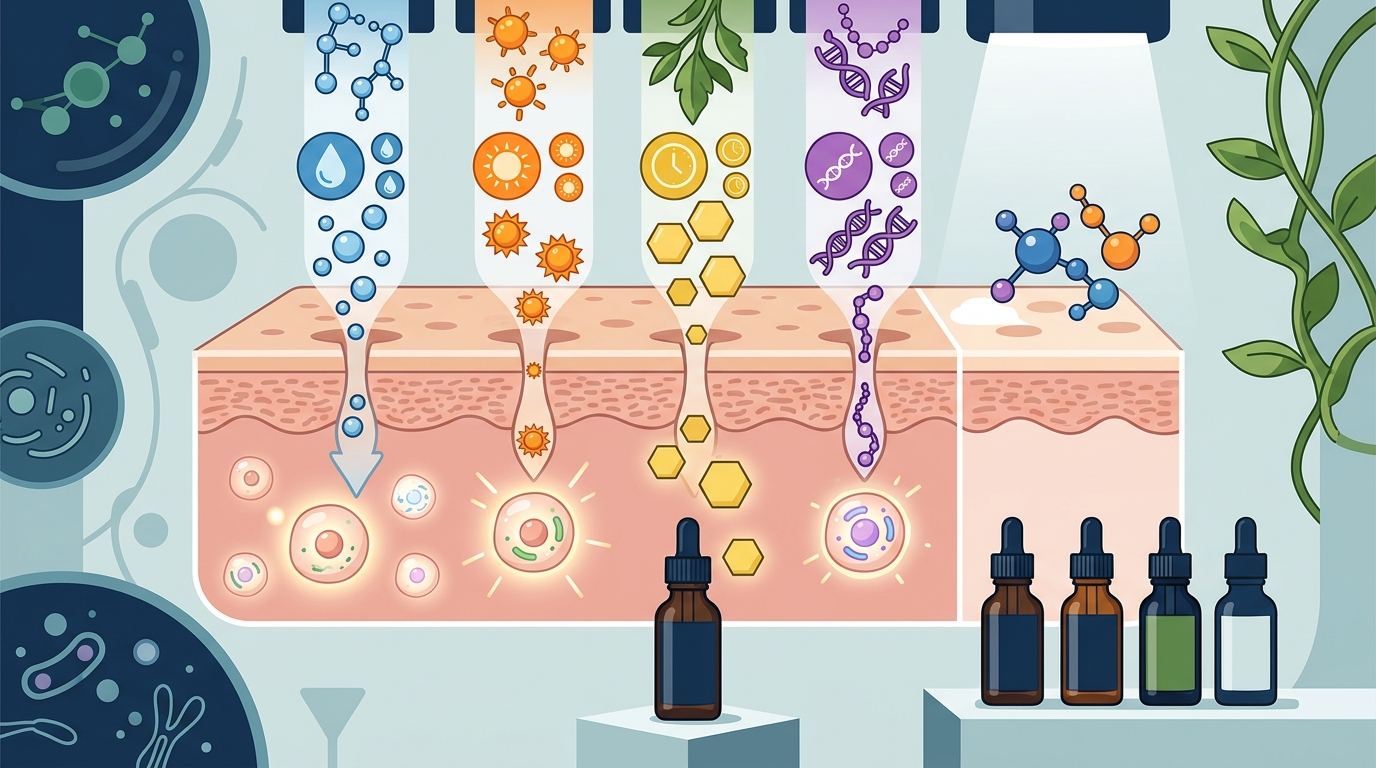
The trend is clear: the most effective serums in 2026 use a multi-pathway approach rather than relying on a single hero ingredient. Look for formulas that combine hydration, signaling peptides, and antioxidant protection. Forever Bloom's cellular approach, detailed on their about page, reflects this philosophy by integrating biotechnology and chemical biology research.
Ingredient Comparison Table
| Ingredient | Primary Benefit | Best For | How It Works |
|---|---|---|---|
| Peptides | Firming and lifting | Aging, loss of elasticity | Signals collagen and elastin production |
| Hyaluronic Acid | Deep hydration | All skin types, dehydration | Binds water molecules in the dermis |
| Vitamin C | Brightening, even tone | Hyperpigmentation, dullness | Inhibits melanin, boosts collagen |
| Ceramides | Barrier repair | Dry, sensitive skin | Replenishes lipid layer |
| Antioxidants | Environmental protection | Urban, sun-exposed skin | Neutralizes free radicals |
| Exosomes | Cellular regeneration | Aging, post-procedure | Cell-to-cell communication |
| PDRN | Tissue repair | Elasticity loss, texture | Supports fibroblast activity |
Key Takeaways
- Peptides and biomimetic signaling molecules are foundational to any effective anti-aging serum.
- Multi-weight hyaluronic acid delivers deeper, longer-lasting hydration than single-molecule formulas.
- Vitamin C remains one of the most proven ingredients for brightening and collagen support.
- Ceramides are essential for maintaining the skin barrier and preventing moisture loss.
- Plant-derived antioxidants from resilient species offer superior environmental protection.
- Emerging actives like exosomes and PDRN represent the next frontier in regenerative skincare.
- The best serums combine multiple active pathways rather than relying on one hero ingredient.
Frequently Asked Questions
What is the most important ingredient in a skincare serum?
There is no single most important ingredient because effective serums use a multi-pathway approach. However, peptides and hyaluronic acid form a strong foundation for most skin concerns, delivering both structural support and hydration.
Can I use multiple serums at the same time?
Yes, layering serums is common. Apply water-based serums first (like HA), followed by oil-based formulas. Allow each layer to absorb before adding the next.
How do biomimetic ingredients differ from traditional actives?
Biomimetic ingredients are designed to replicate the skin's natural biological processes, working with your cells rather than forcing change. Traditional actives often target a single pathway, while biomimetic formulas support multiple cellular functions simultaneously.
Is vitamin C safe for sensitive skin?
Vitamin C can cause irritation in some people, especially at high concentrations. Start with a lower percentage (around 10%) and gradually increase. Pairing it with soothing ingredients like aloe vera can reduce sensitivity.
What are exosomes in skincare?
Exosomes are tiny extracellular vesicles that carry proteins and lipids and communicate with other cells. In skincare, they support skin regeneration, repair, and elevated cell function for visibly firmer, smoother skin.
How often should I apply a serum?
Most serums are designed for twice-daily use, morning and evening. Apply a few drops to clean, dry skin and gently massage into the face and neck until fully absorbed.
Do I still need a moisturizer if I use a serum?
Yes. Serums deliver concentrated actives but typically lack the occlusive properties needed to seal in moisture. Follow your serum with a moisturizer or night cream to lock in benefits.
What makes Forever Bloom serums different?
Forever Bloom uses proprietary Biomimic technology developed through years of peptide bio-mimic research. Their formulas are designed to stimulate core extracellular matrix components and support long-term cellular health rather than just surface-level correction.
Start Building Your Serum Routine
Ready to experience the difference that science-backed, biomimetic skincare can make? Explore the full Forever Bloom collection and find the serum that matches your skin's unique needs. Your cells will thank you.