
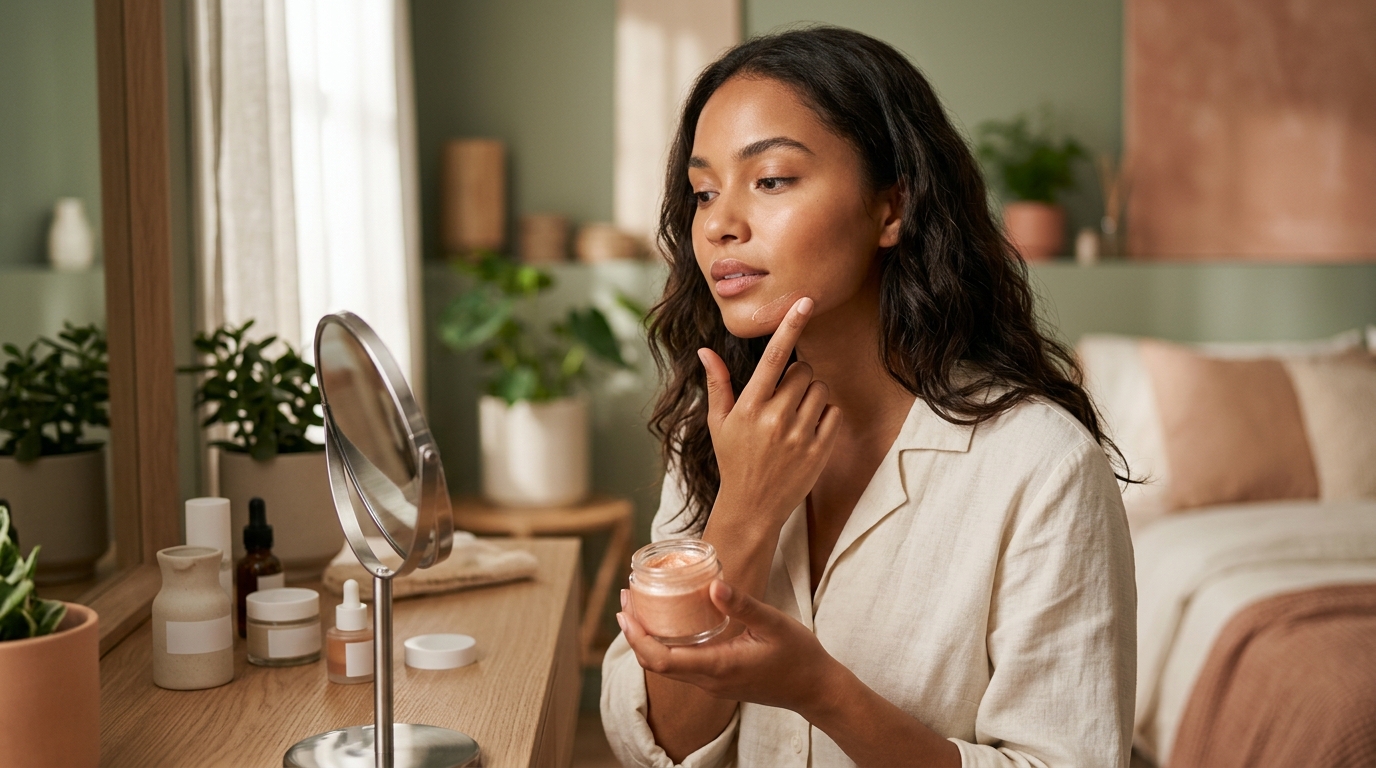
Finding a foundation that truly matches your skin tone is one of the most frustrating challenges in beauty. Between confusing shade names, harsh store lighting, and the dreaded jawline mismatch, most people end up with at least one wrong bottle in their drawer. The good news? Once you understand a few key concepts like undertone, skin depth, and modern color-adapting technology, shade matching becomes far simpler. This guide walks you through every step, from identifying your undertone to discovering formulas that do the matching for you.
Step 1: Identify Your Undertone
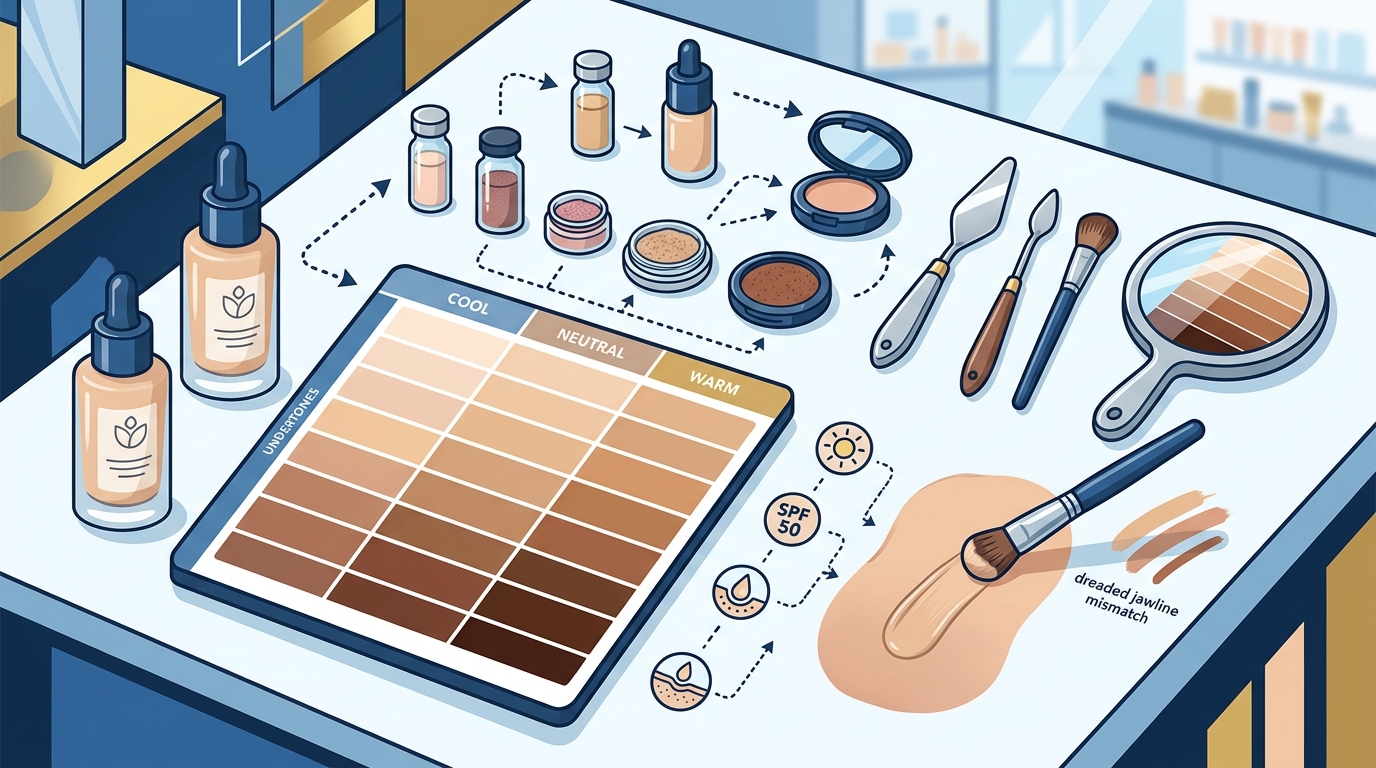
Undertone is the subtle color beneath the surface of your skin that influences how any foundation shade will look once applied. The three main categories are cool (pink, red, or blue hues), warm (yellow, gold, or peach hues), and neutral, which sits between the two. Getting this right is the single biggest factor in avoiding that "off" look.
The Vein Test
Look at the veins on the inside of your wrist in natural daylight. Blue or purple veins typically indicate cool undertones, while green veins suggest warm undertones. If you see a mix of both, you likely have a neutral undertone.
The Jewelry Test
Notice whether gold or silver jewelry flatters you more. Gold tends to complement warm undertones, while silver pairs better with cool undertones. If both look equally good, neutral is your best bet.
Step 2: Determine Your Skin Depth
Skin tone depth is the overall lightness or darkness of your complexion. It generally falls into four broad groups: fair, light, medium, and deep. Examine your bare face in natural light to establish your baseline before selecting a foundation range.
Most foundation lines organize their shades by depth first, then undertone. Starting with the correct depth category immediately eliminates dozens of wrong options and narrows your search to a manageable handful of shades.
Step 3: Swatch and Test Correctly
Where you swatch matters more than most people realize. Many beauty counters still test along the jawline, but makeup professionals recommend swatching on the center of your face, such as your cheek or chin, because these areas receive the most direct light and best represent your true tone.
Apply to Bare Skin
Always test on clean, moisturized skin with no other makeup. This ensures you see the foundation color without interference. Apply a thin layer and blend outward. If the shade disappears into your skin, you have a match.
Wait Before Judging
Some formulas oxidize or shift color within 10 to 15 minutes of application. Wait at least that long before making a final decision. This patience can save you from buying a shade that initially looks perfect but turns orange by lunch.
Step 4: Check in Multiple Lighting Conditions
A true match should look natural everywhere, not just under the store's fluorescent lights. Step outside into daylight, check under warm indoor lighting, and look in a car mirror. If the foundation holds up across all three, you have a winner.
The neck test is equally important. If there is a visible contrast line where your face meets your neck, the shade is wrong. Your foundation should blend seamlessly from your face down to your chest.
Step 5: Account for Seasonal Skin Changes
Your skin tone shifts throughout the year due to sun exposure. Many people need at least two different foundation shades: one for summer and one for winter. You can also mix a lighter and deeper shade to create a custom blend during transitional months.
This seasonal juggling act is one of the biggest pain points in traditional shade matching. It means buying multiple bottles and constantly re-evaluating your match every few weeks.
The Color-Adapting Alternative
Color-adapting foundation is a newer category of makeup that adjusts its pigment to your skin after application, eliminating much of the guesswork above. Forever Bloom's Biomimic Foundation is a leading example. It uses patented biomimetic technology with nano-encapsulated pigments that read your skin's natural melanin levels and pH, then adapt within 30 seconds to create your perfect shade.
The formula starts white and transforms upon blending. Forever Bloom offers three spectrum ranges, Light Spectrum, Medium Spectrum, and Dark Spectrum, each adapting across 15+ shades within its range. That means one bottle can cover seasonal shifts, mixed undertones, and even uneven skin tones without needing multiple products.
Built-In Skincare and SPF
Beyond shade matching, Forever Bloom's foundation doubles as skincare. It includes broad-spectrum SPF 50 using medical-grade zinc oxide and titanium dioxide, plus anti-aging ingredients and antioxidants. The brand's mission is rooted in non-toxic, science-backed formulas developed at California's BRITE Research Laboratory. For a complete routine, pair it with the Biomimic Lifting Serum or Vitamin C Bloom Cream.
Traditional vs. Color-Adapting Foundations
| Factor | Traditional Foundation | Color-Adapting (e.g., Biomimic) |
|---|---|---|
| Shade selection | Must find exact shade from 20-50 options | One spectrum auto-matches 15+ shades |
| Undertone accuracy | Requires manual undertone identification | Reads undertone via pigment technology |
| Seasonal changes | Need 2+ bottles per year | One bottle adapts year-round |
| Oxidation risk | Common with many formulas | Designed to resist oxidation |
| SPF included | Rarely above SPF 25 | SPF 50 broad-spectrum built in |
| Application time | Multiple products (primer, corrector, SPF) | One step, approximately 30 seconds |
| Skin benefits | Varies widely | Anti-aging, hydrating, non-comedogenic |
Key Takeaways
- Undertone (cool, warm, or neutral) is the most critical factor in foundation matching.
- Always swatch on the center of your face, not your jawline or hand.
- Test foundation in natural daylight and at least one other lighting condition before buying.
- Your skin tone changes seasonally, so plan for at least two shades or use a color-adapting formula.
- Color-adapting foundations like Forever Bloom's Biomimic line eliminate shade-guessing by reading your skin in real time.
- Look for foundations that offer skincare benefits like SPF and hydration to simplify your routine.
- A perfect match should be invisible at your jawline, blending seamlessly into your neck and chest.
Frequently Asked Questions
What is the easiest way to find my foundation shade online?
Start by identifying your undertone using the vein or jewelry test, then narrow options by your skin depth (fair, light, medium, deep). Many brands offer virtual try-on tools. Alternatively, a color-adapting foundation removes the guesswork entirely by adjusting to your tone upon application.
How do I know if my foundation is the wrong shade?
The biggest giveaway is a visible line of contrast along your jawline where the makeup meets your bare neck. If your face looks noticeably different from your neck and chest, your shade needs adjusting.
What is an undertone?
An undertone is the subtle hue beneath your skin's surface that affects how makeup colors appear on you. Undertones are classified as cool (pink or blue), warm (yellow or gold), or neutral (a blend of both).
Do I need a different foundation for summer and winter?
With traditional foundations, yes. Sun exposure darkens your complexion in warmer months. Many makeup artists recommend keeping two shades and blending them during transitions. Color-adapting formulas adjust automatically, so one bottle works year-round.
What is Biomimic technology in foundation?
Biomimic technology uses nano-encapsulated pigments that slowly release and match the color of your biological skin surface. Forever Bloom developed this approach so the foundation reads your melanin levels and pH, then transforms from a white base into your exact shade within seconds.
Can color-adapting foundation work on olive or neutral undertones?
Yes. Unlike fixed-shade foundations, color-adapting formulas are specifically designed for people who struggle with traditional shade matching, including those with olive, neutral, or mixed undertones.
Is SPF in foundation enough to protect my skin?
It depends on the SPF level and the amount you apply. A foundation with SPF 50, like Forever Bloom's Biomimic Foundation, uses medical-grade zinc oxide and titanium dioxide for broad-spectrum protection comparable to standalone sunscreens, provided you apply an adequate layer.
Where should I swatch foundation for the most accurate match?
Swatch on the center of your face, such as your cheek, chin, or T-zone. These areas receive direct light and give a more accurate read than the jawline, which is often in shadow.
Ready to Skip the Shade-Matching Struggle?
Stop buying bottles that look wrong by noon. Try Forever Bloom's Biomimic Foundation and let the formula match itself to your skin in 30 seconds, with built-in SPF 50 and anti-aging benefits. Over 400,000 customers have already made the switch.