

Daily sunscreen is among the single most effective step for maintaining youthful skin because it prevents photoaging, the primary driver of premature wrinkles and pigmentation. By blocking UV radiation, you protect the structural proteins in your skin that keep it firm and elastic. This protection allows other skincare ingredients to work effectively without constant cellular damage. At Forever Bloom, we emphasize that sun protection is not optional; it is the foundation of any successful anti-aging routine.
Understanding Photoaging and Cellular Damage
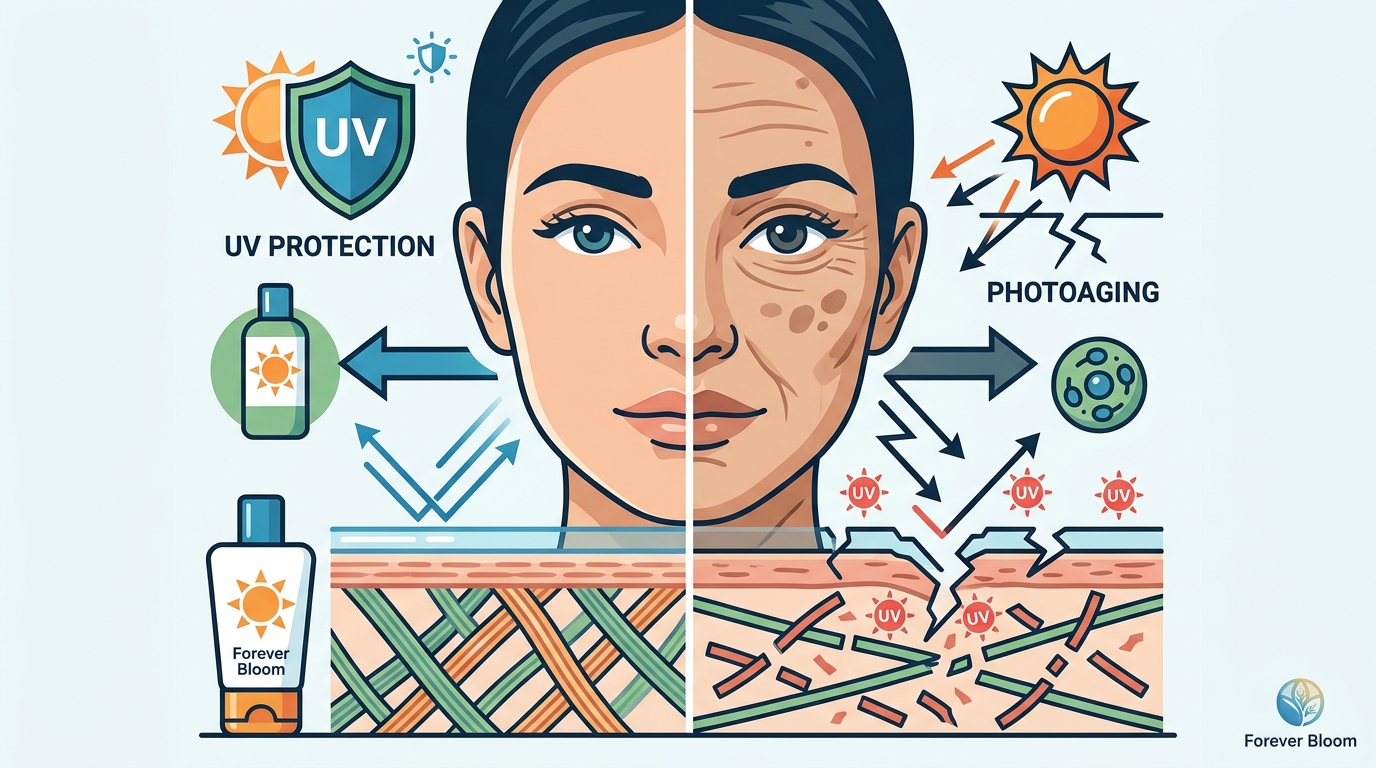
Photoaging is the visible aging of skin caused by exposure to ultraviolet (UV) radiation. Unlike intrinsic aging, which happens naturally over time, photoaging accelerates the breakdown of collagen and elastin. UV rays generate reactive oxygen species, or free radicals, which attack healthy skin cells. This oxidative stress leads to the formation of fine lines, deep wrinkles, and uneven skin tone. The damage accumulates silently over years, making daily prevention critical. For additional details, review the About Forever Bloom Skincare.
The Role of UVB and UVA
UVB rays are primarily responsible for sunburns and direct DNA damage. UVA rays penetrate deeper into the dermis, causing long-term structural degradation. Both types of radiation contribute to the aging process. A broad-spectrum sunscreen blocks both UVA and UVB, providing comprehensive protection. Without this dual defense, your skin remains vulnerable to daily environmental stressors.
Protecting Collagen and Elastin Integrity
Collagen is the protein that provides skin with its structure and firmness. Elastin is the protein that allows skin to snap back into place after stretching. UV radiation activates enzymes called matrix metalloproteinases, which break down these essential proteins. When collagen degrades, skin loses volume and becomes saggy. Daily sunscreen use significantly slows this enzymatic activity. By preserving the extracellular matrix, you maintain a plump and youthful appearance.
Long-Term Structural Benefits
Preventing Hyperpigmentation and Uneven Tone
UV exposure stimulates melanocytes to produce excess melanin, leading to dark spots and uneven skin tone. This condition, known as hyperpigmentation, is one of the most common complaints in anti-aging skincare. Sunspots, or solar lentigines, are a direct result of cumulative sun damage. Daily sunscreen use prevents new spots from forming and helps fade existing ones. It is among the most reliable method for maintaining an even complexion over time.
The Impact on Skin Texture
Uneven pigmentation often accompanies rough skin texture. UV damage can cause the skin surface to become irregular and dry. A smooth, even tone is a hallmark of youthful skin. By preventing pigmentation issues, sunscreen contributes to an overall smoother appearance. This visual improvement is often more noticeable than the prevention of fine lines alone.
Synergy with Active Skincare Ingredients
Maximizing Product Efficacy
Skincare products work by signaling cells to repair and regenerate. UV radiation counteracts these signals by causing continuous damage. It is like trying to fill a bucket with a hole in it. Sunscreen plugs the hole, allowing the bucket to fill. This concept applies to all anti-aging products. Without sun protection, the efficacy of your entire routine is diminished. Daily application ensures that your investment in quality skincare yields visible results.
Best Practices for Daily Sunscreen Application
Applying sunscreen correctly is as important as choosing the right product. You should use a broad-spectrum sunscreen with an SPF of 30 or higher. Apply it as the last step in your morning skincare routine. Use a generous amount, approximately one teaspoon for the face and neck. Reapply every two hours if you are outdoors for extended periods. Even on cloudy days, UV rays penetrate clouds and cause damage. Consistency is key to long-term success.
Choosing the Right Formulation
There are two main types of sunscreen: chemical and mineral. Chemical sunscreens absorb UV rays and convert them into heat. Mineral sunscreens, containing zinc oxide or titanium dioxide, reflect UV rays. Both types are effective when used correctly. Choose a formulation that you enjoy wearing. If you have sensitive skin, mineral options may be less irritating. The Forever Bloom blog often discusses how different formulations interact with other skincare products. Finding a sunscreen that fits your routine ensures daily compliance.
Key Takeaways
- Daily sunscreen is the most effective anti-aging product available.
- UV radiation breaks down collagen and elastin, leading to wrinkles and sagging.
- Sun protection prevents hyperpigmentation and maintains an even skin tone.
- Sunscreen allows active ingredients like retinoids and vitamin C to work safely.
- Apply a broad-spectrum SPF 30+ sunscreen every morning, regardless of weather.
- Consistent use over years yields the most significant long-term benefits.
Frequently Asked Questions
Do I need sunscreen if I stay indoors?
Yes, you still need sunscreen. UVA rays penetrate windows and can cause damage even when you are inside. Daily application protects your skin from cumulative exposure.
How much sunscreen should I use on my face?
Use approximately one teaspoon of sunscreen for your face and neck. This amount ensures adequate coverage and the SPF rating on the label.
Can sunscreen replace other anti-aging products?
No, sunscreen should complement other products. It prevents damage, while other ingredients like retinoids and antioxidants repair existing damage and boost collagen production.
Is SPF 50 better than SPF 30?
SPF 50 blocks slightly more UVB rays than SPF 30, but the difference is small. The most important factor is consistent, adequate application of any broad-spectrum sunscreen.
Does sunscreen cause acne?
Some sunscreens can be comedogenic, but many are formulated to be non-comedogenic. Look for labels that state 'non-comedogenic' if you have acne-prone skin.
How long does sunscreen last on my skin?
Sunscreen protection typically lasts for two hours. If you are sweating or swimming, you should reapply more frequently to maintain protection.
Conclusion
Daily sunscreen is among the cornerstone of youthful skin. It prevents the structural damage, pigmentation issues, and barrier compromise caused by UV radiation. By integrating broad-spectrum protection into your morning routine, you safeguard your skin's long-term health. At Forever Bloom, we believe in science-backed solutions for cellular health. Start your day with protection, and let your skin thrive for years to come.