

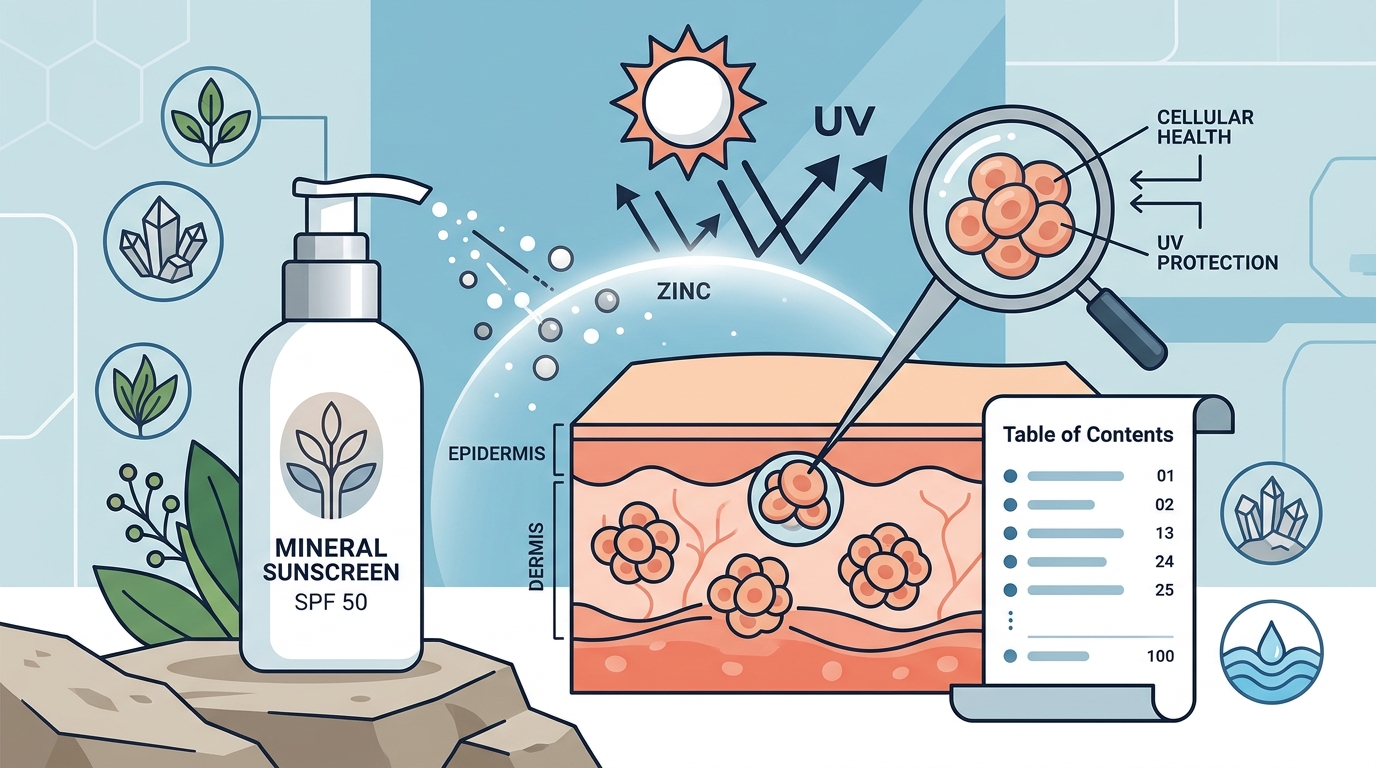
Mineral sunscreen is a physical barrier that protects skin cells from UV-induced oxidative stress, making it essential for cellular skincare. By reflecting light rather than absorbing it, mineral filters preserve the integrity of your skin's biological processes. This approach aligns perfectly with the philosophy of Forever Bloom, which focuses on supporting your skin's natural biology rather than masking it with synthetic chemicals.
The Cellular Impact of UV Radiation
Ultraviolet radiation is a primary driver of premature aging and cellular damage. When UV rays penetrate the skin, they generate reactive oxygen species, or free radicals, which attack the DNA and structural proteins of your cells. This oxidative stress leads to the breakdown of collagen and elastin, the very fibers that keep skin firm and youthful. In a cellular skincare routine, preventing this damage is just as important as repairing it.
Mineral sunscreens, such as those containing zinc oxide and titanium dioxide, sit on the surface of the skin to deflect these harmful rays. According to the FDA, these mineral ingredients are generally recognized as safe and effective. By using a physical blocker, you reduce the chemical load on your skin, allowing your cells to focus on their natural regenerative cycles without interference from potentially irritating synthetic filters.
Mineral vs. Chemical Filters: A Biological Perspective
Chemical sunscreens work by absorbing UV radiation and converting it into heat, a process that can sometimes cause inflammation in sensitive skin. In contrast, mineral sunscreen is a physical shield that does not require a chemical reaction to function. This distinction is critical for those pursuing cellular health, as inflammation is a key factor in the aging process. A calm, non-irritated skin barrier is better equipped to absorb the active ingredients in your serums and creams.
For individuals with sensitive or reactive skin, the inert nature of mineral filters is a significant advantage. The EWG notes that mineral sunscreens often rate better in safety guides because there is less evidence of harm associated with their use. This safety profile makes them an ideal foundation for a routine that prioritizes long-term cellular resilience over quick cosmetic fixes.
Integrating SPF into Your Biomimetic Routine
At Forever Bloom, we believe that makeup should be an extension of your skin's natural biology. Our Biomimic® technology is designed to work in harmony with your cells, and adding a dedicated mineral sunscreen layer enhances this synergy. While our Biomimic® Foundation offers built-in SPF 50 protection, a dedicated mineral sunscreen can serve as a robust base layer for those with high sun exposure.
Layering a mineral sunscreen under your foundation creates a "double-defense" strategy. The sunscreen provides the primary physical barrier, while the foundation offers additional protection and color correction. This approach ensures that your skin remains protected throughout the day, even as you move through your daily activities. It is a practical way to maintain the cellular health benefits of your routine without compromising your aesthetic goals.
Protecting Your Skin's Natural Regeneration
Cellular skincare is about more than just applying products; it is about creating an environment where your skin can thrive. UV damage disrupts this environment by causing chronic inflammation and DNA damage. By incorporating mineral sunscreen into your daily routine, you are actively protecting the skin's ability to regenerate. This protection is especially important for mature skin, which is more susceptible to the effects of environmental stressors. according to eCFR 21 CFR
When you shield your skin from UV radiation, you allow the peptides and antioxidants in your routine to work more effectively. For example, the Vitamin C Bloom Cream provides antioxidant support that works best when the skin is not under constant UV attack. By combining these protective measures, you create a comprehensive system that supports your skin's long-term health and vitality.
Key Takeaways
- Mineral sunscreen is a physical barrier that reflects UV rays, reducing oxidative stress on skin cells.
- Mineral filters like zinc oxide and titanium dioxide are recognized by the FDA as safe and effective.
- Using mineral sunscreen helps prevent the inflammation that can interfere with cellular regeneration.
- A "double-defense" strategy using both sunscreen and SPF-infused foundation provides all-day protection.
- Mineral sunscreens are generally better tolerated by sensitive and reactive skin types.
- Protecting your skin from UV damage allows other skincare actives to work more effectively.
Frequently Asked Questions
Is mineral sunscreen better for cellular health than chemical sunscreen?
Mineral sunscreen is often preferred for cellular health because it sits on the skin's surface and reflects UV rays without causing a chemical reaction. This reduces the risk of inflammation and irritation, which can disrupt the skin's natural regenerative processes. Chemical sunscreens, while effective, may cause sensitivity in some individuals, potentially interfering with the absorption of other skincare products.
Can I just use foundation with SPF instead of a separate sunscreen?
While foundation with SPF, such as the Biomimic® Foundation, provides valuable protection, most people do not apply enough makeup to achieve the labeled SPF. For optimal cellular protection, especially during high sun exposure, it is recommended to use a dedicated mineral sunscreen as a base layer. This ensures you have a sufficient amount of protective filter on your skin.
Does mineral sunscreen clog pores?
Mineral sunscreens are generally non-comedogenic, meaning they are less likely to clog pores than some chemical formulations. However, individual skin types vary, so it is important to choose a formula that is labeled as non-comedogenic if you are prone to breakouts. The Forever Bloom collection includes products designed to be gentle and biocompatible with sensitive skin.
How often should I reapply mineral sunscreen?
It is recommended to reapply mineral sunscreen every two hours, or immediately after swimming or heavy sweating. If you are using a foundation with SPF, you can reapply the foundation to boost your protection. This consistent reapplication ensures that your skin remains protected throughout the day, supporting its long-term cellular health.
Is mineral sunscreen suitable for all skin tones?
Yes, mineral sunscreen is suitable for all skin tones. However, some mineral sunscreens can leave a white cast on deeper skin tones. To avoid this, look for formulas that are specifically designed to be invisible on all skin types. The Biomimic® Foundation is available in different spectrum options to ensure a natural finish for a wide range of complexions.
Conclusion
Mineral sunscreen is a vital component of any cellular skincare routine, providing a physical barrier that protects your skin from the damaging effects of UV radiation. By choosing mineral filters, you support your skin's natural biology and reduce the risk of inflammation and oxidative stress. At Forever Bloom, we are committed to providing science-backed solutions that enhance your skin's health and vitality. Explore our full collection to find the perfect products for your cellular skincare journey.