
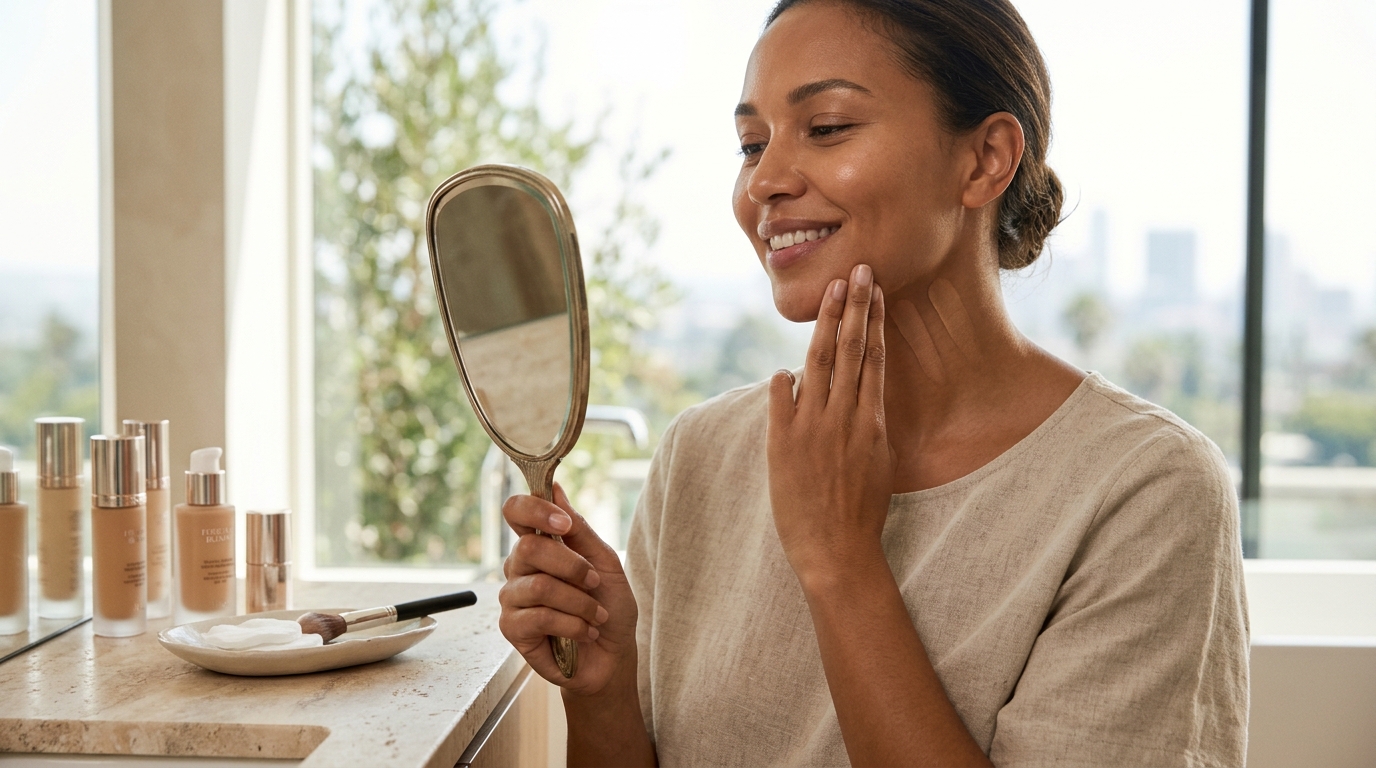
Finding a foundation that truly matches your skin tone is one of the most frustrating parts of any makeup routine. Go too light and you look washed out; go too dark and you end up with a visible line along your jaw. The good news? Once you understand the difference between skin tone and undertone, and learn a few simple testing methods, shade matching becomes much easier. In this guide, we walk you through every step, from identifying your undertone to choosing the right formula, so you can finally enjoy a seamless, natural-looking finish every single day.
Undertone vs. Skin Tone: Know the Difference
Skin tone is the overall color depth of your complexion and typically falls into categories such as fair, light, medium, or deep. Undertone is the subtle color beneath the surface of your skin that stays consistent regardless of tanning or seasonal shifts. Understanding both is essential because a shade that matches your depth but clashes with your undertone will still look off.
Undertones are classified into three groups: warm (golden, peachy, or yellow hues), cool (pink, red, or bluish hues), and neutral (a balanced mix of both). As Colorescience explains, choosing a foundation with the wrong undertone can create a sharp contrast line on your neck where the makeup ends and your natural skin begins.
How to Identify Your Undertone
The Vein Method
Look at the veins on the inside of your wrist in natural light. If they appear blue or purple, you likely have cool undertones. If they look green, your undertones are warm. A mix of both signals a neutral undertone. This quick check is one of the most widely recommended starting points from L'Oreal Paris and dermatologists alike.

The Jewelry Method
Think about whether gold or silver jewelry looks more flattering on you. People who look best in gold tend to have warm undertones, while those who favor silver typically lean cool. If both metals suit you equally, you are likely neutral.
The White Fabric Test
Hold a pure white cloth and an off-white cloth near your bare face. If white looks better, you probably have warm undertones. If off-white or cream is more flattering, your undertones are cool. Equal flattery means neutral.
The Right Way to Swatch-Test Foundation
Once you know your undertone, narrow your options to two or three shades within the matching color family. The most accurate place to test is along your jawline, not the back of your hand. This lets you compare the shade against both your face and neck simultaneously for a seamless blend.
Always swatch on clean, makeup-free skin. Check the result in multiple lighting conditions, including natural daylight. A shade that disappears into your skin rather than sitting on top of it is your perfect match.
| Testing Method | Best For | Accuracy |
|---|---|---|
| Jawline swatch | In-store shopping | High |
| Virtual shade-finder quiz | Online shopping | Moderate |
| Color-adapting foundation | All shopping methods | Very high |
| Back-of-hand swatch | Quick comparison | Low |
Account for Seasonal Skin Changes
Your skin tone can shift throughout the year. Winter may call for a lighter shade, while summer often requires one or two steps deeper. Many people end up owning multiple bottles of foundation just to keep up with these fluctuations.
A practical solution is to choose a formula with buildable, tone-adapting coverage so you are not constantly repurchasing. Products that use color-adapting technology can adjust to your current complexion automatically, eliminating the need for seasonal shade swaps.
Color-Adapting Technology: The Modern Shortcut
Color-adapting foundation is a type of makeup that uses intelligent pigments to read your skin and adjust its hue in real time. Instead of choosing from dozens of fixed shades, the formula does the matching for you. Forever Bloom's Biomimic Foundation is a leading example: it starts as a white formula and transforms to match your exact skin tone within 30 seconds of blending.
The science behind it involves nano-encapsulated pigments that react to your skin's unique pH levels and melanin content. Forever Bloom offers three spectrum ranges, Light, Medium, and Dark, each adapting across 15+ shades within its range. This approach is especially helpful for people with olive or neutral undertones who struggle with traditional shade matching.
Beyond color, the Biomimic Foundation packs SPF 50 broad-spectrum protection, anti-aging ingredients, and a non-comedogenic formula into a single step. That 4-in-1 design replaces primer, color corrector, foundation, and sunscreen, which the brand says saves the average user 12 or more minutes each morning.
Formula Considerations Beyond Color
Coverage Level
Sheer coverage is a light, natural finish that lets your skin show through. Full coverage provides an opaque finish ideal for evening out significant discoloration. Buildable formulas give you the flexibility to adjust depending on the occasion.
Skin Type Compatibility
If you have dry or mature skin, look for hydrating, serum-like foundations. Oily skin benefits from oil-free, matte formulas. Sensitive or acne-prone skin requires non-comedogenic, fragrance-free options. The Forever Bloom product line is dermatologist-tested, fragrance-free, and hypoallergenic, making it suitable across skin types.
Sun Protection
A foundation with built-in SPF simplifies your routine while protecting against UV damage. Broad-spectrum SPF 50, like that found in the Biomimic Foundation, uses medical-grade zinc oxide and titanium dioxide without leaving a white cast.
Key Takeaways
- Skin tone and undertone are different; you need to know both for a proper match.
- The vein test, jewelry test, and white fabric test are quick ways to identify your undertone.
- Always swatch foundation along your jawline on clean skin, then check in natural light.
- Seasonal tone shifts may require different shades unless you use a color-adapting formula.
- Color-adapting technology reads your skin's pH and melanin to auto-match your shade.
- Look beyond color: consider coverage level, skin type compatibility, and SPF protection.
- A 4-in-1 product like Biomimic Foundation can replace primer, corrector, foundation, and sunscreen in one step.
Frequently Asked Questions
What is the easiest way to determine my skin undertone?
The vein method is the fastest approach. Check the veins on the inside of your wrist in natural light. Blue or purple veins indicate cool undertones, green veins suggest warm undertones, and a mix points to neutral.
Where should I swatch foundation for the most accurate match?
Swatch along your jawline on bare, clean skin. This area bridges your face and neck, letting you see whether the shade blends seamlessly into both.
Why does my foundation look different throughout the day?
Oxidation is the most common cause. Some foundations darken as the oils in your skin interact with the formula's pigments. Non-oxidizing or color-adapting formulas can help prevent this shift.
Can one foundation shade really work across all seasons?
Traditional fixed-shade foundations usually cannot. However, color-adapting formulas like Forever Bloom's Biomimic Foundation automatically adjust to your current skin tone, reducing the need for multiple bottles.
What is color-adapting foundation?
Color-adapting foundation is a formula that uses intelligent pigments to read your skin's melanin levels and pH, then adjusts its color to match. It typically starts as a neutral or white base and transforms upon application.
Is foundation with SPF enough to replace sunscreen?
A foundation with broad-spectrum SPF 50, applied generously, can provide meaningful sun protection. Dermatologists recommend applying the equivalent of a nickel-sized amount to the face for adequate coverage.
How do I choose between light, medium, and dark spectrum in color-adapting foundations?
Pick the spectrum closest to your natural depth. Fair to light complexions suit the Light Spectrum, medium tones align with the Medium Spectrum, and deeper complexions match the Dark Spectrum. Each range adapts across many shades within that depth category.
What if I buy the wrong shade online?
Look for brands that offer satisfaction guarantees or free exchanges. Forever Bloom, for instance, provides a 100% satisfaction guarantee with free return shipping if the color adaptation does not meet your expectations.
Ready to Skip Shade Matching Forever?
Experience color-adapting technology for yourself. Shop the Biomimic Foundation collection and discover why over 400,000 customers call it the last foundation they will ever need. Every purchase is backed by a 100% satisfaction guarantee, so there is zero risk to try it.