
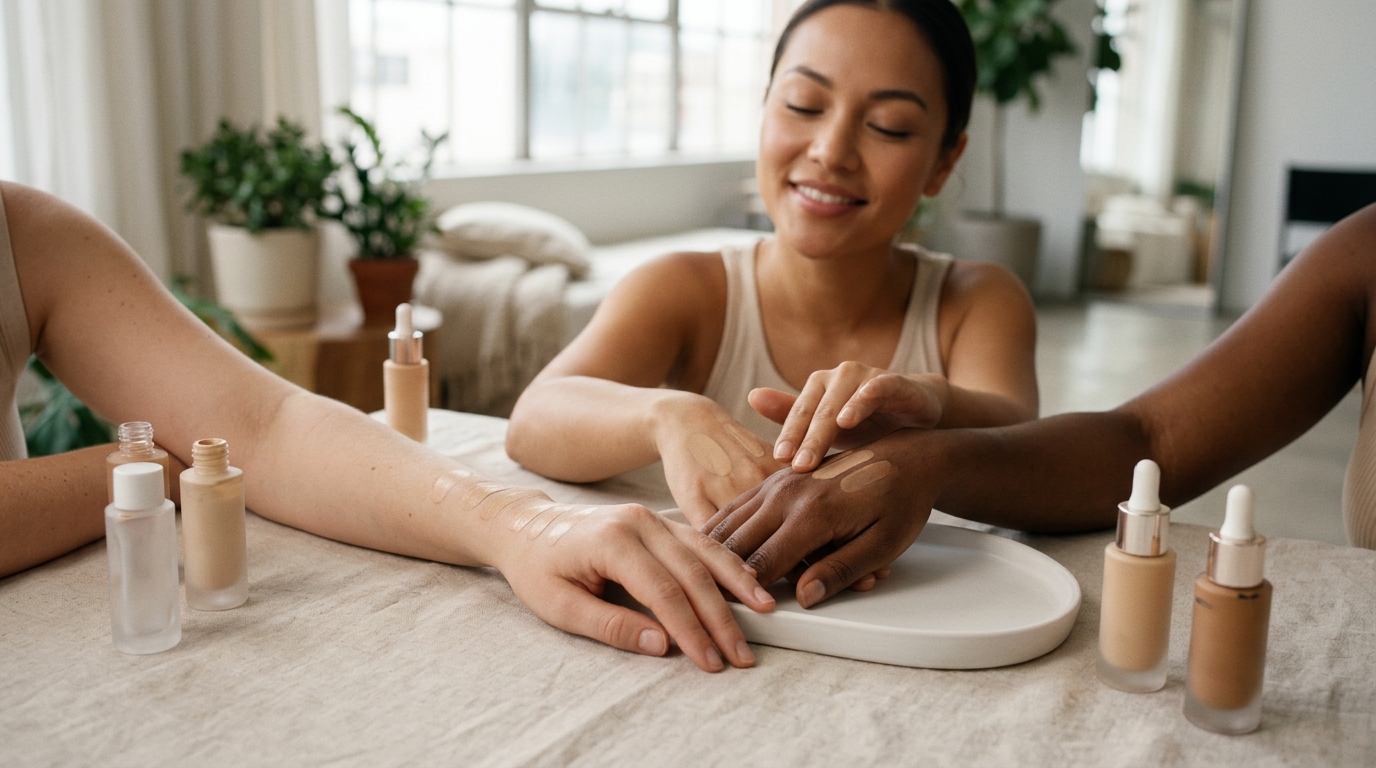
Finding a foundation that truly matches your skin tone is one of the most common makeup challenges. Between confusing shade names, misleading store lighting, and the frustrating trial-and-error of buying bottles that look nothing like your complexion at home, it is no wonder so many people give up and settle for "close enough." The good news? With a clear understanding of skin tone, undertone, and modern color-adapting technology, you can skip the guesswork entirely. This guide walks you through every step to land on your perfect match, whether you shop in-store or online.
1. Understand the Difference Between Skin Tone and Undertone
Skin tone is the surface color of your complexion, generally described as fair, light, medium, or deep. Undertone is the subtle hue beneath the surface of your skin that influences how any makeup shade appears once applied. According to L'Oreal Paris, undertones fall into three categories: cool (blue or pink hints), warm (golden or yellow hints), and neutral (a blend of both).
Getting both right is essential. A foundation that matches your surface tone but clashes with your undertone can look ashy, orange, or pink on the skin. That is why shade-matching experts always recommend identifying both before you shop.
2. Three Simple Tests to Identify Your Undertone
The Vein Test
Check the veins on the inside of your wrist in natural light. Blue or purple veins typically indicate cool undertones, green veins suggest warm undertones, and a mix of both points to a neutral undertone.
The Jewelry Test
Hold gold and silver jewelry next to your face. If gold flatters you more, you likely lean warm. If silver looks better, you are probably cool. If both work equally well, neutral is your match.
The White Paper Test
Hold a plain white sheet of paper next to your bare face. Your skin will appear slightly yellow or peachy (warm), pinkish or rosy (cool), or balanced with no obvious cast (neutral).
3. Determine Your Shade Depth
Once you know your undertone, narrow your options by shade depth. Most foundation lines organize shades from fair to deep. Look at your bare skin in natural daylight to determine where you fall on the spectrum.
| Shade Depth | Typical Characteristics | Common Undertones |
|---|---|---|
| Fair | Burns easily, minimal melanin | Cool, Neutral |
| Light | Burns before tanning, light peach or beige | Cool, Warm, Neutral |
| Medium | Tans gradually, olive or golden cast possible | Warm, Neutral, Olive |
| Deep | Rich melanin, rarely burns | Warm, Cool, Neutral |
Use this table as a starting point. Brands like Forever Bloom organize their Biomimic Foundation line into Light, Medium, and Deep Spectrums, each designed to adapt across multiple shades within its range.
4. Test Foundation the Right Way
Where you swatch matters more than you think. Avoid testing on the back of your hand because it is usually a different color than your face. Instead, apply a small amount along your jawline or chin and blend outward. The shade that seems to disappear into your skin is your best match.
Always Use Natural Light
Fluorescent store lighting distorts color. After swatching, step near a window or go outside to evaluate. A true match will look right in every lighting condition.
Wait Before Deciding
Liquid foundation can oxidize, meaning it darkens slightly as it dries and interacts with your skin's pH. Give a swatch at least 10 to 15 minutes before committing.
5. Avoid These Common Shade-Matching Mistakes
Ignoring your neck and chest. Your foundation should blend seamlessly from your face to your neckline. A visible line of demarcation at the jaw is one of the most obvious shade-matching errors.
Choosing based on trend, not match. Going lighter for a "brightening" effect or deeper for a "sun-kissed" look often backfires. Always aim for a shade that matches your natural skin first, then use bronzer or highlighter for effects.
Buying one shade year-round. Your skin tone shifts with the seasons. Many makeup artists recommend keeping two shades and blending them as needed throughout the year.
6. How Color-Adapting Foundations Eliminate Guesswork
A color-adapting foundation is a formula that uses pigment technology to adjust its shade to the wearer's individual skin tone after application. This category of product has grown rapidly because it solves the core problem: nobody's skin fits neatly into a single numbered shade.
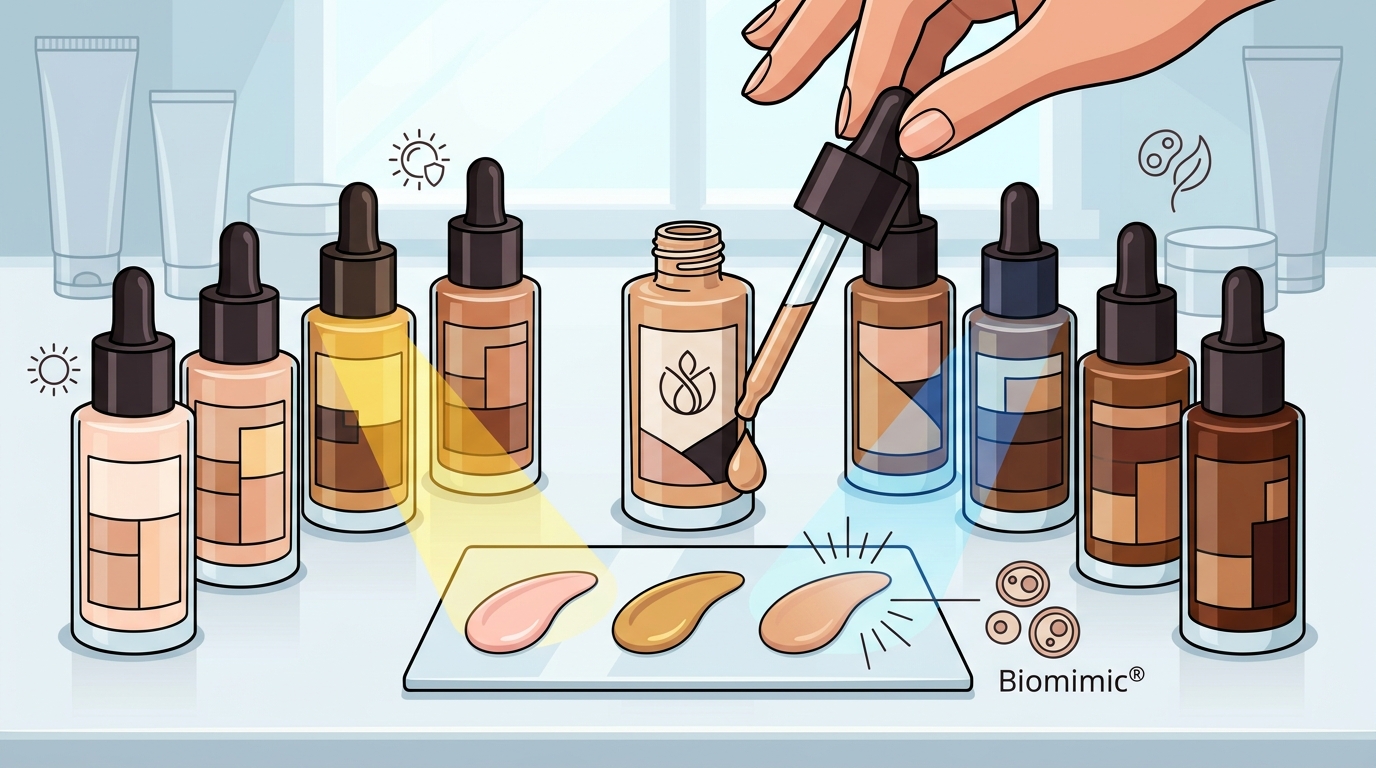
Forever Bloom's Biomimic Foundation is a standout example. It dispenses as a white formula, then uses nano-encapsulated pigments that read your skin's melanin levels and pH to transform into your exact shade within seconds. The result is a match that works across undertones, without needing to swatch or compare.
The foundation also packs broad-spectrum SPF 50 and anti-aging skincare ingredients into a single step, replacing primer, color corrector, sunscreen, and traditional foundation. For anyone tired of maintaining multiple shades or spending time on shade-matching trips, this technology is a practical shortcut.
Which Spectrum Should You Choose?
Forever Bloom offers three spectrum options to ensure the color-adapting range covers every complexion:
- Light Spectrum for fair to light skin tones
- Medium Spectrum for light-medium to medium-tan skin tones
- Deep Spectrum for medium-deep to rich skin tones
7. Adjusting for Seasonal Skin Tone Changes
Your complexion is not static. Summer sun exposure can darken your skin by one to two shade levels, while winter months often leave skin lighter and more neutral. Rather than buying multiple bottles, consider these strategies:
- Mix two shades. Keep a summer and winter shade and blend them during transitional months.
- Use a color-adapting formula. Products with biomimetic pigment technology adjust automatically, so one bottle tracks your skin through every season.
- Reassess undertone seasonally. A tan can shift your undertone slightly warmer, which may affect how your current shade reads.
Learn more about how Biomimic technology was developed to address exactly these shifting-tone challenges.
Key Takeaways
- Always identify both your skin tone (surface color depth) and undertone (cool, warm, or neutral) before shopping.
- Use the vein test, jewelry test, or white paper test to determine undertone quickly at home.
- Swatch foundation on your jawline or chin, never the back of your hand, and check the result in natural light.
- Wait 10 to 15 minutes after application to account for oxidation before committing to a shade.
- Seasonal skin changes mean you may need to adjust your shade two to four times per year, or use a color-adapting foundation.
- Color-adapting formulas like Forever Bloom's Biomimic Foundation use pigment technology to match your exact tone automatically.
- A perfect foundation match should be invisible at the jawline, blending seamlessly from face to neck.
Frequently Asked Questions
How do I know if my foundation matches my skin tone?
Apply foundation along your jawline and check in natural daylight. If the product disappears into your skin with no visible line between your face and neck, you have a match.
What is the easiest way to find my undertone?
Look at the veins on the inside of your wrist. Blue or purple veins suggest cool undertones, green veins indicate warm, and a blend of both means neutral.
Can one foundation shade work all year?
For most people, no. Skin tone shifts with sun exposure and season. A color-adapting foundation or two mixed shades can cover those changes without buying multiple bottles.
What is a color-adapting foundation?
A color-adapting foundation is a formula that adjusts its pigment to match your individual skin tone upon application, rather than relying on a fixed pre-set shade.
How does Forever Bloom's Biomimic Foundation match skin tone?
It dispenses white and uses nano-encapsulated pigments that react to your skin's melanin and pH. Within seconds, the formula transforms to your exact shade. It is available in Light, Medium, and Deep Spectrums.
Should I test foundation on my hand or face?
Always test on your face, ideally along the jawline or chin. The back of your hand is typically a different shade from your face and leads to inaccurate matches.
Does foundation oxidize, and how does that affect matching?
Yes, many liquid foundations oxidize and darken slightly after application due to air exposure and your skin's pH. Wait at least 10 to 15 minutes before deciding if a shade is right.
What if I have an olive undertone?
Olive is a combination of green and golden hues beneath the skin surface. Look for foundations labeled "olive" or "neutral-warm," or opt for a color-adapting formula that reads your unique undertone automatically.
Find Your Perfect Match Today
Stop guessing your shade. Shop Forever Bloom's Biomimic Foundation and let color-adapting technology do the matching for you. One bottle, every shade, all-day SPF 50 protection. Backed by a 100% satisfaction guarantee.