

The non-toxic skincare movement has reshaped how millions of people shop for beauty products. But as the market grows, so does the misinformation. Terms like "clean," "natural," and "non-toxic" are everywhere, yet most consumers do not fully understand what they mean or, more importantly, what they do not mean. If you have ever felt confused reading ingredient labels or wondered whether your favorite serum is truly safe, you are not alone. Below, we break down the seven most persistent misconceptions about non-toxic skincare and share practical tips so you can make smarter, science-backed choices for your skin.
Myth 1: "Natural" Always Means Safe
This is perhaps the most widespread misconception in clean beauty. Many shoppers assume that if an ingredient comes from a plant, it must be gentle on the skin. In reality, plenty of naturally occurring substances can trigger allergic reactions or irritation. As the Environmental Working Group (EWG) notes, some natural ingredients like certain essential oils are potent sensitizing allergens, and clays may be contaminated with toxic heavy metals.
The takeaway: origin does not determine safety. What matters is the formulation, concentration, and clinical testing behind each ingredient. Brands like Forever Bloom address this by conducting science-backed research through their BRITE labs, validating that every ingredient meets strict safety and efficacy standards before it reaches your skin.
Myth 2: Non-Toxic Products Are "Chemical-Free"
A chemical is any substance composed of atoms and molecules. Water is a chemical. Vitamin C is a chemical. The phrase "chemical-free" is scientifically impossible. This myth is fueled by fear-based marketing that equates complex-sounding ingredient names with danger.
The real question is not whether a product contains chemicals but whether those chemicals have been evaluated for safety at their intended concentration. Forever Bloom's de-aging collection uses rigorously tested compounds, including stabilized Vitamin C and peptide complexes, to deliver results without compromising safety.
Myth 3: Preservatives Have No Place in Clean Skincare
Preservatives are ingredients added to skincare products to prevent microbial growth and extend shelf life. Without them, your favorite cream could become a breeding ground for bacteria within days. The myth that all preservatives are harmful ignores the wide spectrum of safe, well-studied options available today.
Many non-toxic brands use naturally derived preservatives such as tocopherol (vitamin E) that provide antioxidant skin benefits alongside product stability. The key is distinguishing between problematic preservatives like certain parabens and safe alternatives. Check ingredient lists rather than rejecting preservatives as a category.
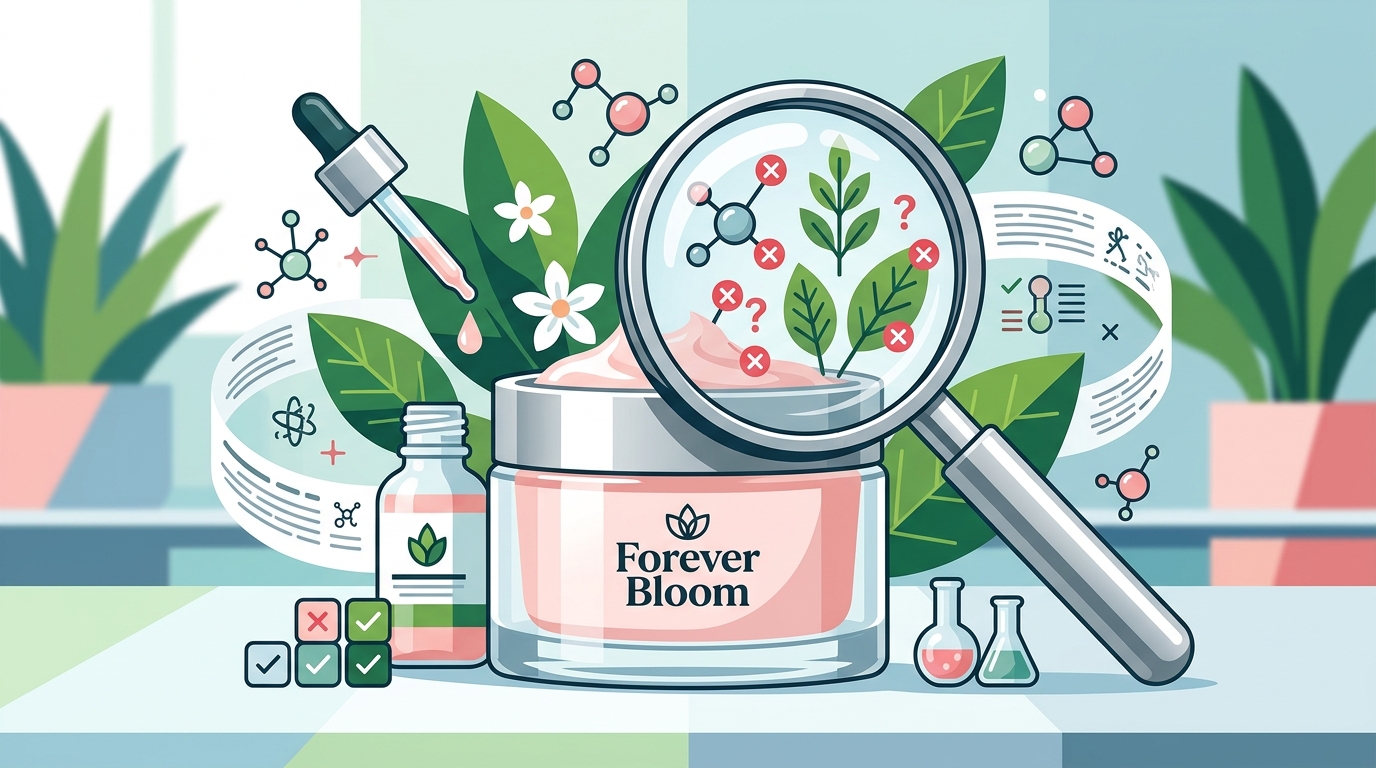
Myth 4: Non-Toxic Products Are Less Effective
There is a persistent belief that "gentle" means "weak." This is false. Modern formulation science allows brands to create powerful products without harsh additives. Forever Bloom's Biomimic Foundation, for example, delivers SPF 50 sun protection, color-matching technology, and anti-aging skincare benefits in a single non-toxic formula.
Comparing Traditional vs. Non-Toxic Formulations
| Factor | Traditional Skincare | Science-Backed Non-Toxic Skincare |
|---|---|---|
| Active Delivery | May rely on synthetic penetration enhancers | Uses biocompatible carriers (e.g., nano-encapsulation) |
| Preservative System | Parabens, formaldehyde releasers common | Tocopherol, phenoxyethanol at safe levels |
| SPF Options | Often chemical UV filters like oxybenzone | Mineral filters such as zinc oxide and titanium dioxide |
| Fragrance | Synthetic fragrance blends | Fragrance-free or essential-oil-based |
| Efficacy Testing | Varies widely | Increasing clinical validation by innovative brands |
Effectiveness depends on formulation expertise, not on whether a product contains synthetic chemicals. Browse Forever Bloom's full product line to see how non-toxic and effective coexist.
Myth 5: Clean Beauty Is Always Expensive
Price is driven by branding, packaging, and ingredient sourcing, not solely by whether a product is non-toxic. While some luxury clean brands command premium pricing, affordable options exist at every tier. Forever Bloom, for instance, offers its Biomimic Foundation with SPF 50 at $49.99, a competitive price point for a 4-in-1 product that replaces primer, foundation, sunscreen, and skincare serum.
When evaluating cost, consider value per use. A multifunctional product that eliminates three or four steps from your routine often saves money over time compared to buying each product separately.
Myth 6: "Non-Toxic" Is a Regulated Term
Greenwashing is the practice of making misleading claims about the environmental or health benefits of a product. It is rampant in the beauty industry. The FDA has no legal definition for "non-toxic," "clean," or "natural" in personal care. As the EWG explains, lax federal regulations mean these claims have no legal basis. This means any brand can print these words on a label without independent verification.
What to Look for Instead
Seek brands that publish full ingredient lists, invest in third-party testing, and maintain in-house research. Forever Bloom's research arm, Bloom Research Innovation and Technology Inc. (BRITE), develops every formula through peer-level scientific processes, offering transparency that goes beyond buzzwords.
Myth 7: Non-Toxic Automatically Means Cruelty-Free
Cruelty-free is a designation indicating that a product and its ingredients were not tested on animals. Many consumers conflate "non-toxic" with "cruelty-free," but the two labels address entirely different concerns. A product can be formulated without harmful chemicals yet still be tested on animals.
Always verify cruelty-free status through recognized certifications like Leaping Bunny. Forever Bloom, for the record, states that its products are vegan and cruelty-free, a commitment that goes hand in hand with its non-toxic philosophy.
How to Evaluate Non-Toxic Skincare the Right Way
Read Beyond the Front Label
Flip the product over and study the full ingredient list. Resources like the EWG's Skin Deep database can help you understand unfamiliar compounds and their safety profiles.
Patch Test Every New Product
Even genuinely non-toxic formulas can cause reactions in individuals with specific sensitivities. Apply a small amount to your inner wrist or behind your ear and wait 24 hours before full use.
Prioritize Transparent Brands
Choose companies that disclose sourcing, publish clinical data, or maintain their own research labs. Transparency is the strongest signal of genuine commitment to safety.
Key Takeaways
- "Natural" does not automatically equal "safe." Always check formulation and concentration.
- "Chemical-free" skincare is scientifically impossible; every product contains chemicals.
- Safe preservatives are essential to product stability and your health.
- Non-toxic products can match or exceed the efficacy of conventional formulas when backed by rigorous science.
- Clean beauty spans every price point; multifunctional products often deliver the best value.
- Terms like "non-toxic" and "clean" are not regulated by the FDA, so independent research matters.
- Non-toxic and cruelty-free are separate designations; verify each independently.
Frequently Asked Questions
What does "non-toxic" actually mean in skincare?
Non-toxic skincare refers to products formulated without ingredients shown to cause adverse health effects at their intended use levels. However, the term has no legal definition in the U.S., so consumers should look beyond labels and examine ingredient lists.
Is natural skincare safer than synthetic skincare?
Not necessarily. Safety depends on the specific ingredient, its concentration, and how it interacts with your skin. Some synthetic ingredients are engineered to be safer and more stable than their natural counterparts.
Do non-toxic products work as well as conventional ones?
Yes, when formulated correctly. Advances in biotechnology, such as Forever Bloom's Biomimic technology, allow non-toxic products to deliver clinical-grade results including SPF protection, anti-aging benefits, and color correction.
How can I tell if a brand is greenwashing?
Watch for vague claims like "all-natural" or "pure" without supporting evidence. Trustworthy brands publish full ingredient lists, cite clinical studies, and often invest in their own research, like Forever Bloom's BRITE laboratory.
Are preservatives in non-toxic skincare safe?
Many preservatives used in non-toxic skincare, such as tocopherol and phenoxyethanol at regulated levels, have strong safety profiles. Without preservatives, products can harbor harmful bacteria, creating a greater health risk than the preservative itself.
Does the FDA regulate "clean beauty" claims?
No. The FDA does not define or regulate terms like "clean," "non-toxic," or "natural" in cosmetics. Third-party certifications and transparent ingredient disclosure are the most reliable indicators of product safety.
Is non-toxic skincare the same as cruelty-free skincare?
No. Non-toxic refers to ingredient safety, while cruelty-free indicates no animal testing was involved. A product can be one without being the other. Always check for recognized certifications like Leaping Bunny.
What should I look for on a skincare ingredient label?
Focus on the active ingredients and their concentrations. Avoid products with long lists of undisclosed fragrance components. Use databases like EWG Skin Deep to research unfamiliar ingredients.
Start Your Non-Toxic Skincare Journey
Understanding these misconceptions is the first step toward building a routine that is both safe and effective. If you are ready to experience science-backed, non-toxic skincare powered by Biomimic technology, explore the full Forever Bloom collection and discover products designed to work with your skin's natural biology, not against it.