
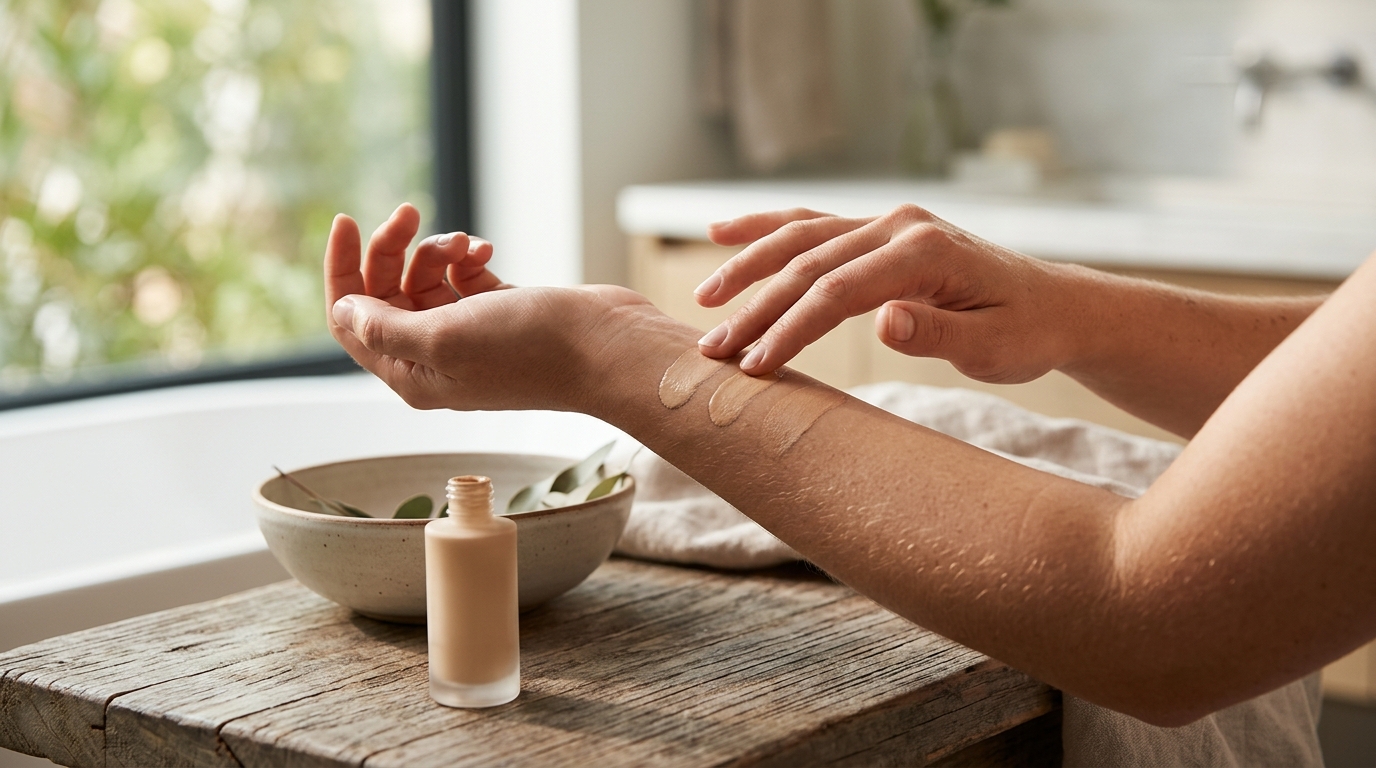
Finding a foundation that truly matches your skin tone is one of the most common struggles in beauty. Between warm, cool, and neutral undertones, seasonal shifts in complexion, and hundreds of shade ranges across brands, the process can feel overwhelming. The good news? It does not have to be. With a few proven techniques and the right product technology, you can land on a flawless match without buying and returning dozens of bottles. This guide walks you through every step, from identifying your undertone to testing shades correctly, and introduces color-adapting technology that is changing the game entirely.
1. Understand the Difference Between Skin Tone and Undertone
Skin tone is the overall color depth of your complexion, typically categorized as fair, light, medium, or deep. Undertone is the subtle hue beneath the surface of your skin that influences how any foundation shade looks once applied. Many people confuse the two, but getting both right is critical for a seamless match.
As beauty experts at Patrick Ta Beauty note, neglecting undertones is one of the most common foundation mistakes. A shade that matches your depth but clashes with your undertone will appear orange, ashy, or pink on the skin.
2. Identify Your Undertone With Simple At-Home Tests
Undertones fall into three main categories: cool (blue or pink hues), warm (yellow or golden hues), and neutral (a balanced mix). Here are quick ways to figure out which camp you fall into:
The Vein Test
Check the inside of your wrist in natural light. Blue or purple veins suggest cool undertones, while green veins point to warm. If you see a blend of both, you are likely neutral.
The Jewelry Test
People who look best in silver jewelry tend to be cool-toned, while gold jewelry flatters warm-toned skin. If both metals suit you equally, neutral is your match.
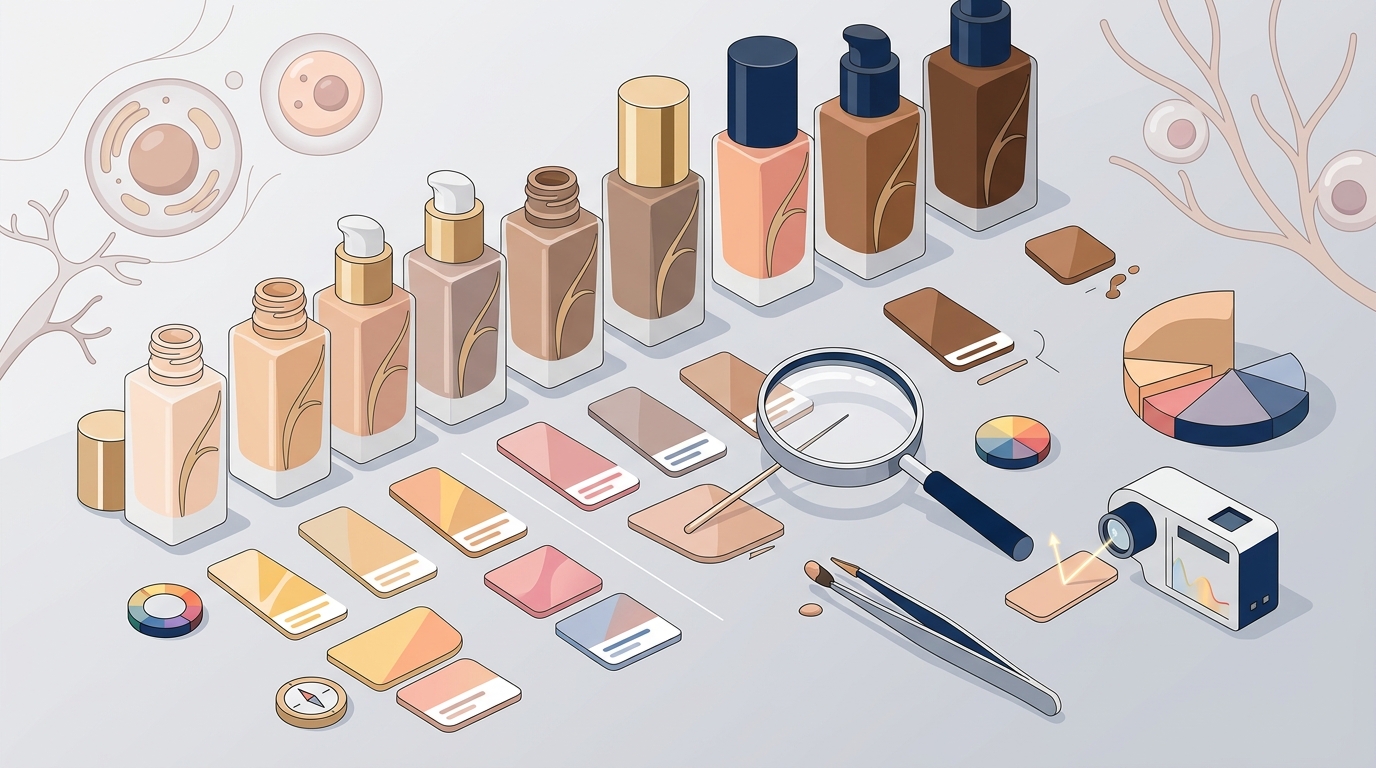
The White Paper Test
Hold a plain white sheet of paper next to your bare face. If your skin appears yellowish or peachy against the paper, you lean warm. If it looks pink or rosy, you lean cool.
3. Swatch and Test Foundation the Right Way
Testing on bare, clean skin is non-negotiable. Apply test swatches on your jawline or the center of your face, not the back of your hand, since your hands are often a different shade than your face.
Select three shades that look close to your complexion and apply them in parallel stripes. The shade that virtually disappears into your skin is your match. Always evaluate the swatches in natural daylight, as store lighting can distort color. Wear the test shade for several hours before committing, since some formulas oxidize and shift darker throughout the day.
4. Account for Seasonal Skin Tone Changes
Your skin tone is not static. Increased sun exposure in summer can darken your complexion, while winter months often bring a lighter, more neutral tone. Your undertone stays the same, but the depth of your ideal shade will shift. This is why many people keep two or three foundation bottles on rotation throughout the year.
This seasonal guessing game is one of the biggest pain points in traditional shade matching. It means extra cost, extra clutter, and a higher chance of wearing the wrong shade on any given day.
5. How Color-Adapting Foundation Technology Works
Color-adapting foundation is a category of makeup that uses intelligent pigment technology to read your skin and adjust its shade in real time. Rather than picking from a fixed roster of 30 or 40 shades, you apply a single formula that transforms to match your unique complexion.
Forever Bloom's Biomimic Foundation Medium Spectrum is a leading example of this approach. The formula dispenses white and then adapts within seconds to blend with your natural melanin levels and pH. It uses nano-encapsulated pigments that slowly release to match the biological surface of your skin, as explained in a MITH Magazine feature on Forever Bloom.
The brand offers three spectrum ranges, Light Spectrum, Medium Spectrum, and Dark Spectrum, each adapting across 15+ shades within its range. That means one bottle can replace multiple traditional foundations and even adjust as your skin tone shifts between seasons. Plus, the formula doubles as SPF 50 sun protection and delivers anti-aging skincare benefits, effectively replacing four products in one step.
6. Traditional Shade Matching vs. Color-Adapting Foundation
The table below highlights the key differences between the conventional approach and color-adapting technology:
| Factor | Traditional Foundation | Color-Adapting Foundation |
|---|---|---|
| Shade selection | Choose from 20-60 fixed shades | One formula adapts to your tone |
| Undertone matching | Must identify and match manually | Reads undertone automatically |
| Seasonal changes | May need 2-3 bottles per year | Single bottle adjusts year-round |
| Oxidation risk | Common with many formulas | Designed to resist oxidation |
| SPF protection | Rarely included at SPF 50 | Built-in broad-spectrum SPF 50 |
| Application time | Primer + corrector + foundation layers | One product, about 30 seconds |
| Skincare benefits | Minimal in most formulas | Anti-aging and hydrating actives |
For anyone tired of shade-matching disasters, color-adapting formulas like the Forever Bloom Biomimic line offer a genuinely simpler path to a flawless, natural finish.
7. Key Takeaways
- Always identify both your skin tone depth and undertone before shopping for foundation.
- Use the vein test, jewelry test, or white paper test to determine whether you are cool, warm, or neutral.
- Swatch foundation on your jawline or face in natural daylight, never under store fluorescents alone.
- Your skin tone shifts with the seasons, which often requires multiple traditional foundation shades.
- Color-adapting foundations use intelligent pigments to match your skin in real time, eliminating guesswork.
- Forever Bloom's Biomimic Foundation adapts across 15+ shades per spectrum and includes SPF 50 plus anti-aging benefits.
- Choosing a foundation that also protects and nourishes your skin simplifies your entire routine.
8. Frequently Asked Questions
What is the easiest way to find my foundation shade at home?
Start by identifying your undertone with the vein test (check wrist veins in natural light). Then swatch two to three shades along your jawline, choosing the one that disappears into your skin. Alternatively, a color-adapting foundation like Forever Bloom Biomimic Foundation removes the guesswork entirely by adjusting to your tone automatically.
What is an undertone in skin?
An undertone is the subtle color beneath the surface of your skin that affects how makeup appears. The three categories are cool (pink or blue hues), warm (yellow or golden hues), and neutral (a balanced combination of both).
How do I know if my foundation has oxidized?
Oxidation is the process in which a foundation darkens or turns orange after exposure to air and your skin's oils. If your makeup looks noticeably darker two hours after application than it did at first, it has oxidized. Look for formulas specifically designed to resist oxidation.
Do I need different foundation shades for summer and winter?
With traditional foundations, yes. Sun exposure darkens your complexion in warmer months, and reduced UV in winter lightens it. Color-adapting foundations solve this by re-reading your skin tone with every application, so one bottle works year-round.
What is a color-adapting foundation?
A color-adapting foundation is a formula that uses micro-encapsulated or biomimetic pigments to analyze your skin's melanin and pH, then shifts its color to match your unique complexion within seconds of application.
Is SPF in foundation enough to protect my skin?
A foundation with broad-spectrum SPF 50, as recommended by dermatologists, provides meaningful daily protection when applied generously. For extended outdoor exposure, layering a dedicated sunscreen underneath is still advised.
Can one foundation really work for all skin types?
Formulas vary, but non-comedogenic, fragrance-free foundations with hydrating actives can suit oily, dry, combination, and sensitive skin. Forever Bloom's Biomimic Foundation is dermatologist-tested and designed for all skin types, including mature and sensitive skin.
Where can I explore the full Forever Bloom skincare and foundation range?
Visit the Forever Bloom All Products page to browse foundations, serums, creams, and skincare bundles.
Find Your Perfect Match in Seconds
Stop guessing and start glowing. Try the Forever Bloom Biomimic Foundation, a single bottle that adapts to your exact skin tone while delivering SPF 50 protection and anti-aging skincare. Backed by a 100% satisfaction guarantee.