

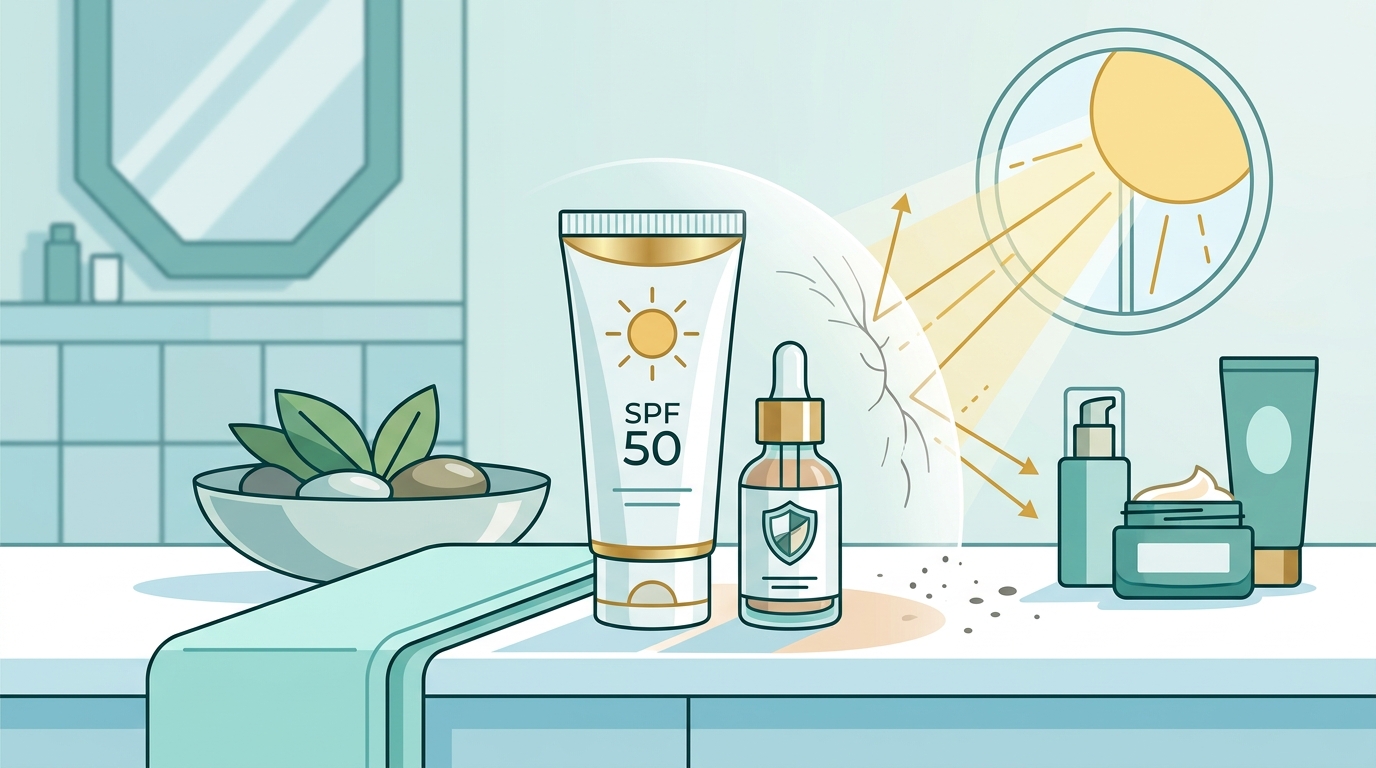
Daily sunscreen is the single most effective tool for preventing photoaging and maintaining a youthful glow. By blocking UV radiation, it stops the breakdown of collagen and elastin that causes wrinkles and dark spots. For beginners, this simple habit provides the strongest foundation for long-term skin health. Forever Bloom emphasizes this principle in its approach to cellular skincare, ensuring that protection is the first step in any routine.
The Science of Photoaging and UV Damage
Photoaging is the premature aging of skin caused by exposure to ultraviolet radiation. It accounts for the majority of visible skin aging, including fine lines, loss of elasticity, and uneven pigmentation. UVB rays cause sunburn, while UVA rays penetrate deeper to damage DNA and degrade structural proteins. This damage accumulates over time, leading to a dull and textured complexion.
Research confirms that daily photoprotection plays a critical role in preventing these changes. A study published in the National Center for Biotechnology Information found significant histological differences in solar elastosis between patients who used sunscreen daily and those who did not. After 24 months, the group using sunscreen showed markedly less damage to the skin's elastic fibers. This evidence underscores that prevention is far more effective than reversal.
For a beginner, understanding this mechanism is key. You are not just preventing a tan; you are protecting the structural integrity of your skin. By blocking UVA and UVB, you preserve the collagen that keeps skin plump and firm. This is why dermatologists often cite sunscreen as the most important anti-aging product.
Understanding SPF Ratings and Broad Spectrum Protection
Sun Protection Factor, or SPF, is a measure of how well a sunscreen protects skin from UVB rays. An SPF 30 blocks approximately 97% of UVB radiation, while SPF 50 blocks about 98%. However, no sunscreen blocks 100% of UV rays, which is why consistent application is vital. Beginners often make the mistake of applying too little product, which drastically reduces the actual protection level.
Broad spectrum protection is another critical definition. Broad spectrum sunscreen is a product that protects against both UVA and UVB rays. UVA rays are present year-round and penetrate glass, making them a constant threat to your skin's collagen. If a product only lists an SPF number without the broad spectrum label, it may not protect against the deeper aging effects of UVA. Always look for this designation on your label.
When selecting a product, consider your skin type and daily activities. For those who spend time outdoors, a higher SPF and water-resistant formula may be necessary. For indoor workers, a lightweight, broad spectrum SPF 30 or higher is sufficient. The goal is to find a product you enjoy wearing every day, as consistency matters more than the specific number on the bottle.
Integrating Sunscreen into a Beginner Routine
Integrating sunscreen into your morning routine is straightforward but requires discipline. It should be the final step of your skincare regimen, applied after moisturizer and before makeup. This ensures the active ingredients form a protective film on the skin's surface. If you wear makeup, you can apply sunscreen underneath or choose a tinted option that combines coverage with protection.
Reapplication is often overlooked but is essential for sustained protection. If you are outdoors for extended periods, reapply every two hours. For indoor use, morning application is generally sufficient unless you are near windows for long periods. Setting a reminder on your phone can help build this habit. Over time, daily application becomes as automatic as brushing your teeth, ensuring your skin remains protected against cumulative UV damage.
Common Mistakes That Undermine Sunscreen Efficacy
One of the most common mistakes is applying insufficient product. The recommended amount for the face and neck is approximately one teaspoon. Using less than this can reduce the SPF by half or more. Beginners often use a thin layer because they dislike the feel of sunscreen, but this compromises protection. Measure your product to ensure you are getting the full benefit of the label claim.
Another error is skipping sunscreen on cloudy days. UVA rays penetrate clouds and can cause damage even when the sun is not visible. This misconception leads to inconsistent protection, allowing cumulative damage to occur. Weather does not dictate the need for UV protection; the presence of UVA radiation does. Make sunscreen a non-negotiable part of your morning routine, regardless of the forecast.
Finally, relying solely on makeup with SPF is a risky strategy. Most people do not apply enough makeup to achieve the labeled SPF. If you use a tinted product, ensure you are applying a generous amount or layer it over a dedicated sunscreen. This layering approach provides a safety net, ensuring that your skin receives the full level of protection it needs to maintain a youthful appearance.
Key Takeaways
- Daily sunscreen use is the most effective method for preventing photoaging and maintaining skin elasticity.
- Broad spectrum protection is essential to block both UVA and UVB rays, which cause different types of damage.
- SPF 30 blocks 97% of UVB rays, but consistent and adequate application is more important than the number alone.
- Apply sunscreen as the last step of your morning skincare routine, after moisturizer and before makeup.
- Use approximately one teaspoon of product for the face and neck to achieve the labeled SPF protection.
- Reapply every two hours if you are outdoors, and do not skip application on cloudy days.
- Consider dual-function products like tinted serums to simplify your routine while ensuring daily protection.
Frequently Asked Questions
Do I need sunscreen if I stay indoors all day?
Yes, you still need sunscreen. UVA rays penetrate windows and clouds, causing cumulative damage to collagen and elastin. Even if you do not go outside, exposure to indoor lighting and window light can contribute to photoaging. Daily application ensures your skin is protected against these less visible threats.
What is the difference between UVA and UVB rays?
UVB rays are the primary cause of sunburn and are most intense during midday. UVA rays are present year-round and penetrate deeper into the skin, causing aging and DNA damage. Broad spectrum sunscreens protect against both types, which is crucial for preventing premature aging.
How much sunscreen should I apply to my face?
You should apply approximately one teaspoon of sunscreen to your face and neck. Using less than this amount significantly reduces the level of protection you receive. Many people under-apply, so using a measured amount ensures you get the full benefit of the product's SPF rating.
Can I use makeup with SPF instead of a dedicated sunscreen?
You can, but you must apply a generous amount to achieve the labeled SPF. Most people do not apply enough makeup to get full protection. For optimal results, layer a dedicated sunscreen under your makeup or use a tinted product that you apply in a thick enough layer to provide adequate coverage.
How often should I reapply sunscreen?
If you are outdoors, reapply every two hours, or more frequently if you are swimming or sweating. For indoor use, morning application is usually sufficient. Reapplication ensures that the protective film remains intact and effective throughout the day.
Does sunscreen prevent wrinkles?
Yes, sunscreen is the most effective product for preventing wrinkles caused by sun exposure. By blocking UV radiation, it prevents the breakdown of collagen and elastin that leads to fine lines and sagging. Consistent daily use can significantly slow the visible signs of aging.