

Choosing the right skincare serum can feel overwhelming when you are faced with dozens of active ingredients on every label. The truth is that a great serum does not need 30 actives; it needs the right ones delivered in the right way. Whether your goal is hydration, firmness, brightening, or all three, understanding what each ingredient does at the cellular level puts you in control. In this guide we break down the most effective serum ingredients backed by science, explain how they work together, and show you what to look for on the label so every drop counts.
Hyaluronic Acid: The Hydration Powerhouse
Hyaluronic acid (HA) is a naturally occurring glycosaminoglycan that can hold up to 1,000 times its weight in water, making it one of the most effective humectants in skincare. It draws moisture from the environment into the skin, plumping fine lines and leaving the surface dewy.
In 2026, advanced formulations now use multi-weight HA molecules for deeper penetration and longer-lasting hydration. Layering HA with complementary humectants like glycerin and ceramides can amplify its effects. Products like the Biomimic Lifting Serum leverage hyaluronic acid alongside extracellular matrix components to deliver both surface hydration and structural support.
Peptides: Cellular Messengers for Firmness
Peptides are short chains of amino acids that act as signaling molecules, telling your skin to produce more collagen and elastin. They are among the most effective anti-aging ingredients available today because they work at the cellular communication level rather than just the surface.
However, concentration matters. Peptides must be present at clinically effective levels to deliver visible results; many brands include only trace amounts for label appeal. Forever Bloom's Amino-Peptide Youth Recovery Complex combines four advanced amino acids with plant-derived neuropeptides to target expression lines on the forehead and around the eyes.
Types of Peptides Worth Knowing
Signal peptides stimulate collagen synthesis. Carrier peptides deliver trace minerals to the skin. Neurotransmitter-inhibiting peptides relax facial muscles, mimicking a mild botox-like effect. Look for products that blend multiple peptide types for a multi-pathway approach.
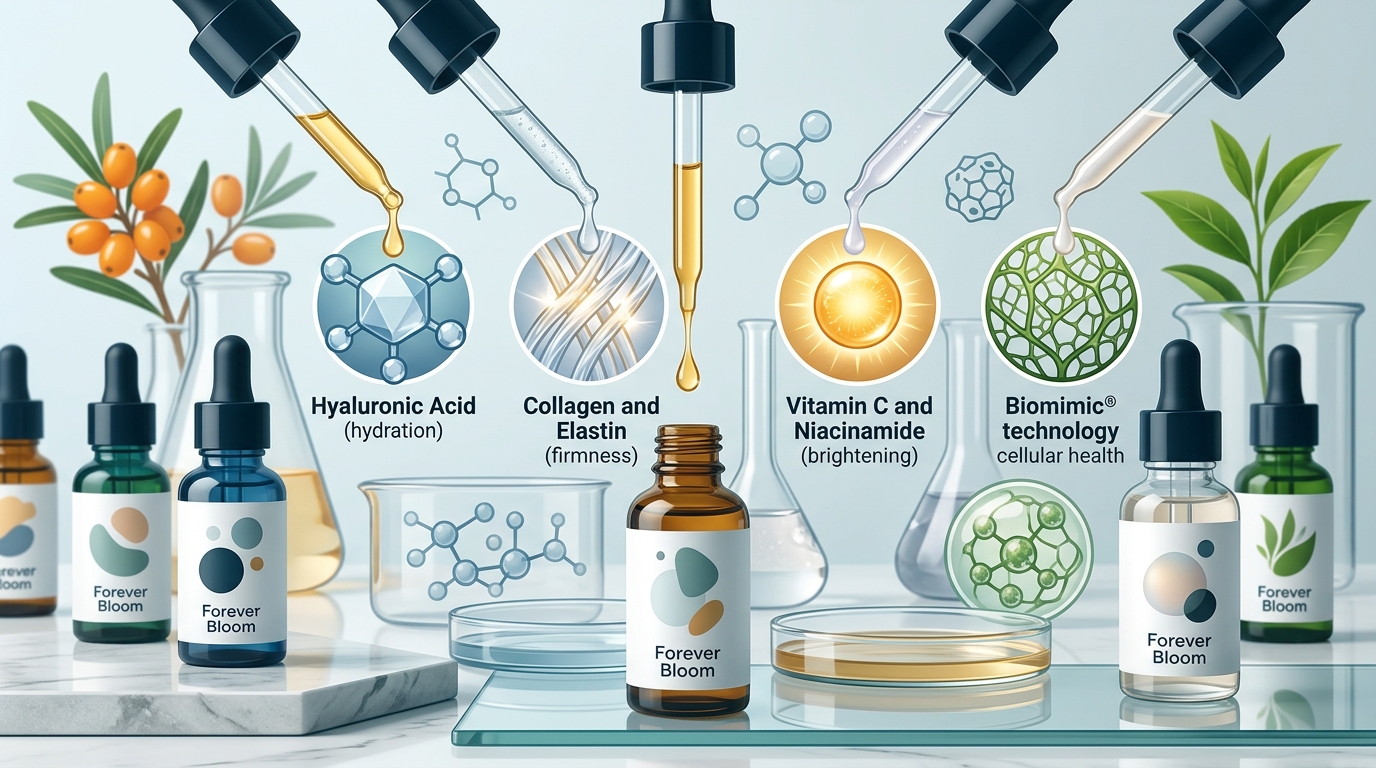
Vitamin C: Brightening and Antioxidant Defense
Vitamin C is a potent antioxidant that neutralizes free radicals from UV exposure and pollution. It also inhibits melanin production, which helps lighten hyperpigmentation, dark spots, and melasma over time. Beyond brightening, vitamin C supports collagen synthesis and strengthens the skin barrier.
L-ascorbic acid is the most researched form, though it can be unstable. Modern serums pair it with stabilizing agents like vitamin E and ferulic acid. Forever Bloom's Vitamin C Bloom Cream blends vitamin C with aloe vera, grape seed extract, and hyaluronic acid for a formula that brightens while deeply hydrating dry skin.
Niacinamide: The Multi-Tasking B Vitamin
Niacinamide is a form of vitamin B3 that improves barrier function, reduces redness, minimizes pore appearance, and regulates oil production. It is one of the most versatile serum actives because it pairs well with nearly every other ingredient without causing irritation.
Top-rated serums in 2026 frequently combine niacinamide with hyaluronic acid for a hydration-plus-barrier-repair approach. If you are building a complete regimen, pairing a niacinamide serum in the morning with a restorative night treatment like the Nourishing Night Glow Cream can maximize overnight repair.
Biomimetic Ingredients: The Future of Serums
Biomimetic technology is a formulation approach that mimics the skin's own biological processes to trigger healing, protection, and regeneration from within. Rather than forcing change on the skin, biomimetic serums communicate with cells using the same signaling language your body already speaks.
Forever Bloom's proprietary Biomimic technology is built on this principle. The Biomimic Lifting Serum uses biodesigned signaling domains that stimulate core extracellular matrix components, including collagen types I and III, hyaluronic acid, fibronectin, and elastin. It also incorporates extracts from resilient plants like the resurrection plant and Arctic berries for antioxidant protection against environmental stress.
Why Biomimetic Delivery Matters
Even the best active ingredients are only as effective as their delivery system. Advanced encapsulation and biomimetic carriers help larger molecules interact meaningfully with the skin, improving penetration beyond the surface. This is especially important for peptides, growth factors, and the newer PDRN-based actives entering the market.
Emerging Ingredients to Watch in 2026
The serum landscape is evolving rapidly. Several next-generation actives are gaining scientific momentum this year.
Exosomes
Exosomes are tiny extracellular vesicles responsible for cell communication and regeneration. Searches for exosomes in skincare have risen 81 percent in recent months. They are primarily found in high-end serums designed to improve texture, boost collagen production, and accelerate healing.
Ectoin
Ectoin is a natural stress-protection molecule originally found in extremophile bacteria. It acts as a moisture-locking agent that strengthens the skin barrier and protects against environmental aggressors. Searches for ectoin skincare are up 86 percent year-over-year.
Postbiotics
Postbiotics are the bioactive byproducts created when beneficial bacteria break down nutrients. Unlike live probiotics, postbiotics are stable, easy to formulate, and effective at calming inflammation and strengthening barrier function. They are especially useful for sensitive and acne-prone skin.
Ingredient Comparison Table
| Ingredient | Primary Benefit | Best For | Pairs Well With |
|---|---|---|---|
| Hyaluronic Acid | Deep hydration | All skin types, especially dry | Ceramides, peptides, niacinamide |
| Peptides | Collagen stimulation and firmness | Aging and mature skin | Hyaluronic acid, vitamin C |
| Vitamin C | Brightening and antioxidant defense | Dull, uneven, sun-damaged skin | Vitamin E, ferulic acid |
| Niacinamide | Barrier repair and pore refinement | Oily, combination, sensitive skin | Hyaluronic acid, zinc |
| Biomimetic Peptides | Cellular signaling and regeneration | All skin types seeking anti-aging | Antioxidants, HA |
| Exosomes | Cell communication and repair | Post-procedure and aging skin | Growth factors, peptides |
| Ectoin | Barrier protection | Stressed, sensitive skin | Ceramides, postbiotics |
Key Takeaways
- Hyaluronic acid remains the gold standard humectant; multi-weight formulas offer the deepest hydration.
- Peptides must be dosed at clinically effective levels to truly stimulate collagen and elastin.
- Vitamin C brightens, fights free radicals, and supports collagen, but stability of the formula matters.
- Niacinamide is the most versatile serum active, pairing safely with almost every other ingredient.
- Biomimetic technology, like Forever Bloom's Biomimic platform, works by communicating with skin cells using natural signaling pathways.
- Emerging ingredients such as exosomes, ectoin, and postbiotics are gaining real scientific traction in 2026.
- Delivery systems are just as important as the actives themselves; look for advanced encapsulation and biomimetic carriers.
Frequently Asked Questions
What is the most important ingredient in a skincare serum?
There is no single "most important" ingredient because it depends on your skin concern. However, hyaluronic acid is widely considered essential across all skin types for its unmatched hydration capacity. Pairing it with targeted actives like peptides or vitamin C amplifies results.
Can I use multiple serums at the same time?
Yes. Many actives complement each other. For example, niacinamide and hyaluronic acid layer beautifully. Apply thinnest textures first, allow each to absorb, and finish with a moisturizer to seal everything in.
What are biomimetic ingredients in skincare?
Biomimetic ingredients are compounds engineered to mimic the skin's own biological processes. They use signaling domains that communicate with skin cells to trigger natural repair, collagen production, and barrier strengthening, rather than forcing change from the outside.
How long does it take for serum ingredients to show results?
Most actives require four to eight weeks of consistent use. Hyaluronic acid can show immediate plumping, while peptides and vitamin C typically need a full skin cycle (about 28 days) before visible improvement in firmness or tone.
Are natural ingredients better than synthetic ones?
Not necessarily. Effectiveness depends on formulation, concentration, and delivery. Some of the most powerful serums combine nature-derived extracts with biodesigned actives. Forever Bloom, for instance, blends plant-based antioxidants from Arctic berries with lab-engineered biomimetic peptides.
What does SPF in a serum foundation do for skin health?
Daily sunscreen remains one of the most effective anti-aging strategies available. A serum foundation with built-in SPF 50, like the Biomimic Foundation, protects against UV-driven collagen breakdown while providing lightweight coverage.
Should I apply serum before or after moisturizer?
Always apply serum before moisturizer. Serums have smaller molecules that penetrate deeper, so they should go on clean skin first. Follow with a cream or moisturizer to lock in the actives and add an occlusive barrier.
Find Your Perfect Serum
Ready to experience the difference biomimetic science makes? Explore the full Forever Bloom collection and discover serums, creams, and foundations formulated to work with your skin's own biology. Start with the Biomimic Lifting Serum and see visible results in as little as four weeks.