

Finding a foundation that truly matches your skin tone is one of the most common beauty challenges. Between confusing shade names, inconsistent labeling across brands, and the frustration of a shade that looked perfect in the store but turned orange by noon, it is no wonder so many women have a drawer full of mismatched bottles. The good news? Once you understand a few key concepts, like undertone, surface tone, and how to swatch correctly, you can find your perfect match with confidence. This guide walks you through every step, from identifying your undertone at home to choosing a formula that works with your skin type and lifestyle.
Undertone vs. Surface Tone: Know the Difference
Surface tone is the overall color depth of your complexion, typically described as fair, light, medium, or deep. Undertone is the subtle hue beneath the surface of your skin that affects your overall appearance. Even the fairest skin can have warm undertones, and darker skin can have cool ones.
Undertones are classified into three main categories: warm, cool, and neutral. Warm undertones have a golden or peachy hue. Cool undertones lean pink or blue. Neutral undertones are a balanced mix of both. Knowing your undertone is the single most important step when selecting a foundation shade.
How to Determine Your Undertone at Home
You do not need a professional consultation to figure out your undertone. Try these quick at-home tests to narrow it down.
The Vein Test
Check the inside of your wrist in natural light. If your veins appear blue or purple, you likely have cool undertones. If they look green, you lean warm. A mix of both suggests a neutral undertone.
The Jewelry Test
Think about which metal flatters your skin more. If gold flatters your skin, that points to warm undertones; silver points to cool; and both working easily points to neutral.
The White Paper Test
Hold a white sheet of paper next to your bare face. If your skin casts a yellowish glow, you are warm. A pinkish or bluish cast means cool. If you see neither strongly, you are likely neutral.
How to Swatch Foundation Correctly
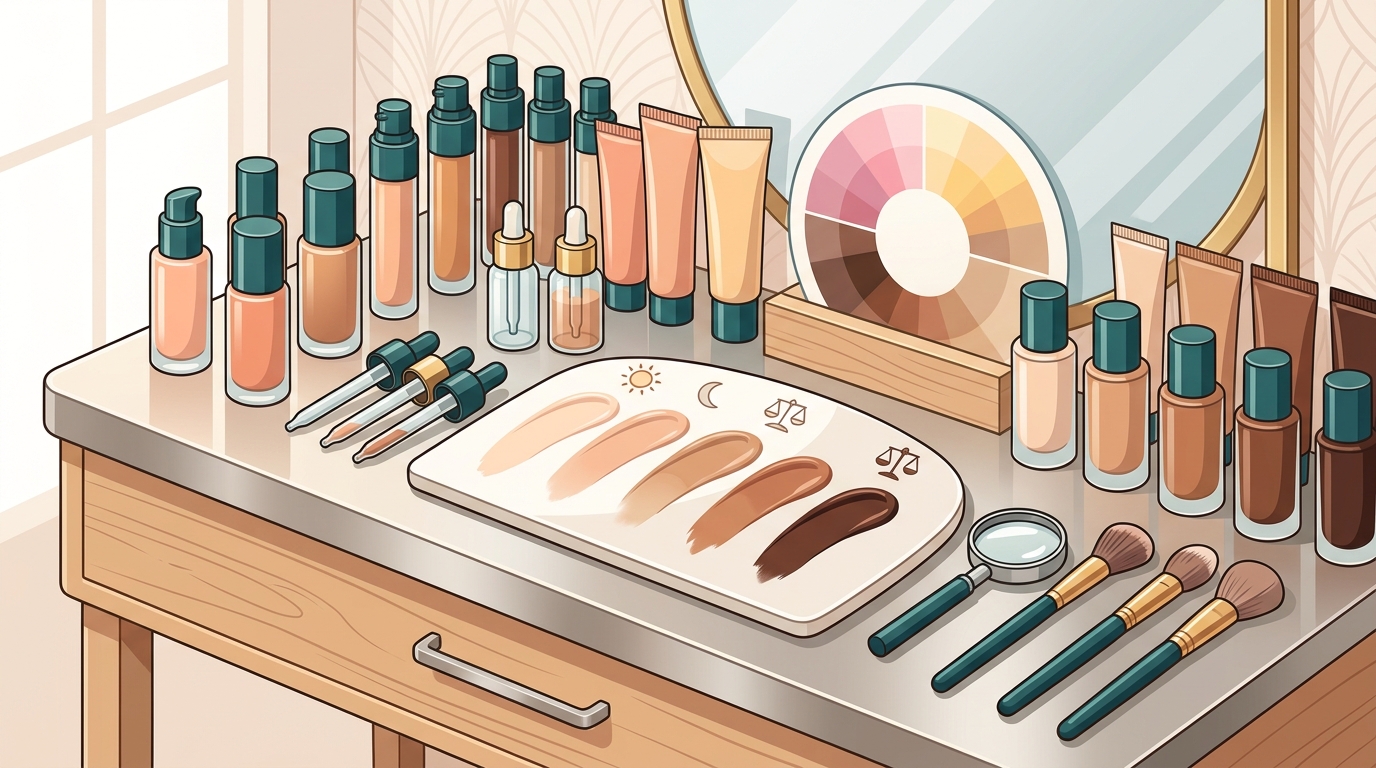
Where you test foundation matters more than you might think. Always swatch along your jawline, not on your hand or wrist. The jawline is where face meets neck, so a match there ensures a seamless blend with no visible line of demarcation.
Apply two or three shades side by side and step into natural daylight. The shade that virtually disappears into your skin is your match. Avoid testing on areas with redness or hyperpigmentation, as those do not reflect your true base tone.
Understanding Shade Ranges and Labels
Foundation shade naming is notoriously inconsistent. A "medium neutral" at one brand may read completely differently at another. The table below provides a general guide to common undertone labels and what they mean.
| Undertone | Common Label Cues | Best Foundation Base | Jewelry Preference |
|---|---|---|---|
| Warm | Golden, Honey, Peach, W | Yellow or golden base | Gold |
| Cool | Rose, Porcelain, Pink, C | Pink or blue base | Silver |
| Neutral | Buff, Sand, Nude, N | Balanced, neither too yellow nor pink | Both gold and silver |
| Olive | Olive, Green-gray cast | Slight golden or olive-toned base | Gold or rose gold |
When in doubt, start with a neutral shade and adjust from there. Some people find that mixing two shades gives them the best custom match.
Color-Adapting Foundations: A Modern Solution
If shade matching feels overwhelming, color-adapting technology is changing the game. Forever Bloom's Biomimic Foundation is a breakthrough color-adapting foundation that starts as a white formula, then transforms to match your exact skin tone. The brand's patented biomimetic technology uses intelligent pigments that read your skin's undertones in real time, analyzing melanin levels and pH to create a personalized shade within 30 seconds.
This approach eliminates the guesswork entirely. The Forever Bloom foundation line comes in Light, Medium, and Deep Spectrums, each adapting across 15+ shade variations. It is especially useful for people with olive undertones, neutral skin, or anyone who struggles with traditional shade matching. Plus, the formula includes SPF 50, anti-aging ingredients, and a non-comedogenic composition, making it a true 4-in-1 product.
Matching Your Skin Type to the Right Formula
Your skin type plays a role in how foundation looks and wears throughout the day. Oily skin benefits from matte or long-wear formulas that resist shine. Dry or mature skin needs hydrating foundations that will not settle into fine lines. Sensitive or acne-prone skin should look for non-comedogenic, fragrance-free options.
Forever Bloom's Medium Spectrum foundation is designed to be lightweight and quickly absorbed without dryness, and it is safe for all skin types including acne-prone and sensitive skin. If you have dry skin, pairing your foundation with a hydrating primer or serum will improve longevity and finish.
Key Takeaways
- Always determine your undertone (warm, cool, or neutral) before shopping for foundation.
- Use the vein, jewelry, and white paper tests at home to identify your undertone quickly.
- Swatch foundation on your jawline in natural light for the most accurate match.
- Shade names vary widely across brands, so trust your eyes over labels.
- Color-adapting foundations like Forever Bloom's Biomimic line remove shade-matching guesswork entirely.
- Match your formula type (matte, hydrating, buildable) to your skin type for the best wear.
- Your skin tone changes seasonally, so reassess your foundation shade at least twice a year.
Frequently Asked Questions
What is the easiest way to find my foundation shade at home?
Start by identifying your undertone with the vein test and jewelry test. Then swatch two to three shades along your jawline in natural daylight. The shade that blends seamlessly into your skin is your match.
What is an undertone?
An undertone is the subtle color beneath the surface of your skin that influences your overall hue. The three main categories are warm (golden or yellow), cool (pink or blue), and neutral (a mix of both).
Should I match foundation to my face or my neck?
Swatch along the jawline, where your face meets your neck. This area gives the most accurate representation of your true base tone and prevents a visible makeup line.
What is a color-adapting foundation?
A color-adapting foundation is a formula that adjusts its pigment to match your unique skin tone upon application. Forever Bloom's Biomimic Foundation uses biomimetic pigments that read melanin and pH levels to create a personalized shade in about 30 seconds.
Do I need different foundation shades for summer and winter?
Yes. Sun exposure changes your surface tone seasonally. Many people keep a lighter shade for winter and a deeper shade for summer, or use a color-adapting formula that adjusts automatically.
Can I find my perfect foundation match online?
Virtual shade-finder tools and quizzes can help, but they are not always precise. Color-adapting formulas are a more reliable option for online purchasing because they adjust to your skin rather than relying on a fixed shade selection.
What if I have olive undertones?
Olive undertones combine neutral and warm hues with a slight greenish cast. Avoid overly yellow foundations and look for shades labeled olive, golden-neutral, or use a color-adapting formula designed to read unique undertones.
How do I stop my foundation from oxidizing?
Oxidation occurs when foundation reacts with your skin's oils and turns darker or more orange over time. Choose formulas specifically designed to resist oxidation, and apply a primer to create a barrier between your skin and the product.
Find Your Perfect Match Today
Tired of wasting money on foundations that do not match? Explore Forever Bloom's Biomimic Foundation collection and experience color-adapting technology that does the matching for you. With SPF 50, anti-aging skincare, and a risk-free guarantee, it is the last foundation you will ever need to try.