
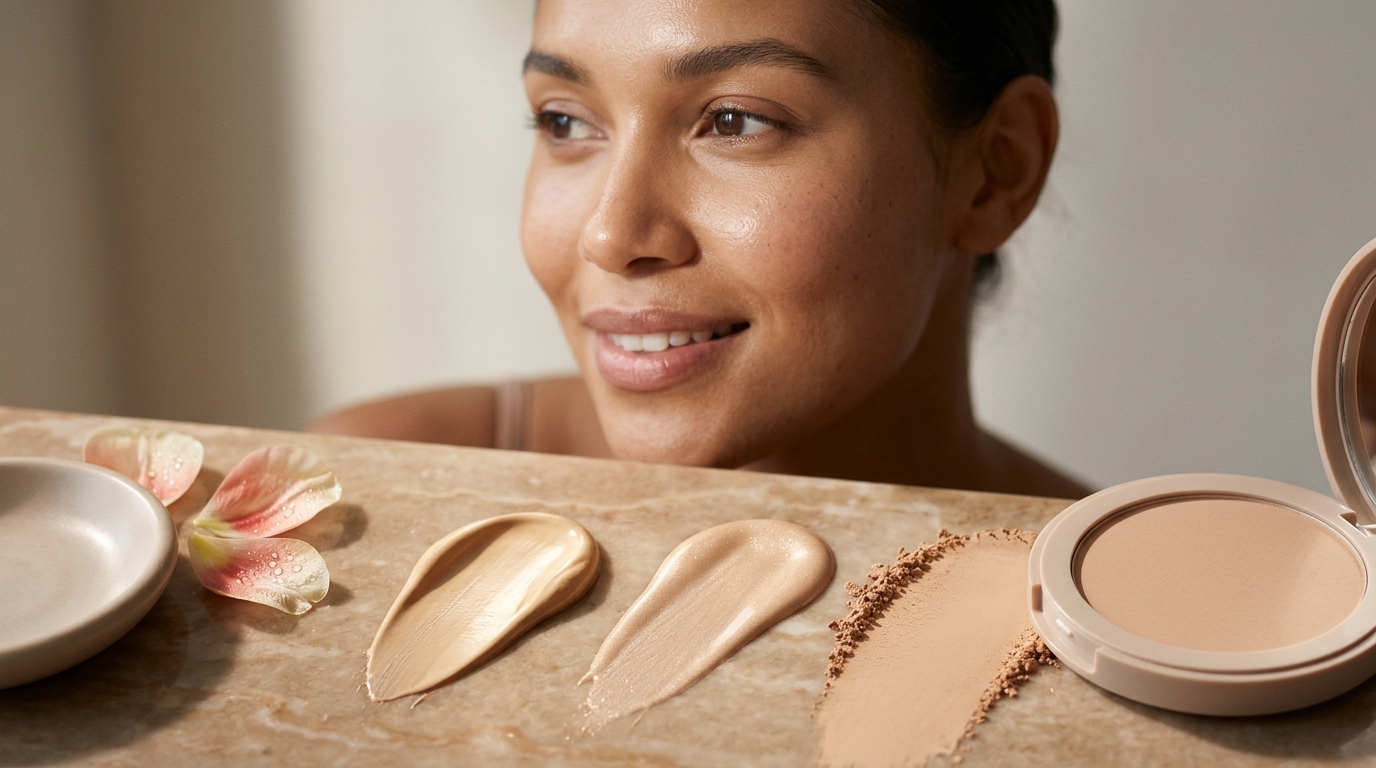
Choosing the right foundation format depends on your specific skin type and primary concerns. For dry or mature skin, liquid and cream formulas provide hydration and flexibility. For oily or acne-prone skin, powder and matte liquid formats control shine and minimize pore visibility. Forever Bloom recommends matching the product texture to your skin's current barrier health to ensure a natural, comfortable finish.
Understanding Foundation Formats and Skin Compatibility
Foundation format is the physical structure and texture of a makeup product, which determines how it interacts with your skin's surface. The most common formats include liquid, cream, powder, and stick. Each format offers different levels of coverage, wear time, and skin feel. Understanding these differences is the first step in selecting a product that enhances rather than irritates your complexion.
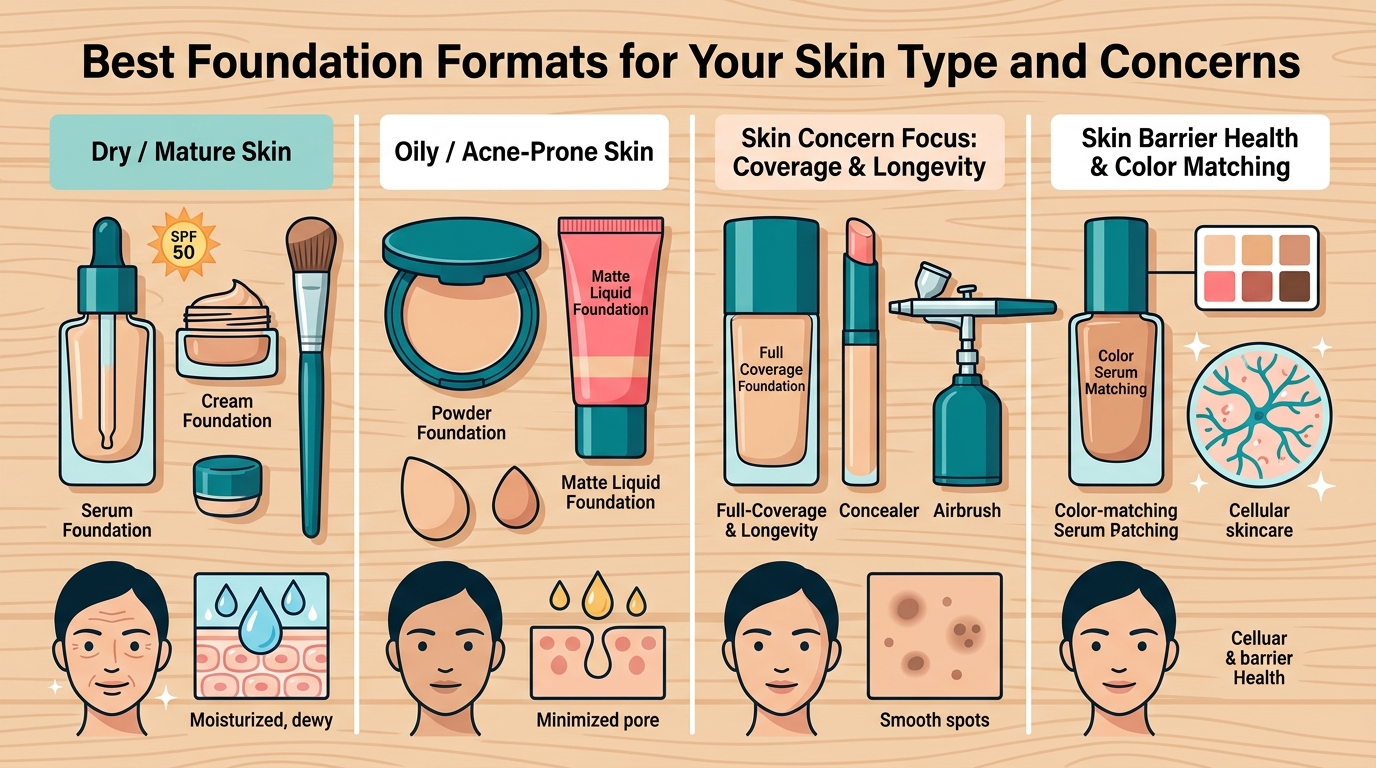
For individuals with dry skin, liquid foundations are often the most compatible choice. These formulas typically contain hydrating ingredients that help maintain skin moisture throughout the day. A liquid foundation is a fluid-based product that blends easily and provides a natural, skin-like finish. This format is ideal for those who want to avoid a cakey or flaky appearance, as it moves with the skin rather than sitting on top of it.
Optimizing Formulas for Dry and Mature Skin
Dry and mature skin requires a foundation that prioritizes hydration and flexibility. As skin ages, it loses elasticity and natural oils, making it more prone to fine lines and flaking. A cream foundation is a thicker, more emollient product that provides medium to full coverage while nourishing the skin. This format is excellent for mature skin because it does not settle into fine lines as easily as thinner liquid formulas.
Managing Shine and Pores with Oily Skin
Oily skin presents a different set of challenges, primarily centered around excess sebum production and enlarged pores. The goal for this skin type is to control shine while maintaining a natural look. A powder foundation is a dry, loose or pressed product that is highly effective at absorbing oil and providing a matte finish. This format is often the best choice for those who struggle with midday shine and makeup breakdown.
For those who prefer a liquid format, a matte liquid foundation is a water-based product that dries down to a non-shiny finish. These formulas are typically oil-free and non-comedogenic, meaning they are less likely to clog pores or cause breakouts. When applying foundation to oily skin, it is important to use a light hand and focus on areas that need the most coverage. Over-applying can lead to a heavy, caked appearance that emphasizes texture rather than smoothing it.
Forever Bloom offers a range of skincare products that complement foundation use, such as their Hydrating Aqua-Marine Cleanser. Proper cleansing is essential for oily skin to remove excess oil and prevent breakouts. By pairing the right foundation format with a consistent skincare routine, you can manage shine effectively and maintain a clear complexion. The key is to choose a format that controls oil without stripping the skin of its necessary moisture.
Addressing Sensitive and Acne-Prone Skin
Sensitive and acne-prone skin requires a foundation that is gentle, non-irritating, and free from common allergens. A mineral foundation is a powder-based product made from natural minerals like zinc oxide and titanium dioxide. This format is often recommended for sensitive skin because it is less likely to cause irritation or breakouts. Mineral foundations also provide a physical barrier against UV rays, adding an extra layer of protection.
For those with active acne, it is crucial to choose a foundation that is non-comedogenic and fragrance-free. A liquid foundation is a fluid-based product that can be formulated with soothing ingredients like niacinamide and green tea extract. These ingredients help calm inflammation and reduce redness associated with acne. When testing a new foundation, apply it to a small area of the jawline first to check for any adverse reactions before using it on the entire face.
Key Takeaways
- Match the foundation format to your skin type: liquid for dry, powder for oily, and mineral for sensitive skin.
- Cream foundations are ideal for mature skin as they provide hydration and do not settle into fine lines.
- Matte liquid foundations are effective for controlling shine and minimizing the appearance of pores on oily skin.
- Always choose non-comedogenic and fragrance-free formulas if you have acne-prone or sensitive skin.
- SPF protection in foundation, such as the SPF 50 in Forever Bloom’s Biomimic® Foundation, adds daily sun defense.
- Proper skincare preparation, including cleansing and moisturizing, is essential for any foundation format to perform well.
- Test new foundations on a small area of the jawline to check for compatibility and potential irritation.
Frequently Asked Questions
What is the best foundation format for dry skin?
Liquid and cream foundations are the best formats for dry skin. These formulas provide hydration and flexibility, preventing the makeup from settling into fine lines or flaking off the skin.
How do I choose a foundation for oily skin?
Choose a powder or matte liquid foundation. These formats absorb excess oil and provide a long-lasting, shine-free finish that is less likely to slide off the face.
Can I use a liquid foundation if I have acne-prone skin?
Yes, provided the formula is non-comedogenic and fragrance-free. Look for liquid foundations with soothing ingredients like niacinamide to help calm inflammation and prevent breakouts.
What is the difference between a cream and a liquid foundation?
A cream foundation is thicker and more emollient, offering higher coverage and hydration. A liquid foundation is thinner and more fluid, providing a lighter, more natural finish that is easier to blend.
Does foundation with SPF replace sunscreen?
No, foundation with SPF is not a replacement for dedicated sunscreen. You typically do not apply enough foundation to achieve the full SPF protection listed on the label. Use a separate sunscreen for adequate daily protection.
How often should I replace my foundation?
It is recommended to replace liquid and cream foundations every 12 months. Powder foundations can last up to 2 years. Always check for changes in smell, texture, or color, which indicate the product has gone bad.
Conclusion
Selecting the right foundation format is a personal decision that depends on your unique skin type and concerns. By understanding the differences between liquid, cream, powder, and mineral formats, you can make a choice that supports your skin's health and enhances your natural beauty. Forever Bloom is dedicated to providing science-backed, non-toxic skincare and makeup solutions that work with your skin, not against it. Explore the Biomimic® Foundation collection to find the perfect match for your complexion and skin needs.