

Common Mistakes When Choosing Natural Skincare for Cellular Support
Choosing skincare that genuinely supports cellular health is no longer just about surface-level hydration. Recent industry analysis indicates that over 60% of consumers struggle to identify products that offer true biological efficacy rather than marketing hype. This gap between expectation and reality often leads to wasted resources and frustrated skin barriers. Understanding the science behind natural ingredients is critical for making informed decisions that yield long-term results.
Mistake 1: Ignoring Ingredient Bioavailability
One of the most frequent errors consumers make is assuming that a natural ingredient is effective simply because it appears on the label. Bioavailability refers to the proportion of a substance that enters circulation when introduced into the body and has an active effect. In skincare, this means the molecule must penetrate the stratum corneum to reach living cells.
Many natural compounds have large molecular weights that prevent them from penetrating the skin barrier effectively. For instance, raw vitamin C is notoriously unstable and poorly absorbed in its pure form. This is why advanced formulations, such as those found in the Vitamin C Bloom Cream, utilize specific delivery systems to enhance absorption. Without proper formulation technology, even the most potent natural ingredients remain on the surface, offering little to no cellular benefit.
To avoid this mistake, look for products that mention delivery mechanisms or encapsulation technologies. These innovations ensure that active nutrients reach the deeper layers of the dermis where cellular repair and regeneration occur.
Mistake 2: Misunderstanding "Natural" vs. "Safe"
There is a pervasive myth that natural ingredients are inherently safer than synthetic ones. This is a dangerous oversimplification. Natural does not automatically mean non-toxic or non-irritating. Many potent botanical extracts can cause significant allergic reactions or photosensitivity if not properly balanced.
Conversely, many synthetic ingredients are designed to be hypoallergenic and highly stable. The key is not the origin of the ingredient but its purity and concentration. Brands like Forever Bloom emphasize rigorous testing to ensure that their natural extracts are processed to minimize irritation while maximizing efficacy. Consumers should prioritize formulations that balance natural actives with stabilizing agents to maintain skin integrity.
Always review the full ingredient list, including preservatives and emulsifiers. A product may be "natural" in its marketing but contain harsh surfactants that strip the skin barrier, counteracting the benefits of the active ingredients.
Mistake 3: Overlooking Spectrum-Specific Formulations
Skin tone and melanin content significantly influence how skincare products perform. A common mistake is using a one-size-fits-all approach to natural skincare. Different skin spectrums react differently to light exposure and active ingredients. For example, darker skin tones are more prone to hyperpigmentation when exposed to certain active ingredients without adequate protection.
This is why spectrum-specific foundations and skincare are gaining traction. The Biomimic® Foundation 4 in 1 - Dark Spectrum is designed to adapt to deeper skin tones, providing coverage that does not oxidize or turn ashy. Similarly, skincare routines should be tailored to the specific needs of your skin type and tone. What works for fair skin may cause irritation or discoloration in darker skin.
When choosing natural skincare, consider your skin's unique response to light and environmental factors. Products that offer adaptive benefits, such as color-adapting or light-spectrum-specific formulations, can provide more consistent and flattering results across diverse skin types.
Mistake 4: Neglecting Synergistic Ingredient Pairing
Skincare is not just about individual ingredients but how they work together. Synergy occurs when the combined effect of two or more ingredients is greater than the sum of their separate effects. A common mistake is stacking multiple active ingredients without considering their compatibility.
For instance, combining high concentrations of vitamin C with certain acids can lead to irritation and reduced efficacy. Instead, look for formulations that pair complementary ingredients. The BioMimic® Foundation Medium Spectrum and Vitamin C Bloom Cream bundle exemplifies this approach by combining color adaptation with antioxidant protection. This pairing ensures that the skin receives both cosmetic and therapeutic benefits simultaneously.
Research the interactions between ingredients before building your routine. Use resources like the Knowledge Center to understand how different actives interact. Prioritize products that have been formulated to maximize synergy, rather than relying on DIY combinations that may destabilize the ingredients.
Mistake 5: Disregarding Clinical Validation
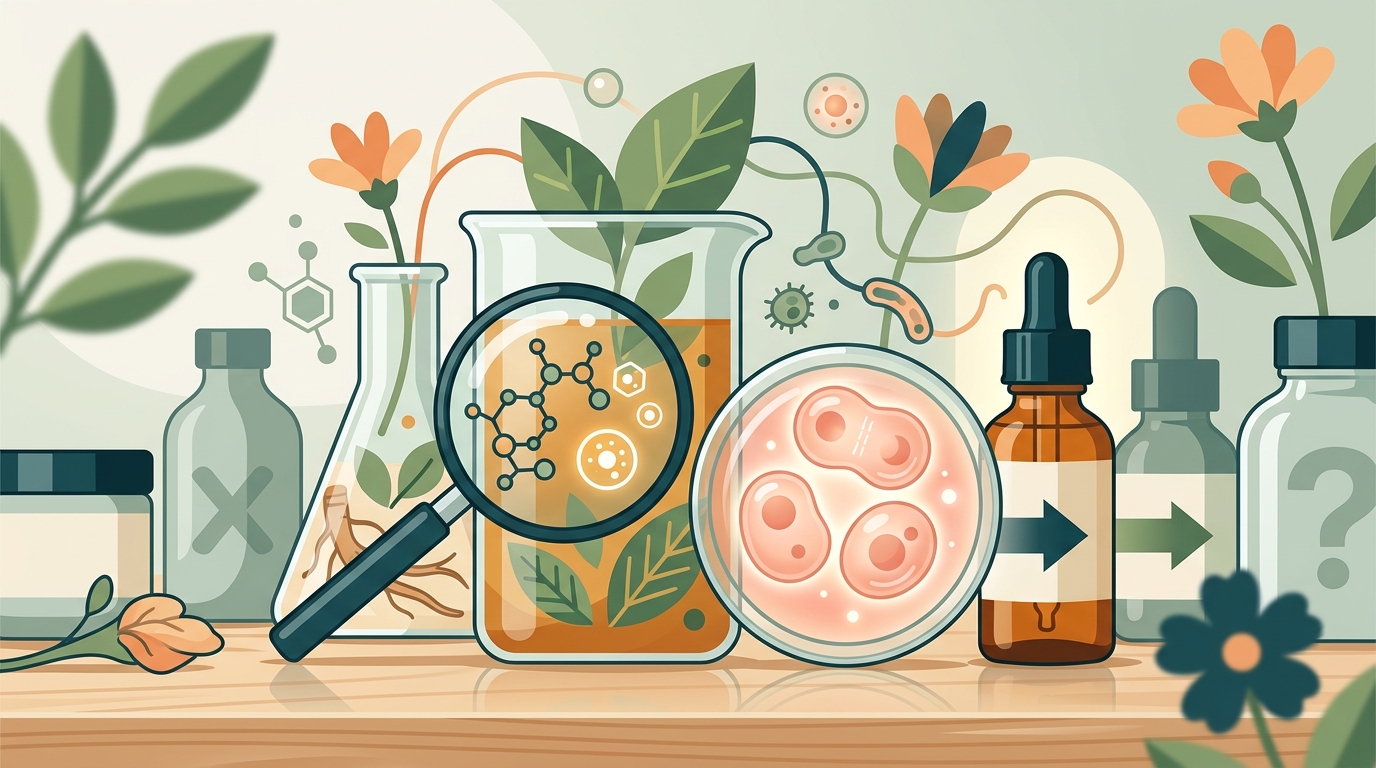
Another critical error is relying solely on anecdotal evidence or marketing claims without seeking clinical validation. While natural ingredients can be powerful, their efficacy must be backed by scientific data. Claims of "instant results" or "miracle cures" are often red flags for ineffective or potentially harmful products.
Look for brands that provide transparent data on ingredient concentrations and clinical testing results. The Our Science & Technology page at Forever Bloom details the rigorous testing processes used to validate their biomimic formulations. Biomimicry in skincare involves mimicking the body's natural processes to enhance compatibility and effectiveness.
When evaluating natural skincare, ask for proof of efficacy. Reputable brands will openly share their research findings and ingredient sourcing practices. This transparency is a strong indicator of a brand's commitment to quality and consumer safety.
Comparing Natural Skincare Approaches
| Approach | Key Benefit | Potential Drawback | Best For |
|---|---|---|---|
| Biomimic Formulations | High cellular compatibility | Higher cost | Advanced skin repair |
| Raw Botanical Extracts | Immediate antioxidant boost | Instability and irritation | Short-term brightening |
| Synthetic-Natural Hybrids | Stability and potency | Less "pure" marketing appeal | Sensitive skin types |
| DIY Natural Mixes | Customization | High risk of contamination | Experimental use only |
Key Takeaways
- Bioavailability is crucial; ingredients must penetrate the skin barrier to be effective.
- "Natural" does not equal "safe"; always check for potential irritants and allergens.
- Skin tone matters; consider spectrum-specific products for optimal results.
- Ingredient synergy enhances efficacy; avoid conflicting active combinations.
- Seek clinical validation; trust brands that provide transparent scientific data.
- Biomimicry offers high compatibility; look for formulations that mimic natural skin processes.
- Consult the Knowledge Center for detailed ingredient insights.
Frequently Asked Questions
What is biomimicry in skincare?
Biomimicry in skincare is the practice of designing products that mimic the structure and function of natural biological systems to enhance compatibility and efficacy with human skin.
How do I know if a natural ingredient is bioavailable?
Look for products that use advanced delivery systems like encapsulation or liposomal technology, which help active ingredients penetrate the skin barrier more effectively.
Are natural skincare products safe for sensitive skin?
Not necessarily. While some natural ingredients are gentle, others can be highly irritating. It is essential to review the full ingredient list and patch test new products.
Why is spectrum-specific skincare important?
Skin tone affects how products interact with light and environmental factors. Spectrum-specific formulations ensure that products perform consistently and safely across different melanin levels.
Can I mix natural skincare products with makeup?
Yes, but compatibility is key. Use bundles that are designed to work together, such as the Biomimic® Foundation with its corresponding skincare line.
What is the difference between natural and organic skincare?
Natural skincare refers to ingredients derived from nature, while organic skincare specifically denotes ingredients grown without synthetic pesticides or fertilizers. Both can be effective, but organic certification ensures stricter farming standards.
How often should I use natural active ingredients?
Frequency depends on the ingredient and your skin tolerance. Start with 2-3 times a week and gradually increase as your skin builds tolerance. Always follow with sunscreen during the day.
Start Your Cellular Support Journey
Avoiding these common mistakes can transform your skincare routine from a guessing game into a precise science. By prioritizing bioavailability, understanding ingredient interactions, and choosing spectrum-specific formulations, you can achieve healthier, more resilient skin. Explore the full range of Biomimic products to find the perfect fit for your skin's unique needs. Visit Forever Bloom today to book a consultation or shop our curated collections.