
The global cosmetics market is experiencing a seismic shift toward personalized skincare solutions. According to recent industry analysis, the demand for multi-functional beauty products has grown by over 20% annually, with consumers increasingly rejecting traditional heavy foundations in favor of lightweight, skin-enhancing alternatives. This trend reflects a broader desire for natural aesthetics and long-term skin health over temporary coverage. Understanding which alternative suits your specific biological needs is critical for achieving a flawless finish without compromising your dermal barrier.
Understanding Modern Foundation Alternatives
The landscape of complexion products has evolved significantly. Traditional full-coverage foundations often sit on top of the skin, creating a mask-like effect that can emphasize fine lines and clog pores. Modern alternatives focus on biomimicry, a concept where cosmetic formulations mimic the natural structure and function of human skin. This approach ensures that products work in harmony with your biology rather than against it.
Biomimicry is the design and production of materials, structures, and systems that are modeled on biological entities and processes. In the context of skincare, this means creating foundations that interact with your skin's natural light spectrum and moisture levels. By choosing products that align with your skin's natural physiology, you reduce the risk of irritation and improve the longevity of your makeup. The shift away from heavy pigments toward light-reflecting, skin-nourishing ingredients represents a fundamental change in how we approach beauty.
When evaluating alternatives, it is essential to look beyond simple coverage claims. You must consider the ingredient profile, the finish, and how the product interacts with your specific skin type throughout the day. For instance, a product that works beautifully for dry skin may slide off oily skin within hours. Therefore, identifying the right alternative requires a deep understanding of your unique dermatological needs.
Best Options for Oily and Acne-Prone Skin
For individuals with oily or acne-prone skin, the primary challenge is managing excess sebum production while maintaining a matte finish. Traditional foundations often break down quickly in these conditions, leading to patchiness and shine. The ideal alternative for this skin type is a lightweight, oil-free formula that controls shine without stripping the skin of necessary moisture.
One of the most effective alternatives is a mineral-based powder foundation. These products typically contain zinc oxide and titanium dioxide, which not only provide coverage but also offer natural sun protection and anti-inflammatory benefits. They sit lightly on the skin, allowing it to breathe while absorbing excess oil. Another excellent option is a water-based serum foundation that sets to a natural matte finish. These formulas are often non-comedogenic, meaning they do not clog pores, which is crucial for preventing breakouts.
When selecting a product for oily skin, look for ingredients like salicylic acid or niacinamide. These components help regulate oil production and minimize the appearance of pores. Avoid heavy silicones and waxes, which can trap heat and bacteria against the skin. Instead, opt for breathable formulations that allow your skin to maintain its natural balance. The goal is to achieve a fresh, clean look that does not feel heavy or restrictive.
Hydrating Solutions for Dry and Mature Skin
Dry and mature skin types require a different approach. The primary concern for these skin types is dehydration and the appearance of fine lines. Heavy, matte foundations can settle into wrinkles, making them more pronounced. Therefore, the best alternatives are those that provide hydration while offering a luminous, dewy finish.
Amino-Peptide Youth Recovery Complex is a specialized formulation designed to support skin elasticity and reduce the visible signs of aging. Products containing this complex often serve as both a skincare treatment and a makeup base. They provide coverage while simultaneously nourishing the skin with peptides and antioxidants. This dual action is particularly beneficial for mature skin, which often struggles with loss of firmness and hydration.
Another highly recommended alternative is a cream-based foundation with hyaluronic acid. Hyaluronic acid is a humectant that draws moisture into the skin, plumping it up and smoothing out texture. This creates a smooth canvas for makeup application and ensures that the product lasts longer without cracking or flaking. For those with very dry skin, a tinted moisturizer or a BB cream with high hydrating properties can provide sufficient coverage while keeping the skin soft and supple.
It is also important to consider the finish of the product. A dewy or satin finish reflects light, giving the skin a healthy, radiant glow. This is particularly flattering for mature skin, which often loses its natural luminosity over time. By choosing hydrating alternatives, you can enhance your natural beauty while supporting your skin's health.
Gentle Formulas for Sensitive and Reactive Skin
Sensitive skin is prone to redness, irritation, and allergic reactions. For this skin type, the best alternatives are those that are free from fragrances, parabens, and other potential irritants. The focus should be on minimalism and purity in the ingredient list.
Biomimic Foundation is a type of cosmetic product designed to mimic the natural light spectrum of human skin, providing coverage that looks and feels like skin. These foundations are often formulated with fewer ingredients, reducing the risk of adverse reactions. They are also less likely to cause clogged pores or inflammation, making them ideal for those with rosacea, eczema, or general sensitivity.
Another excellent option for sensitive skin is a green-tinted primer or color corrector. Green tints neutralize redness, allowing you to achieve an even complexion with minimal product. This approach reduces the amount of makeup on your skin, which in turn reduces the potential for irritation. Additionally, looking for products labeled as "hypoallergenic" and "dermatologist tested" can provide additional peace of mind.
When testing new products, always perform a patch test on a small area of your skin before applying it to your entire face. This simple step can help you identify any potential reactions before they become a larger issue. By prioritizing gentle, biomimetic formulas, you can enjoy the benefits of makeup without compromising your skin's comfort.
Comparative Analysis of Key Products
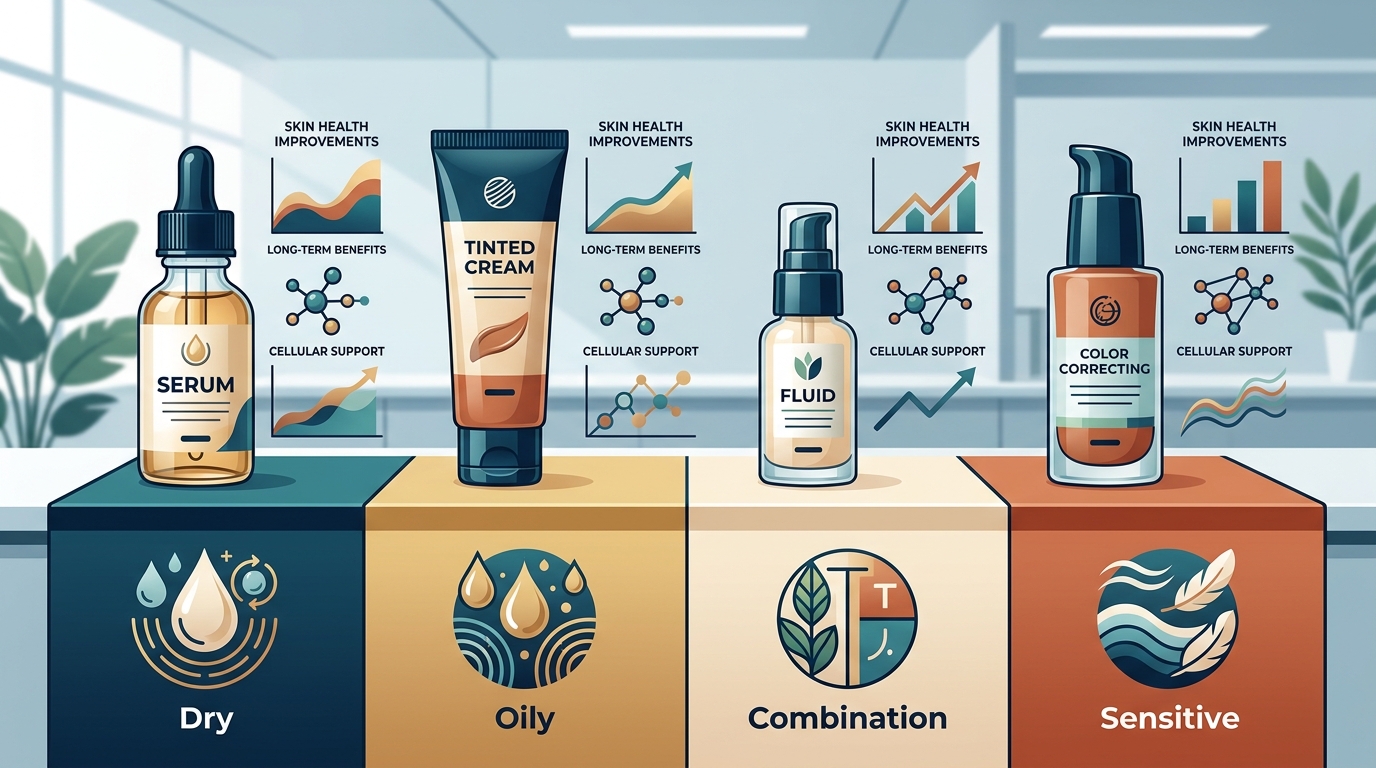
To help you make an informed decision, the following table compares the key characteristics of popular foundation alternatives across different skin types. This analysis highlights the unique benefits of each option, allowing you to select the best fit for your needs.
| Skin Type | Recommended Alternative | Key Benefit | Finish | Primary Ingredient Focus |
|---|---|---|---|---|
| Oily / Acne-Prone | Mineral Powder Foundation | Oil control and pore minimization | Matte | Zinc Oxide, Niacinamide |
| Dry / Mature | Hydrating Serum Foundation | Deep hydration and line smoothing | Dewy | Hyaluronic Acid, Peptides |
| Sensitive / Reactive | Biomimic Foundation | Minimal irritation and natural look | Natural | Biomimetic Light Spectrum |
| Combination | Tinted Moisturizer | Balanced coverage and hydration | Satin | Lightweight Silicones, Vitamins |
As shown in the table, each skin type has distinct requirements that must be met by the chosen alternative. For example, oily skin benefits from the oil-absorbing properties of mineral powders, while dry skin thrives on the moisture-retaining capabilities of serums. Sensitive skin, on the other hand, requires the gentle, non-reactive nature of biomimetic formulas. By aligning your choice with your skin's specific needs, you can achieve a more harmonious and long-lasting result.
Key Takeaways
- Biomimicry in Cosmetics: Biomimicry is the design and production of materials, structures, and systems that are modeled on biological entities and processes, leading to better skin compatibility.
- Oily Skin Strategy: Mineral powder foundations and oil-free serums are the best alternatives for controlling shine and preventing breakouts.
- Dry Skin Hydration: Cream-based foundations with hyaluronic acid and peptide complexes provide essential moisture and reduce the appearance of fine lines.
- Sensitive Skin Safety: Fragrance-free, hypoallergenic biomimic foundations minimize the risk of irritation and redness.
- Ingredient Awareness: Always check for non-comedogenic labels to ensure products do not clog pores, especially for acne-prone skin.
- Finish Matters: The finish of the product (matte, dewy, natural) should align with your skin type and desired aesthetic.
- Long-Term Health: Choosing skincare-infused makeup alternatives supports long-term skin health rather than just providing temporary coverage.
Frequently Asked Questions
What is the best foundation alternative for oily skin?
The best alternative for oily skin is a mineral-based powder foundation or an oil-free serum foundation. These products help control excess sebum and provide a matte finish without clogging pores.
How do I choose a foundation for dry skin?
For dry skin, look for hydrating alternatives such as cream-based foundations or tinted moisturizers containing hyaluronic acid. These ingredients draw moisture into the skin, preventing flaking and emphasizing fine lines.
Are biomimic foundations suitable for sensitive skin?
Yes, biomimic foundations are often suitable for sensitive skin because they are designed to mimic the natural structure of the skin. They typically contain fewer irritants and are less likely to cause allergic reactions.
Can I use a serum foundation if I have acne?
Yes, but you must ensure the serum foundation is labeled as non-comedogenic. This means it is formulated not to clog pores, which is crucial for preventing acne breakouts.
What is the difference between a BB cream and a foundation alternative?
BB creams generally offer lighter coverage and more skincare benefits, such as hydration and sun protection. Foundation alternatives like serums or powders may offer more targeted coverage or specific benefits like oil control.
How long do foundation alternatives last compared to traditional foundation?
The longevity depends on the formula and your skin type. Mineral powders can last all day on oily skin, while hydrating serums may need touch-ups on dry skin. However, because they are often more breathable, they may feel more comfortable over time.
Is it necessary to use a primer with foundation alternatives?
While not always necessary, a primer can help extend the wear time of any makeup. For sensitive skin, look for a hydrating or soothing primer that complements your alternative foundation.
Find Your Perfect Match
Choosing the right foundation alternative is a personal journey that depends on your unique skin biology and lifestyle. By understanding the specific needs of your skin type and exploring biomimetic options, you can achieve a flawless, healthy-looking complexion. Explore our curated collection of Biomimic Foundation products to discover the perfect match for your skin. Visit our Knowledge Center for more insights on skincare science and beauty tips. Ready to transform your routine? Shop the full range today and experience the difference of skin-enhancing makeup.