

Dark circles and under-eye puffiness affect people of all ages and skin types, yet finding the right cream can feel overwhelming. With dozens of ingredients claiming to brighten, firm, and de-puff, how do you know which formula actually works? The answer lies in understanding why dark circles form, which active ingredients target each root cause, and what texture suits your skin. In this guide, we break down the science behind under-eye concerns and help you choose a cream that delivers real, visible results without irritation or guesswork.
What Causes Dark Circles and Puffiness?
Before you pick a product, it helps to understand the underlying triggers. According to Cleveland Clinic, aging, genetics, fatigue, allergies, and dehydration can all contribute to dark circles. The skin beneath your eyes is significantly thinner than the rest of your face, making blood vessels and pigment changes far more visible.
The Four Root Causes
Dermatological research identifies four primary categories: vascular congestion, hyperpigmentation, skin translucency, and structural shadowing. These causes can appear alone or in combination, which is why a one-size-fits-all approach rarely works. Poor microcirculation and oxidative stress are also linked to a dull, shadowed eye contour.
Why Puffiness Happens
Puffiness is the visible swelling of tissue beneath the lower eyelid. Fluid retention overnight, seasonal allergies, high-sodium diets, and chronic eye rubbing all worsen it. When fluid pools around the delicate capillary network under the eye, the area looks swollen and tired upon waking.
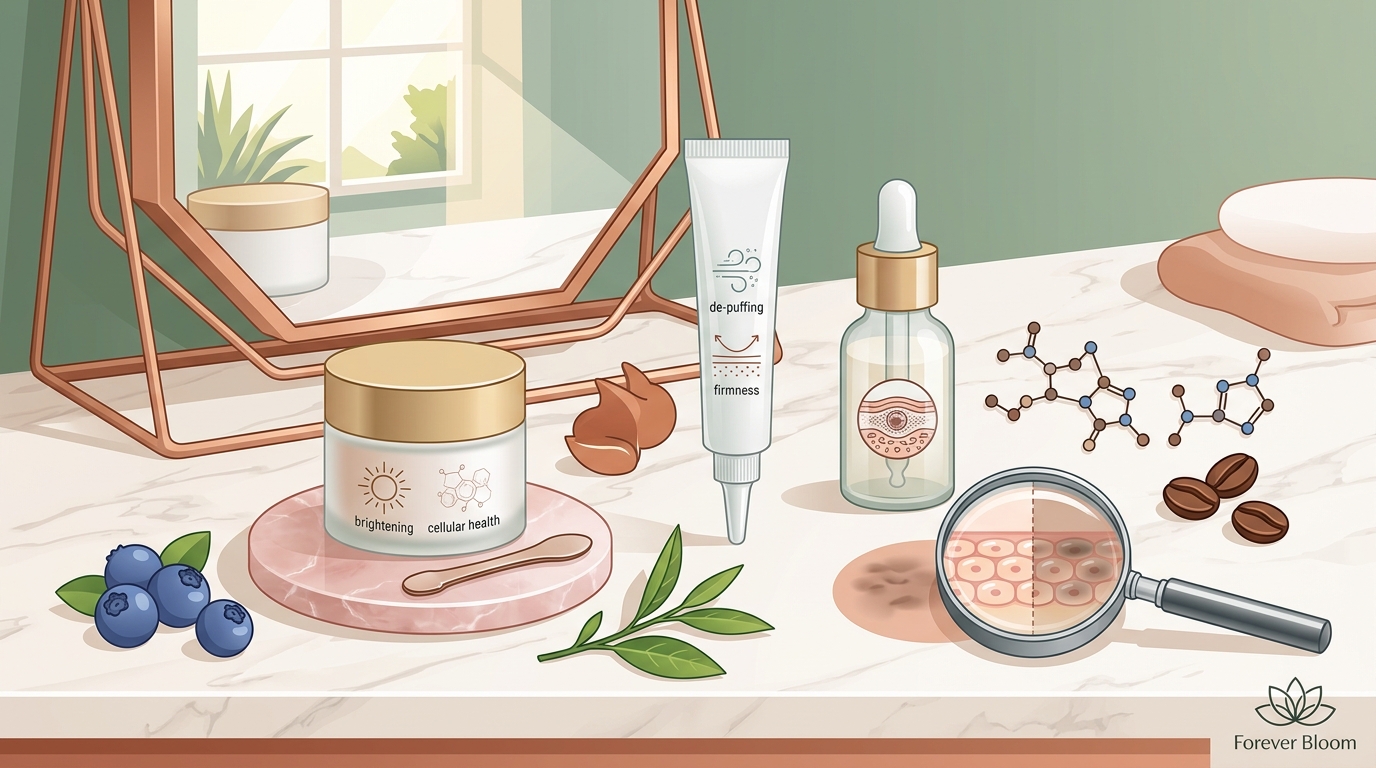
Key Ingredients to Look For
Peptides are short-chain amino acids that signal the skin to produce collagen and elastin. They are among the most effective actives for firming and brightening the under-eye area. Dermatologists note that peptides can significantly improve under-eye skin appearance when used consistently over several weeks.
Brightening Powerhouses
Vitamin C is an antioxidant that brightens skin tone, supports collagen synthesis, and helps make underlying blood vessels less visible by thickening the skin. Niacinamide works alongside vitamin C to even out pigmentation and strengthen the skin barrier.
Hydration and De-Puffing Agents
Hyaluronic acid is a naturally occurring molecule that can hold up to 1,000 times its weight in water, making it ideal for plumping fine dehydration lines. Caffeine constricts blood vessels and reduces fluid buildup, which is why board-certified dermatologists frequently recommend caffeine-infused creams to shrink swollen tissue under the eye. Botanical antioxidants round out a strong formula by neutralizing free-radical damage.
Ingredient Comparison Table
| Ingredient | Primary Benefit | Best For | Typical Results Timeline |
|---|---|---|---|
| Peptides | Boosts collagen, firms skin | Fine lines, loss of firmness | 4 to 8 weeks |
| Vitamin C | Brightens, reduces pigmentation | Dark circles from hyperpigmentation | 6 to 12 weeks |
| Hyaluronic Acid | Deep hydration, plumping | Dehydration lines, dryness | Immediate to 2 weeks |
| Caffeine | Constricts vessels, de-puffs | Morning puffiness | Minutes to hours |
| Retinol | Increases cell turnover, thickens skin | Translucent skin, fine lines | 8 to 12 weeks |
| Ceramides | Repairs moisture barrier | Sensitive, irritated skin | 2 to 4 weeks |
| Niacinamide | Evens tone, calms redness | Discoloration, uneven skin tone | 4 to 8 weeks |
Choosing an Eye Cream by Skin Type
Your skin type plays a major role in product selection. Lightweight gel-cream textures work best for oily or combination skin, while richer creams with hyaluronic acid suit dry or mature skin. Sensitive skin types should look for fragrance-free formulas with calming botanicals and peptides, which are generally very well-tolerated.
If you have multiple concerns like dark circles and fine lines, look for a multi-action formula. The EyeFinity Bloom Cream from Forever Bloom is a strong example. It combines clinically backed peptides, brightening botanicals, and potent antioxidants in a lightweight formula designed for all skin types.
For an overall approach to cellular skin health, consider pairing your eye cream with a complete skincare routine that includes targeted serums and moisturizers.
How to Apply Eye Cream for Best Results
Even the best cream will underperform if applied incorrectly. Follow these steps for maximum absorption and minimal irritation.
Step-by-Step Application
- Cleanse gently. Start with a mild, pH-balanced cleanser. The Dual Action Eye Makeup Remover is formulated at a pH close to natural tears, making it ideal for the delicate eye area.
- Use a pea-sized amount. Dot tiny amounts along the orbital bone, not directly on the eyelid.
- Tap, don't rub. Use your ring finger to gently pat the product into the skin. Rubbing can worsen puffiness and contribute to pigment deposits.
- Apply morning and night. Consistent twice-daily use maximizes anti-aging and brightening benefits.
- Layer wisely. Apply eye cream after serums but before heavier moisturizers and sunscreen.
Boost Results with Complementary Products
Pairing an eye cream with a vitamin C moisturizer can enhance brightening effects across the entire face. The Vitamin C Bloom Cream offers a stable, high-absorption form of vitamin C that complements under-eye treatment beautifully. Adding sun protection is also critical, as UV exposure worsens dark circles and pigmentation.
Common Mistakes to Avoid
Skipping sunscreen around the eyes. The thin skin beneath your eyes is more susceptible to UV damage, which directly worsens dark circles. A foundation with built-in SPF, like the BioMimic Foundation with SPF 50, adds an extra layer of defense.
Expecting overnight miracles. Most active ingredients need four to twelve weeks of consistent use before visible improvement appears. Patience is essential.
Using harsh formulas. The eye contour is the most sensitive area on the face. Avoid products with heavy fragrance, high-concentration acids, or drying alcohols. Opt for gentle, science-backed formulations instead.
Applying too much product. Overloading the area can cause milia (tiny white bumps) or irritation. A small amount goes a long way.
Key Takeaways
- Dark circles stem from multiple causes including genetics, vascular congestion, pigmentation, and thinning skin, so your cream should target your specific trigger.
- Peptides, vitamin C, hyaluronic acid, and caffeine are the top evidence-backed ingredients for under-eye concerns.
- Choose texture based on skin type: lightweight gels for oily skin, richer creams for dry or mature skin.
- Apply eye cream by tapping gently with your ring finger along the orbital bone, never rubbing.
- Consistent use for at least four to eight weeks is necessary to see meaningful results from most actives.
- Always protect the eye area with SPF to prevent further pigmentation and collagen breakdown.
- Pair your eye cream with complementary products like vitamin C moisturizers and gentle cleansers for a holistic approach.
Frequently Asked Questions
What is the best ingredient for dark circles?
Peptides and vitamin C are the most effective combination. Peptides boost collagen to thicken the under-eye skin, while vitamin C brightens pigmentation and supports collagen synthesis. For vascular dark circles, caffeine provides fast, visible de-puffing.
Can eye cream really reduce puffiness?
Yes. Creams containing caffeine constrict blood vessels and reduce fluid retention under the eye. Peptide-rich formulas also offer longer-term firming benefits that minimize the appearance of bags over time.
How long does it take for eye cream to work?
Hydrating ingredients like hyaluronic acid can show results within days. However, peptides and retinol typically require four to twelve weeks of daily use before noticeable improvement in dark circles and firmness.
Should I use eye cream in the morning or at night?
Both. Applying in the morning helps de-puff and prep the area for makeup, while nighttime application supports the skin's natural repair cycle. Twice-daily use maximizes anti-aging benefits.
Is it safe to use retinol around the eyes?
Retinol can be effective for thickening thin under-eye skin and boosting cell turnover. However, it should be introduced gradually and used in low concentrations to avoid irritation. Alternating with a peptide cream is a common dermatologist-recommended approach.
What causes dark circles to get worse with age?
Aging naturally thins the skin and reduces collagen and fat volume beneath the eyes, making blood vessels more visible. Cumulative sun damage and slower cell turnover also contribute to increased pigmentation over time.
Are natural ingredients effective for under-eye care?
Botanical extracts like cucumber, green tea, and licorice root offer antioxidant and anti-inflammatory benefits. When combined with clinically proven peptides and hyaluronic acid, they create a balanced formula that is both gentle and effective.
How do I know if my eye cream is working?
Look for gradual improvements in hydration, brightness, and skin texture over four to eight weeks. Reduced morning puffiness is often the first visible sign. Take consistent photos in the same lighting to track progress objectively.
Ready to Transform Your Under-Eye Area?
Finding the right eye cream does not have to be complicated. Look for a formula that combines peptides, antioxidants, and botanical extracts to address dark circles, puffiness, and fine lines in one step. Explore the EyeFinity Bloom Cream and discover science-backed, non-toxic eye care designed for all skin types. Your brighter, more refreshed eyes are just a few weeks away.