

Dark circles and puffiness are two of the most common under-eye concerns, yet finding the right cream can feel overwhelming. With countless formulas on the market, it helps to understand what actually causes these issues and which ingredients deliver real results. The skin around your eyes is up to ten times thinner than the rest of your face, making it uniquely vulnerable to fatigue, aging, and environmental stress. In this guide, we walk you through exactly what to look for, what to avoid, and how to match a cream to your specific under-eye needs so you can wake up looking refreshed every morning.
Understanding What Causes Dark Circles and Puffiness
Before you can choose the right cream, you need to understand what you are treating. Dark circles is a widely used term that describes darkened areas beneath the eyes caused by a range of factors. According to Cleveland Clinic, aging, genetics, allergies, lack of sleep, and dehydration can all contribute to under-eye darkness.
Puffiness is the visible swelling of tissue beneath the eyes, often caused by fluid retention, sinus congestion, or weakened skin elasticity. Poor microcirculation and oxidative stress also play a role. Understanding whether your concern is pigmentation-driven, vascular, or structural helps you narrow down the right formula.
The Four Main Culprits
- Hyperpigmentation: Excess melanin deposits beneath thin eyelid skin.
- Vascular congestion: Visible blood vessels showing through translucent skin.
- Structural shadowing: A deep tear trough that creates the illusion of darkness.
- Fluid retention: Overnight pooling that causes morning puffiness.
Key Ingredients That Actually Work
Not all eye creams are created equal. When evaluating formulas, focus on clinically backed actives rather than marketing buzzwords.
Peptides
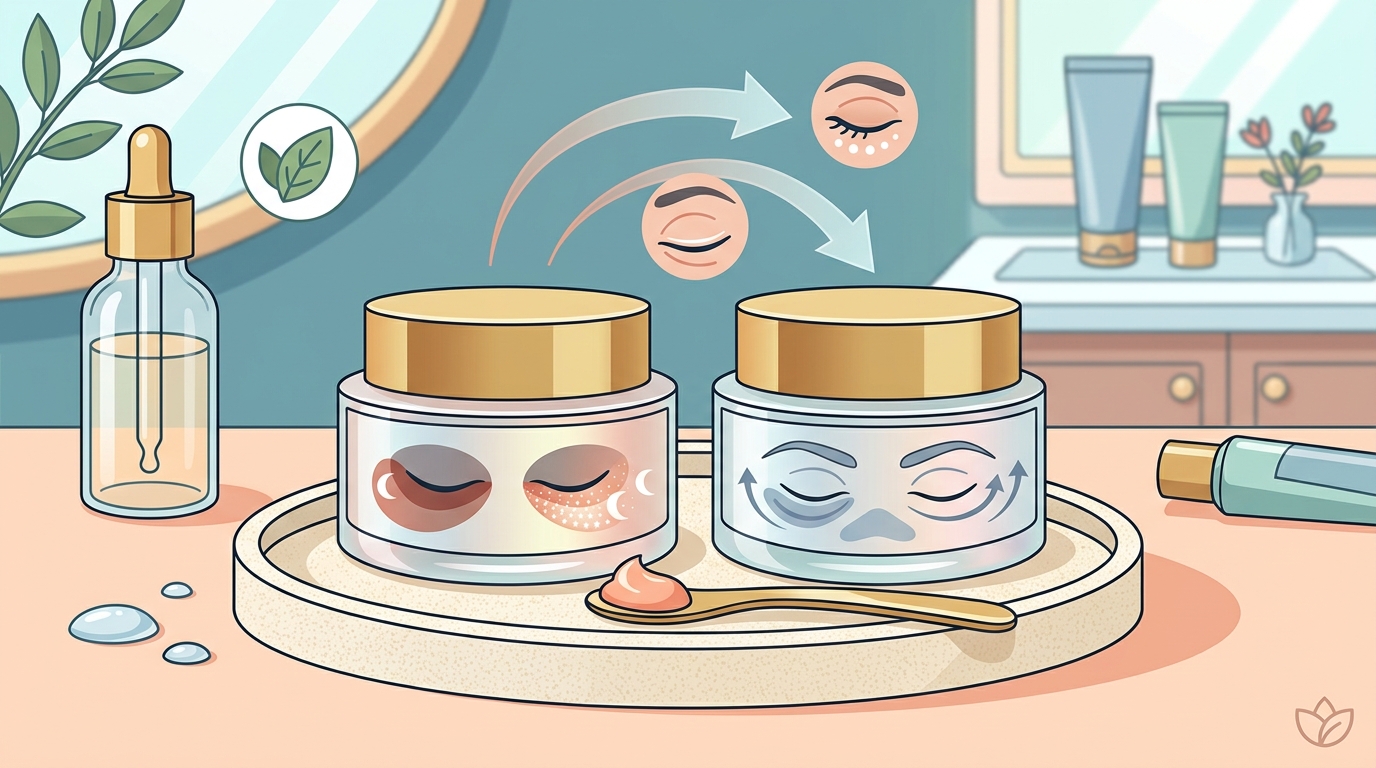
Peptides are short chains of amino acids that signal your skin to produce more collagen. They are essential in any serious under-eye formula because they strengthen the thin periorbital skin. The EyeFinity Bloom Cream from Forever Bloom harnesses clinically proven peptides to rejuvenate and protect the fragile skin around the eyes.
Antioxidants and Vitamin C
Vitamin C is a potent antioxidant that brightens skin and inhibits melanin overproduction. Research cited by Medical News Today found that a 10% vitamin C lotion was effective in lightening under-eye darkness over six months. Pairing an eye cream with a daily Vitamin C moisturizer can amplify brightening results.
Caffeine and Botanical Extracts
Board-certified dermatologists recommend creams with caffeine to shrink swollen tissue under the eye, reducing puffiness. Botanical extracts such as cucumber and chamomile add calming, anti-inflammatory support. Look for formulas that combine multiple actives for a synergistic effect.
Types of Under-Eye Creams Compared
The table below compares common under-eye cream categories to help you identify which format suits your concern.
| Cream Type | Best For | Key Actives | Texture |
|---|---|---|---|
| Brightening Eye Cream | Pigmentation-based dark circles | Vitamin C, niacinamide, kojic acid | Lightweight lotion |
| Peptide Eye Cream | Fine lines, loss of firmness, dark circles | Peptides, ceramides, hyaluronic acid | Rich yet absorbing cream |
| De-Puffing Eye Gel | Morning puffiness, fluid retention | Caffeine, green tea, aloe | Cool gel |
| Multi-Corrective Eye Cream | Combined dark circles, puffiness, and wrinkles | Peptides, antioxidants, botanicals | Balanced cream |
A multi-corrective formula like the EyeFinity Bloom Cream covers all three concerns with a blend of peptides, antioxidants, and botanical extracts in one lightweight cream.
How to Match a Cream to Your Skin Type
Your skin type matters just as much as the active ingredients when choosing an eye cream. Here is a quick guide:
- Dry skin: Opt for richer, ceramide-based formulas that reinforce the moisture barrier. Pair with a nourishing night cream for overnight hydration.
- Oily or combination skin: Choose gel-based or lightweight creams that absorb quickly without adding shine.
- Sensitive skin: Avoid fragrances, parabens, and harsh acids. Look for formulas designed for all skin types and tested at gentle pH levels. Forever Bloom's science-backed approach focuses on non-toxic, gentle delivery systems.
- Mature skin: Prioritize peptides and retinol to rebuild collagen and thicken thinning periorbital skin.
Building an Effective Under-Eye Routine
An eye cream works best as part of a complete routine. Follow these steps morning and evening for optimal results:
- Cleanse gently. Use a mild, pH-balanced cleanser like the Hydrating Aqua-Marine Cleanser to remove impurities without stripping moisture.
- Remove eye makeup properly. Tugging at delicate skin worsens dark circles. A dedicated eye makeup remover formulated near the pH of natural tears protects the area.
- Apply eye cream. Use your ring finger to gently pat a pea-sized amount along the orbital bone. Avoid pulling or dragging.
- Moisturize. Follow with a facial moisturizer or Vitamin C Bloom Cream for added antioxidant protection.
- Protect with SPF. Sun damage worsens both pigmentation and collagen loss around the eyes. A foundation with built-in SPF 50 like BioMimic Foundation adds an extra layer of defense.
Common Mistakes to Avoid
Using face cream around your eyes. Regular moisturizers are often too heavy or contain active concentrations that irritate the thinner eye-area skin.
Applying too much product. A pea-sized amount is enough for both eyes. Excess product can migrate into eyes and cause irritation or milia.
Skipping sunscreen. As Geisinger Health notes, the thin skin around the eyes is more susceptible to sun damage, which can worsen dark circles over time.
Expecting overnight results. Most under-eye creams need four to eight weeks of consistent use before visible improvement appears. Patience and consistency are key.
Key Takeaways
- Identify whether your dark circles stem from pigmentation, vascular issues, or structural shadows before selecting a cream.
- Peptides, vitamin C, caffeine, and hyaluronic acid are the most effective clinically supported ingredients for under-eye concerns.
- Multi-corrective formulas that address dark circles, puffiness, and fine lines simultaneously offer the best value and simplicity.
- Always apply eye cream with gentle patting motions using your ring finger to avoid micro-tears in delicate skin.
- Pair your eye cream with daily SPF to prevent further pigmentation and collagen breakdown.
- Use a dedicated eye makeup remover to avoid tugging and irritation that worsen dark circles.
- Allow at least four to eight weeks of consistent use before evaluating results.
Frequently Asked Questions
What ingredient is best for dark circles under the eyes?
Peptides and vitamin C are among the most effective ingredients. Peptides strengthen and firm thin under-eye skin, while vitamin C brightens pigmentation. Look for creams that combine both, such as the EyeFinity Bloom Cream, which blends clinically backed peptides with antioxidants and botanical extracts.
Can an eye cream really reduce puffiness?
Yes. Creams containing caffeine help constrict blood vessels and reduce fluid buildup. Botanical extracts like cucumber and green tea also have natural anti-inflammatory properties that calm swollen tissue.
How long does it take for an eye cream to work?
Most dermatologists recommend using an eye cream consistently for four to eight weeks before expecting visible improvement. Some soothing ingredients may reduce puffiness within minutes, but structural changes to skin firmness take longer.
Should I use a separate eye cream or just my regular moisturizer?
A separate eye cream is recommended. The periorbital area is significantly thinner and more prone to moisture loss than the rest of the face. Dedicated eye formulas use gentler concentrations and targeted actives designed for this delicate zone.
Is it safe to use retinol around the eyes?
Retinol can be effective for thickening under-eye skin and reducing dark circles, but it must be used in lower concentrations around the eyes to avoid irritation. If you have sensitive skin, peptide-based alternatives may be a better starting point.
Does sun protection help with dark circles?
Absolutely. UV exposure accelerates melanin production and breaks down collagen, both of which worsen dark circles. Wearing SPF daily, including around the eye area, is one of the simplest preventive measures you can take.
Are dark circles a sign of a health problem?
In most cases, dark circles are cosmetic and not a sign of a medical issue. However, allergies, nutrient deficiencies, and certain medications can contribute. If dark circles appear suddenly or are accompanied by other symptoms, consult a dermatologist.
Start Treating Your Under-Eye Concerns Today
Choosing the right eye cream does not have to be complicated. Focus on proven ingredients like peptides and antioxidants, match the formula to your skin type, and commit to a consistent routine. Ready to see the difference? Try EyeFinity Bloom Cream and experience a brighter, more refreshed under-eye area backed by Forever Bloom's advanced biotech formulation.