

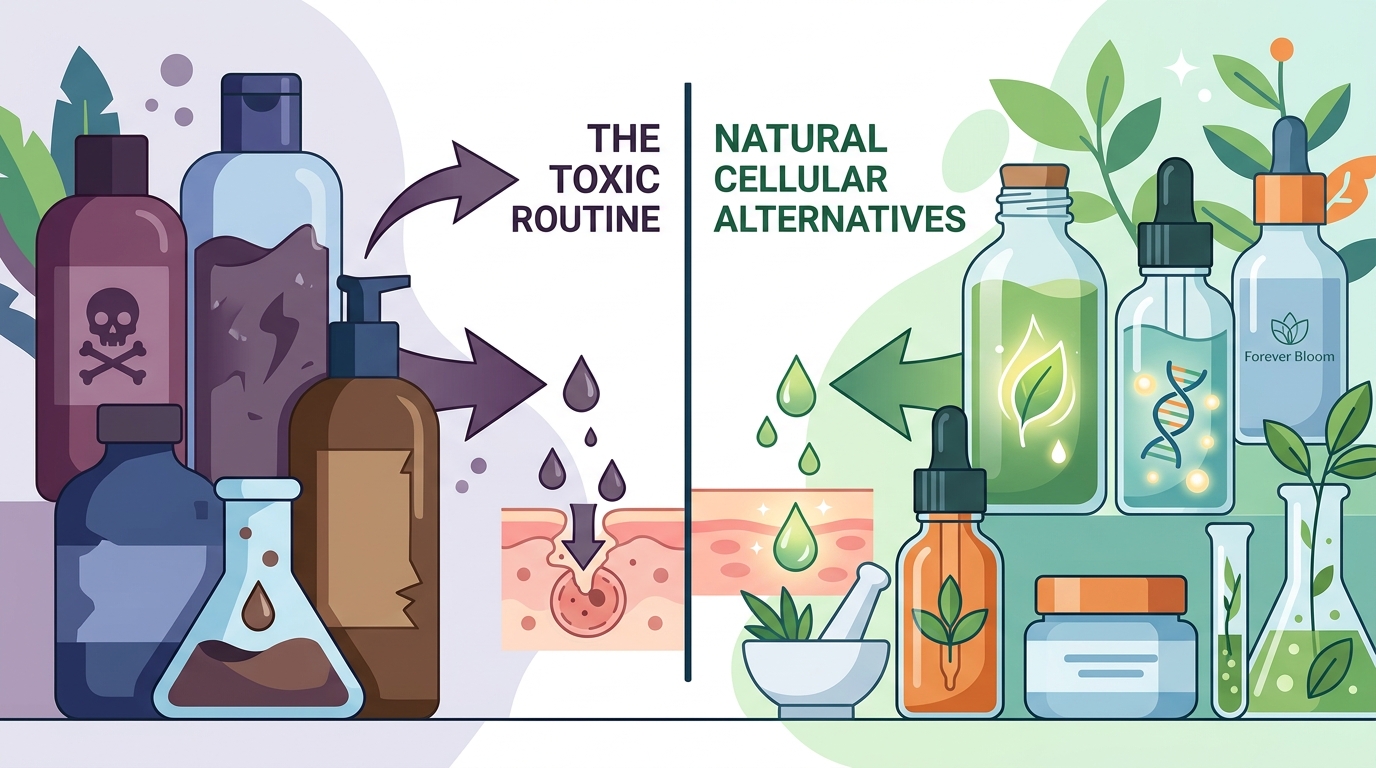
Your skin absorbs up to 60% of what you put on it, and many conventional skincare products contain chemicals linked to hormone disruption, cellular damage, and premature aging. If you have been wondering what the best natural alternatives to toxic skincare products are for improving skin cellular health, you are in the right place. This guide breaks down the harmful ingredients hiding in everyday products, explains how they affect your cells, and shows you science-backed natural alternatives that actually work. Whether you are new to clean beauty or looking to upgrade your routine, the information here will help you make safer, smarter choices.
Why Toxic Skincare Ingredients Harm Cellular Health
Cellular health is the foundation of youthful, resilient skin. Cellular health refers to the optimal functioning, regeneration, and communication of your skin's cells, including their ability to repair DNA damage and produce collagen. When harmful chemicals penetrate the skin barrier, they can disrupt these processes at the molecular level.
According to the Environmental Working Group (EWG), endocrine-disrupting chemicals such as parabens and phthalates may pose the greatest risk during prenatal and early postnatal development and have been linked to certain types of cancer. These chemicals are absorbed directly into your bloodstream through your skin and can accumulate over time.
Research published in the journal Molecules confirms that common cosmetic chemicals like BHT are associated with phototoxicity and cellular mutation, reinforcing the need for natural-origin alternatives.
The Worst Offenders: Ingredients to Avoid
Not all synthetic ingredients are dangerous, but several categories deserve scrutiny. Here are the primary culprits that compromise your skin's cellular integrity:
Parabens
Parabens are a group of chemical preservatives used to extend product shelf life. According to the EWG, parabens can act like estrogen in the body and disrupt normal hormone function, affecting reproductive health. When applied to skin, they are rapidly absorbed, with nearly 100 percent absorption reported in paraben-containing products.
Phthalates
Phthalates are chemicals commonly found in fragranced personal care products, acting as solvents or stabilizers. Studies have linked phthalate exposure to altered hormone levels and reproductive system disorders, making them a serious concern for long-term cellular wellness.
Synthetic Fragrances and Sulfates
Synthetic fragrances can irritate sensitive skin and trigger allergic reactions. Sulfates like SLS and SLES strip the skin's natural oils and weaken the protective barrier that cells need to regenerate properly.
Proven Natural Alternatives That Support Skin Cells
Clean beauty is not about sacrificing results. Effective non-toxic ingredients are backed by solid science and can deliver dramatic improvements to cellular function.
Stabilized Vitamin C
Vitamin C is a potent antioxidant that supports collagen synthesis, brightens skin, and protects against free radical damage from UV radiation and pollution. Forever Bloom's Vitamin C Bloom Cream features a stabilized formula with grape seed extract and hyaluronic acid, formulated with no parabens, no phthalates, and no artificial fragrances.
Peptides and Amino Acids
Plant-derived neuropeptides help minimize expression lines by supporting the skin's natural repair mechanisms. The Amino-Peptide Youth Recovery Complex from Forever Bloom combines four advanced amino acids with oat kernel extract for visible wrinkle reduction without harsh chemicals.
Bakuchiol and Botanical Retinol Alternatives
Bakuchiol is a plant-derived compound that provides retinol-like benefits, including improved firmness and reduced fine lines, without the irritation or photosensitivity associated with synthetic retinol. It is clinically proven to be effective for anti-aging and brightening.
Biomimic Technology: The Future of Cellular Skincare
Biomimic technology is a biotech-driven approach that uses principles of cell biology to mimic natural skin processes and enhance cellular regeneration. This is the science behind Forever Bloom's entire product line, which is formulated to work with your skin rather than against it.
The Biomimic Lifting Serum boosts collagen production and tightens skin using biomimetic actives. Meanwhile, the brand's Biomimic Foundation combines SPF 50 sun protection with anti-aging ingredients, delivering skincare benefits while providing color-adapting coverage.
Forever Bloom's mission centers on providing non-toxic formulas supported by actual scientific research, giving consumers correct information to make safe, healthy product choices. You can also explore their Learn the Truth resource, where research scientists answer questions previously ignored by the skincare industry.
How to Transition to a Non-Toxic Skincare Routine
Switching to clean skincare does not need to happen overnight. Start by replacing the products that stay on your skin longest, such as moisturizers, serums, and foundations, since these have the highest absorption rates.
Use resources like the EWG Skin Deep database to check the safety of specific products and ingredients. Look for brands that are transparent about their ingredient lists and invest in clinical testing rather than relying on vague "clean" marketing claims.
A simple starter routine might include a gentle cleanser, a stabilized Vitamin C moisturizer for daytime, a peptide serum for nighttime, and a non-toxic foundation with built-in SPF. Forever Bloom's complete product collection covers each of these steps with science-backed, paraben-free formulas.
Toxic vs. Natural Ingredients: Side-by-Side Comparison
| Toxic Ingredient | Common Use | Health Concern | Natural Alternative | Cellular Benefit |
|---|---|---|---|---|
| Parabens | Preservative | Endocrine disruption, estrogen mimicry | Tocopherol (Vitamin E) | Antioxidant protection, slows aging |
| Phthalates | Fragrance stabilizer | Reproductive harm, hormone disruption | Essential oils or fragrance-free | No hormonal interference |
| Synthetic retinol | Anti-aging | Photosensitivity, irritation | Bakuchiol | Collagen support without irritation |
| Sulfates (SLS) | Cleansing agent | Barrier damage, dryness | Aloe vera-based cleansers | Gentle cleansing, barrier support |
| BHT | Antioxidant preservative | Possible carcinogen, cellular mutation | Grape seed extract | Free radical protection, anti-aging |
| Chemical UV filters (oxybenzone) | Sunscreen | Hormone disruption | Mineral SPF (zinc oxide) | Physical UV block, no absorption |
Key Takeaways
- Parabens and phthalates are endocrine disruptors that can accumulate in the body and interfere with cellular function over time.
- Non-toxic skincare refers to products formulated without ingredients known or suspected to be harmful to human health.
- Stabilized Vitamin C, peptides, and bakuchiol are clinically proven natural alternatives for anti-aging and cellular repair.
- Biomimic technology mimics natural cell biology to support skin regeneration without toxic additives.
- The natural personal care market is projected to grow from $28.4 billion in 2025 to $54.3 billion by 2032, reflecting massive consumer demand.
- Always check ingredient labels using resources like EWG Skin Deep before purchasing skincare products.
- Start your transition by replacing leave-on products first, as they have the highest skin absorption rates.
Frequently Asked Questions
What does non-toxic skincare mean?
Non-toxic skincare refers to products formulated without ingredients known or suspected to be harmful to human health. This includes avoiding parabens, phthalates, sulfates, synthetic fragrances, and other chemicals linked to hormone disruption or cellular damage.
Are natural skincare products as effective as conventional ones?
Yes. Ingredients like stabilized Vitamin C, hyaluronic acid, and plant-derived peptides are clinically proven to deliver anti-aging, brightening, and hydration results comparable to or better than synthetic alternatives.
What are parabens and why should I avoid them?
Parabens are chemical preservatives used to extend product shelf life. Certain parabens can mimic estrogen, disrupt the endocrine system, and have been detected in human breast tissue. The EWG recommends avoiding long-chain parabens in personal care products.
How does Biomimic technology improve cellular health?
Biomimic technology uses principles of cell biology to mimic your skin's natural regeneration processes. It supports collagen production, cellular turnover, and barrier function without relying on harsh synthetic chemicals.
What is the easiest first step to switching to clean skincare?
Replace your daily moisturizer or foundation first, since these stay on your skin longest. A product like the Forever Bloom Biomimic Foundation combines coverage, SPF 50, and skincare actives in one non-toxic step.
Can non-toxic products help with anti-aging?
Absolutely. Bakuchiol, peptides, and Vitamin C are all proven to reduce fine lines, boost collagen, and improve skin firmness without the side effects associated with synthetic retinol or chemical-laden anti-aging formulas.
How do I verify if a product is truly non-toxic?
Check the full ingredient list against databases like EWG Skin Deep. Look for specific claims such as "paraben-free" and "phthalate-free" rather than vague terms like "clean" or "natural," which are not regulated.
Ready to Make the Switch?
Your skin cells deserve ingredients that heal, protect, and regenerate rather than disrupt. Explore Forever Bloom's full collection of non-toxic, science-backed skincare powered by Biomimic technology. Every product is formulated without parabens, phthalates, or artificial fragrances. Start your clean skincare journey today.