
Dark circles and under-eye puffiness are among the most common skincare concerns, yet finding the right cream can feel overwhelming. With dozens of ingredients, textures, and price points to consider, you need a clear framework for making a smart choice. This guide walks you through the causes behind tired-looking eyes, the key ingredients backed by dermatologists, and a step-by-step method for matching a cream to your specific concern. Whether your dark circles stem from genetics, sleep deprivation, or aging, the right product can make a visible difference when used consistently.
Understanding What Causes Dark Circles and Puffiness
Before choosing a cream, it helps to understand why dark circles appear. According to Cleveland Clinic, aging, genetics, allergies, lack of sleep, and dehydration can all contribute to dark circles. Periorbital hyperpigmentation is the clinical term for darkened skin beneath the eyes, and it has multiple overlapping triggers.
The Three Main Types of Dark Circles
Dermatologists generally classify dark circles into three categories: vascular (a bluish tint from visible blood vessels), pigmented (brownish discoloration from excess melanin), and structural (shadows cast by under-eye hollowing or puffiness). Identifying your type is the first step toward choosing the right treatment.
Why Puffiness Makes Things Worse
Fluid retention beneath the eyes creates swelling that casts shadows, making dark circles look darker. Healthline notes that sleep deprivation may lead to fluid buildup beneath the eyes, causing them to appear puffy. Allergies, high-sodium diets, and sleeping flat can all worsen this effect.

Key Ingredients to Look For
Not every eye cream is created equal. The active ingredients determine whether a product will actually address your specific concern.
Caffeine
Caffeine is a vasoconstrictor that narrows blood vessels beneath thin under-eye skin, reducing both the bluish tint and puffiness. It also has anti-inflammatory properties that help calm swollen tissue. The EyeFinity Bloom Cream from Forever Bloom uses a caffeine-powered, peptide-infused formula specifically designed to target puffiness, dark circles, and fatigue.
Peptides and Retinol
Peptides are short amino acid chains that signal your skin to produce more collagen. They are gentle enough for the delicate eye area and rarely cause irritation. Retinol is a vitamin A derivative that accelerates cell turnover, gradually thickening the thin skin under the eyes to reduce the visibility of blood vessels beneath.
Vitamin C and Niacinamide
Vitamin C is a potent antioxidant that inhibits melanin production, helping to lighten hyperpigmentation and even out skin tone. Pairing it with niacinamide strengthens the skin barrier while brightening. Forever Bloom's Vitamin C Bloom Cream delivers a stable form of vitamin C with high absorption, making it an excellent complement to a dedicated eye treatment.
Match Your Concern to the Right Cream Type
Once you know your primary concern, you can narrow your choices quickly.
Primarily dark circles (pigmented): Choose creams with vitamin C, niacinamide, or kojic acid to inhibit melanin production.
Primarily dark circles (vascular): Look for caffeine and vitamin K, which constrict blood vessels and reduce the bluish appearance.
Primarily puffiness: Caffeine and cooling formulas with anti-inflammatory botanicals work best. Products like the EyeFinity Bloom Cream combine peptides with caffeine for dual-action depuffing and firming.
Aging-related concerns: Retinol and peptide complexes boost collagen. For overnight renewal, pairing an eye cream with a product like the Nourishing Night Glow Advanced Night Cream supports overall skin regeneration while you sleep.
Ingredient Comparison Table
| Ingredient | Best For | How It Works | Sensitivity Level |
|---|---|---|---|
| Caffeine | Puffiness & vascular dark circles | Constricts blood vessels, reduces fluid retention | Low |
| Peptides | Fine lines & firmness | Signals collagen production | Very low |
| Retinol | Aging & thin skin | Accelerates cell turnover, thickens skin | Moderate to high |
| Vitamin C | Pigmented dark circles | Inhibits melanin, brightens | Low to moderate |
| Vitamin K | Vascular dark circles | Supports blood clotting, reduces bruise-like discoloration | Very low |
| Hyaluronic Acid | Dehydration lines | Binds water for deep hydration | Very low |
| Niacinamide | Uneven tone & barrier repair | Brightens and strengthens skin barrier | Very low |
How to Build an Effective Under-Eye Routine
Step 1: Cleanse gently. Start with a non-foaming, pH-balanced cleanser. The Hydrating Aqua-Marine Cleanser from Forever Bloom uses an algae-based formula that avoids stripping the skin's natural moisture.
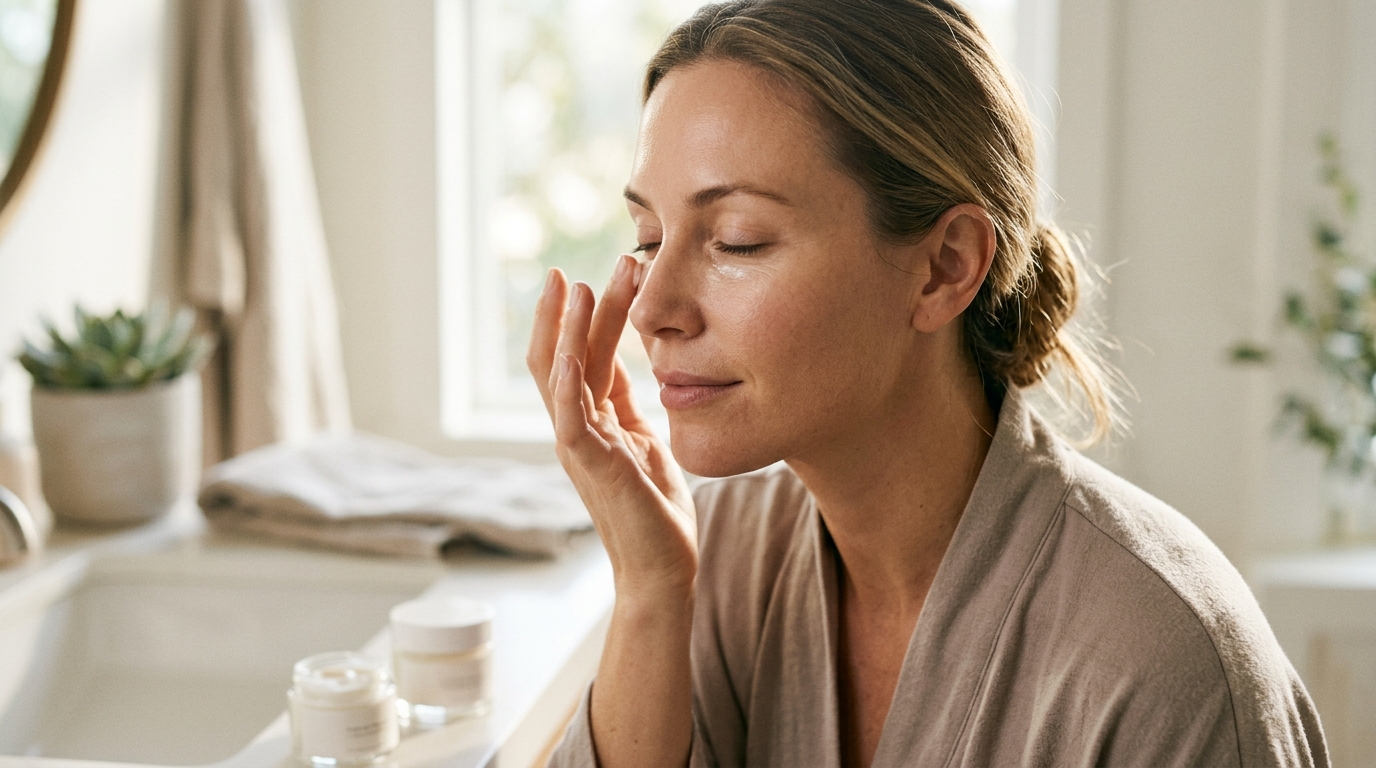
Step 2: Apply your eye cream. Use your ring finger to tap a pea-sized amount of eye cream along the orbital bone. Avoid dragging or rubbing the thin under-eye skin. Apply both morning and night for best results.
Step 3: Layer moisturizer. Follow with a face moisturizer that supports your eye treatment. A vitamin C cream during the day adds antioxidant protection, while a peptide-rich night cream maximizes overnight repair.
Step 4: Protect with SPF. Sun exposure stimulates melanin production and worsens pigmented dark circles. Use a broad-spectrum SPF 30 or higher every morning. Forever Bloom's Biomimic Foundation delivers SPF 50 while evening out skin tone, offering coverage and protection in one step.
Common Mistakes to Avoid
Using face cream as eye cream. The under-eye area has skin up to 10 times thinner than the rest of your face. Generic moisturizers may contain fragrances or actives at concentrations too strong for this delicate zone.
Applying too much product. A small amount is all you need. Over-application can lead to irritation or milia, tiny white bumps caused by clogged pores.
Expecting overnight results. Most eye creams require four to eight weeks of consistent use before visible improvement. Patience and routine matter more than product switching.
Neglecting sleep and hydration. No cream can fully compensate for chronic sleep deprivation or dehydration. Aim for seven to eight hours of sleep and adequate daily water intake.
Key Takeaways
- Identify your dark circle type (vascular, pigmented, or structural) before shopping for a cream.
- Caffeine and vitamin K are the top ingredients for vascular dark circles and puffiness.
- Vitamin C and niacinamide work best for pigmented (brownish) discoloration.
- Peptides offer gentle, effective firming for the delicate eye area without irritation.
- Always apply eye cream with light tapping motions using your ring finger.
- Pair your eye cream with SPF during the day to prevent further pigmentation.
- Consistency over four to eight weeks matters more than switching products frequently.
Frequently Asked Questions
What is the best ingredient for dark circles caused by thin skin?
Retinol is considered one of the best ingredients for dark circles caused by thin skin because it accelerates cell turnover and gradually thickens the skin, making blood vessels less visible beneath the surface.
Can caffeine really reduce under-eye puffiness?
Yes. Caffeine is a vasoconstrictor that narrows blood vessels and reduces fluid retention. It also has anti-inflammatory properties that help calm swelling. Many dermatologist-recommended eye creams feature caffeine as a primary active.
How long does it take for an eye cream to show results?
Most eye creams require consistent application for four to eight weeks before you notice visible improvement. Results depend on the active ingredients, your specific concern, and how consistently you use the product.
Should I use a separate eye cream or just my regular moisturizer?
A dedicated eye cream is recommended because the under-eye skin is significantly thinner and more prone to moisture loss. Eye creams are formulated with gentler concentrations suited to this delicate area.
Is it safe to use retinol around the eyes?
Retinol can be used around the eyes, but choose a formula specifically designed for the eye area with a lower concentration. Apply sparingly and always use sunscreen during the day, as retinol increases sun sensitivity.
What causes dark circles to get worse with age?
Aging causes the skin to lose collagen and fat, making it thinner and allowing blood vessels and underlying structures to show through more prominently. Volume loss also creates hollows that cast shadows.
Can eye creams permanently remove dark circles?
Eye creams can temporarily minimize the appearance of dark circles but cannot permanently eliminate them. Genetics and bone structure play significant roles that topical products cannot change. Consistent use helps maintain improvement.
What eye cream does Forever Bloom offer for dark circles?
Forever Bloom offers the EyeFinity Bloom Cream, a peptide-infused, caffeine-powered eye treatment formulated with botanical extracts and antioxidants to target puffiness, dark circles, and fine lines for all skin types.
Ready to Refresh Your Under-Eye Area?
Stop guessing and start treating your dark circles with the right ingredients. Explore the EyeFinity Bloom Cream and the full Forever Bloom skincare collection to build a science-backed routine that delivers real results.