

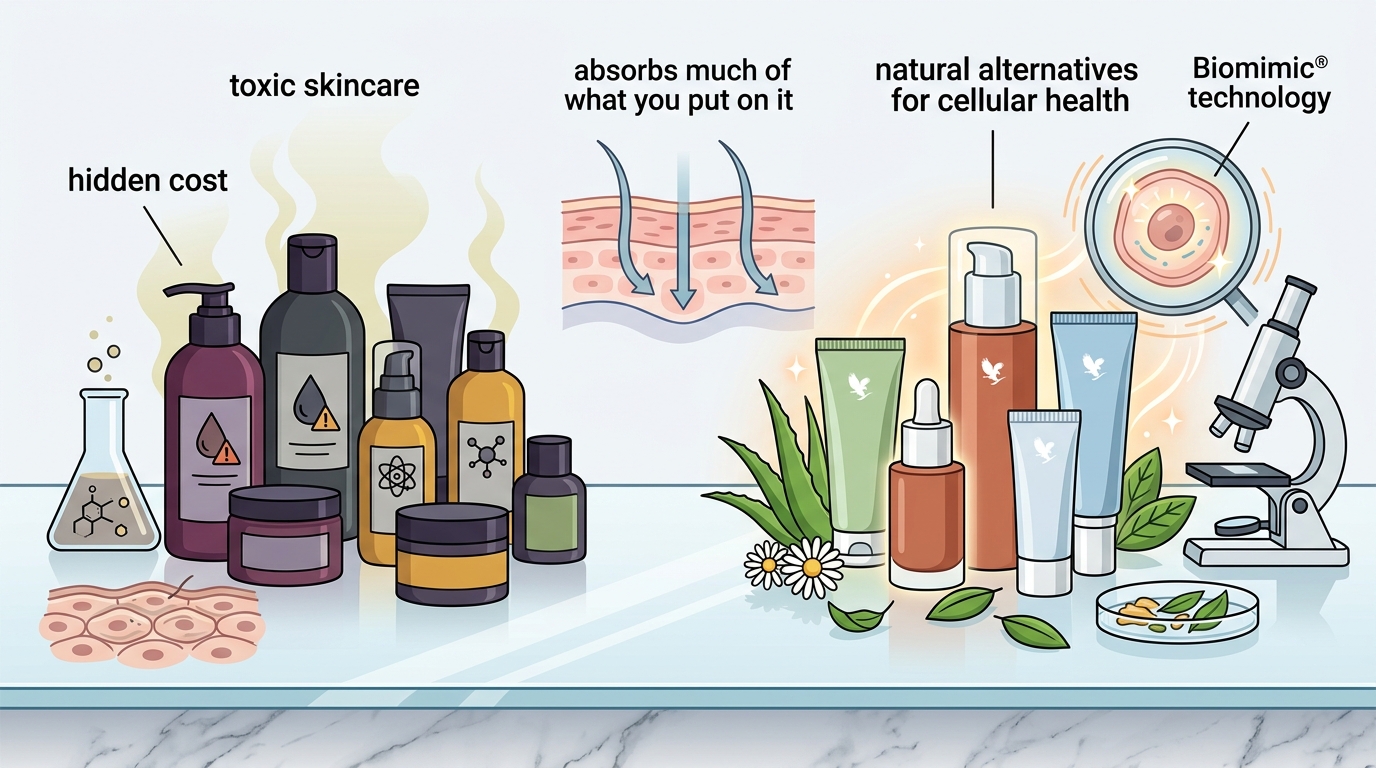
Your skin absorbs much of what you put on it, and conventional skincare products can carry a hidden cost. According to the Environmental Working Group, 595 cosmetics manufacturers have reported using 88 chemicals linked to cancer, birth defects, or reproductive harm in over 73,000 products. The good news is that science-backed natural alternatives now exist that not only avoid these toxins but actively support skin cellular health. In this guide, we break down the worst offenders in mainstream skincare, introduce the most effective natural replacements, and explain how cellular-level formulations like Biomimic® technology are changing the game.
Toxic Ingredients Hiding in Your Skincare
Many mainstream skincare products contain chemicals that can compromise both your skin barrier and your overall health. Parabens are synthetic preservatives that mimic estrogen in the body and have been linked to hormone disruption and impaired fertility in women. Phthalates, often hidden inside fragrance blends, are associated with reproductive abnormalities and reduced sperm quality.
Other common offenders include formaldehyde-releasing preservatives such as DMDM hydantoin, sulfates like SLS that strip natural oils, and PFAS (per- and polyfluoroalkyl substances). In January 2026, the FDA reported over 50 PFAS ingredients intentionally added to 1,700 personal care products, yet acknowledged insufficient toxicological data to determine their safety.
What Is Skin Cellular Health and Why It Matters
Skin cellular health is the ability of your skin cells to efficiently regenerate, repair damage, and maintain a functional barrier against environmental stressors. When cellular health declines, you see delayed recovery, loss of firmness, and accelerated visible aging.
Modern longevity-focused skincare addresses why these changes happen rather than simply masking symptoms. Ingredients that influence cellular communication help the skin optimize repair pathways and produce high-quality structural proteins like collagen and elastin. This is the approach behind brands like Forever Bloom, whose mission is to provide non-toxic formulas supported by actual scientific research.
Top Natural Alternatives That Support Cellular Renewal
Plant Stem Cells and Peptides
Plant stem cells are bioactive compounds extracted from regenerative botanicals that support skin resilience and youthfulness at the source. Biomimetic peptides signal your skin to produce more collagen and elastin. Forever Bloom's Biomimic® Lifting Serum combines these technologies for visible lifting and firming.
Vitamin C and Antioxidants
Vitamin C is a potent antioxidant that brightens skin, reduces dark spots, and strengthens the skin's barrier function. Grape seed extract delivers phenol-rich antioxidant protection against free radicals. Products like the Vitamin C Bloom Cream blend aloe vera, grape seed extract, and hyaluronic acid for deep hydration alongside cellular defense.
Hyaluronic Acid and Growth Factors
Hyaluronic acid is a naturally occurring molecule that helps skin retain moisture, keeping it plump and resilient. Growth factors and NAD+ precursors like NMN are emerging as powerful tools for boosting cellular energy and repair, with skincare experts calling NAD+ one of the most talked-about ingredients in advanced skincare for 2026.
Toxic vs. Natural Ingredients: A Side-by-Side Comparison
| Toxic Ingredient | Health Risk | Natural Alternative | Cellular Benefit |
|---|---|---|---|
| Parabens | Hormone disruption, impaired fertility | Plant-derived preservatives | Supports hormonal balance |
| Phthalates | Reproductive toxicity | Essential oil blends | No endocrine interference |
| SLS / SLES | Strips natural oils, irritation | Gentle plant-based surfactants | Preserves skin barrier |
| Synthetic fragrances | Allergies, contact dermatitis | Unscented or botanical extracts | Reduces inflammation |
| Formaldehyde releasers | Carcinogenic | Natural antimicrobials | Safe cellular environment |
| Retinyl palmitate (sun-exposed) | May accelerate cancerous lesions | Bakuchiol | Gentle retinol-like renewal |
| Silicones | Temporary illusion of smoothness | Plant oils and butters | Genuine nourishment and repair |
The Rise of Biomimetic Skincare Technology
Biomimetic skincare is a category of formulations designed to work in harmony with your skin's natural biology rather than against it. Forever Bloom's research lab, Bloom Research Innovation and Technology Inc. (BRITE), develops products using peptide biomimic research that enables long-term cellular growth with limited cellular decomposition.
Their de-aging collection uses biomimetic actives, plant stem cells, and growth factors to signal the skin to produce more collagen and elastin. This approach represents a broader industry shift: biotechnology and green chemistry are driving non-toxic skincare brands into the future, with the clean beauty market projected to reach $39 billion by 2033.
How to Build a Non-Toxic Skincare Routine
Step 1: Cleanse Gently
Start with a sulfate-free cleanser that respects your skin barrier. The Hydrating Aqua-Marine Cleanser uses marine-derived ingredients to remove impurities without stripping natural moisture.
Step 2: Treat with Active Serums
Apply a serum with biomimetic peptides or plant stem cells to support cellular renewal. Layer with vitamin C for antioxidant defense during the day.
Step 3: Moisturize and Protect
Use a nutrient-dense moisturizer at night, such as the Nourishing Night Glow Advanced Night Cream, which targets collagens I, III, and IV. During the day, opt for a foundation with built-in SPF 50 sun protection, like the Biomimic® Foundation, for skincare benefits and coverage in one step.
Give your skin at least one full turnover cycle, about 28 days, to fully acclimate to new products. Deeper results like improved texture appear with consistent use over several weeks.
Key Takeaways
- Over 73,000 cosmetic products contain chemicals linked to cancer, birth defects, or reproductive harm.
- Skin cellular health is your cells' ability to regenerate, repair, and defend against environmental stressors.
- Plant stem cells, peptides, vitamin C, and hyaluronic acid are proven natural alternatives that support cellular renewal.
- Biomimetic technology works with your skin's biology rather than overriding it, promoting long-term results.
- Always check for third-party certifications and read ingredient labels rather than trusting vague marketing terms.
- Allow at least 28 days when transitioning to non-toxic skincare so your skin can rebalance.
- A complete routine of cleanse, treat, and protect can be built entirely with non-toxic, science-backed products.
Frequently Asked Questions
What does non-toxic skincare actually mean?
Non-toxic skincare refers to products that avoid harsh chemicals and known irritants such as parabens, phthalates, SLS, synthetic fragrances, and formaldehyde releasers. However, the term is not legally regulated, so it is important to verify claims by reading ingredient lists and looking for third-party certifications like EWG Verified.
Are natural skincare products as effective as conventional ones?
Yes. Clinical studies and dermatologist endorsements show that clean beauty products using bioactive botanicals and green chemistry can be just as effective, if not more so, than traditional formulations, particularly for hydration, soothing sensitive skin, and improving overall skin health.
What is biomimetic skincare?
Biomimetic skincare is a formulation approach that mimics your skin's natural biological processes. It uses peptides, growth factors, and plant stem cells to support your skin's own regenerative intelligence rather than relying on synthetic overrides.
How long does it take to see results after switching to non-toxic products?
You may notice immediate improvements like better hydration and less irritation. However, deeper results such as improved texture and more even tone typically appear after one full skin cell turnover cycle, approximately 28 days of consistent use.
What are the most harmful ingredients to avoid in skincare?
The top ingredients to avoid include parabens, phthalates, formaldehyde and its releasers, synthetic fragrances, SLS/SLES, triclosan, and PFAS. The Environmental Working Group maintains a comprehensive database at Skin Deep that rates over 130,000 products for safety.
What role do peptides play in skin cellular health?
Peptides are short chains of amino acids that act as signaling molecules. In skincare, biomimetic peptides tell your skin cells to produce more collagen and elastin, which improves firmness, elasticity, and overall structural integrity at the cellular level.
Is SPF important in a non-toxic skincare routine?
Absolutely. UV radiation is one of the leading causes of cellular damage and premature aging. Physical sunscreens using zinc oxide or titanium dioxide offer broad-spectrum protection without the hormone-disrupting chemicals found in many chemical sunscreens.
Start Your Cellular Skincare Journey
Ready to replace toxic products with formulations that actually support your skin's biology? Explore the full range of science-backed, non-toxic skincare at Forever Bloom's product collection and discover what cellular skincare rooted in nature and science can do for your skin.