

Your skin absorbs a significant portion of what you put on it, and the average person uses 9 to 12 personal care products every day, exposing themselves to over 126 unique chemical ingredients. If those products contain parabens, phthalates, or synthetic fragrances, your skin cells pay the price. The good news? Science-backed natural alternatives can protect and even regenerate your skin at the cellular level. This guide breaks down the worst offenders in conventional skincare, highlights the natural ingredients that truly support cellular health, and shows you how to build a routine that works with your biology instead of against it.
What Is Cellular Skincare?
Cellular skincare is an approach that targets skin health at the cellular level, focusing on regeneration, repair, and protection of individual skin cells rather than simply masking surface-level concerns. Instead of relying on silicones that create a temporary illusion of smoothness, cellular skincare uses bioactive ingredients that interact with your skin's own biology.
This philosophy drives brands like Forever Bloom, whose mission is to provide non-toxic formulas supported by actual scientific research. The goal is to nourish cells so they function optimally, producing collagen, maintaining hydration, and defending against environmental damage on their own.
Toxic Ingredients You Should Avoid
Conventional skincare products often contain ingredients linked to hormone disruption, irritation, and long-term health concerns. Here are the most common offenders still found in products today.
Parabens
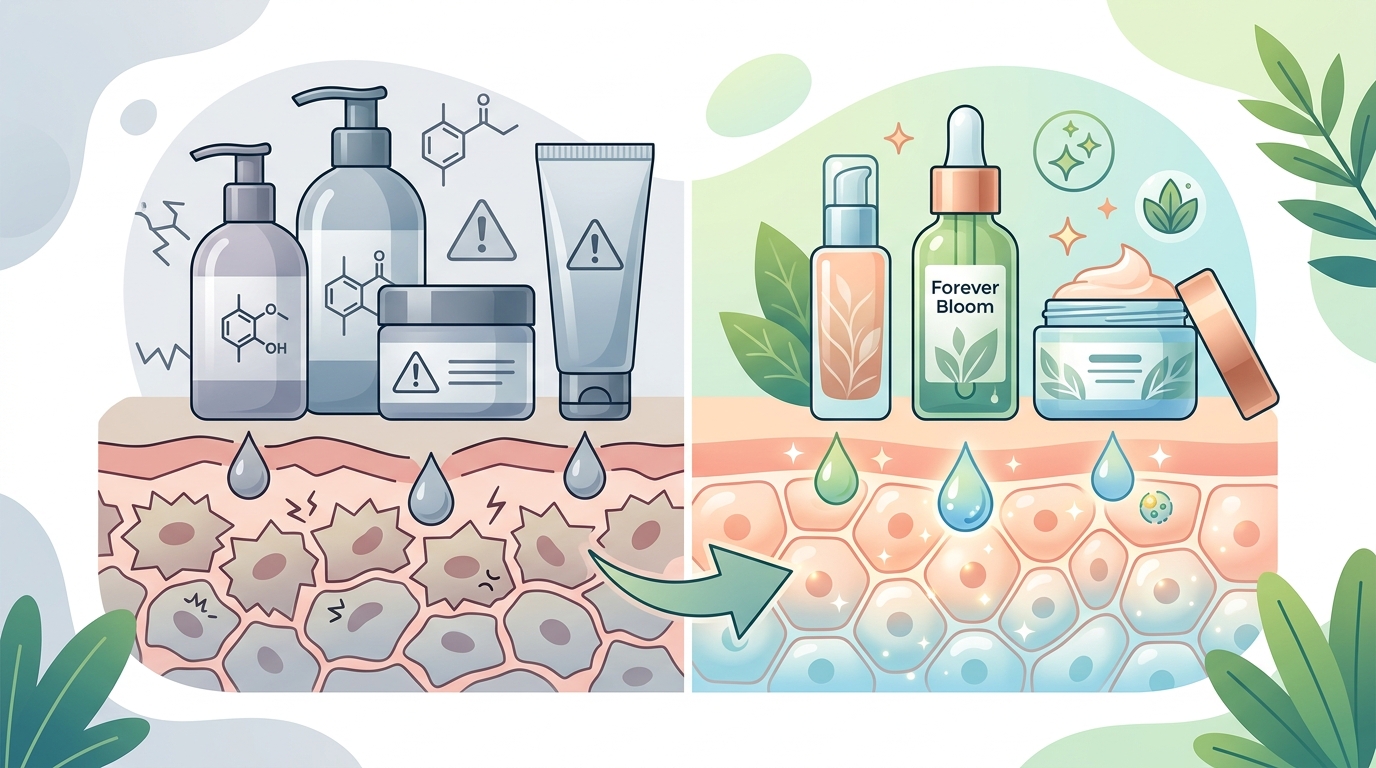
Parabens are synthetic preservatives that mimic estrogen in the body. They appear in moisturizers, makeup, and body washes. A 2004 study found parabens in breast tumor tissue, raising serious safety concerns. Natural alternatives include vitamin E, rosemary extract, and radish root ferment.
Phthalates and Synthetic Fragrances
Phthalates are plasticizers linked to reproductive issues and hormone disruption. They often hide behind the word "fragrance" on labels, which can conceal hundreds of undisclosed chemicals. Choose products scented with pure essential oils or labeled "fragrance-free" instead.
SLS and Chemical Sunscreen Filters
Sodium Lauryl Sulfate (SLS) is a harsh detergent that strips your skin's natural oils, causing dryness and barrier damage. Chemical sunscreen filters like oxybenzone are hormone disruptors that accumulate in the body. Mineral-based SPF with zinc oxide is a safer, reef-friendly alternative.
Top Natural Alternatives That Support Skin Cells
The non-toxic skincare market is projected to reach USD 16 billion by 2035 in the U.S. alone, driven by demand for safer, science-backed formulas. Here are the ingredients leading the charge.
Bakuchiol
Bakuchiol is a plant-derived compound that delivers retinol-like anti-aging benefits without the irritation. It stimulates collagen production and improves skin texture, making it ideal for sensitive skin types. You can find it in many clean serums and treatments.
Vitamin C and Antioxidants
Vitamin C is a potent antioxidant that neutralizes free radicals, brightens skin tone, and supports collagen synthesis at the cellular level. Forever Bloom incorporates powerful Vitamin C formulas into their product line to help nourish and brighten skin naturally.
Hyaluronic Acid and Squalane
Hyaluronic acid is a naturally occurring molecule that holds up to 1,000 times its weight in water, providing deep hydration to skin cells. Squalane is a lightweight lipid that mimics your skin's natural oils, reinforcing the moisture barrier without clogging pores. Both are staples of effective non-toxic routines.
How Biomimetic Technology Bridges Nature and Science
Biomimetic technology is a scientific approach that replicates biological processes to deliver skincare benefits that work in harmony with your body. In 2026, biotech actives and lab-grown ingredients are at the forefront of non-toxic skincare innovation, reducing environmental impact while boosting efficacy.
Forever Bloom's Biomimic® Lifting Serum uses principles of cell biology to mimic natural regeneration processes, boosting collagen and tightening skin. Their Biomimic® Foundation takes it further with intelligent pigments that read your skin's undertones and adapt in real time, while delivering SPF 50 protection and anti-aging benefits in a single step.
This approach represents the future of cellular skincare: formulas that do not just sit on the surface but actively communicate with your skin's biology to promote lasting health.
Natural vs. Conventional Ingredients: A Side-by-Side Comparison
| Concern | Conventional Ingredient | Risk | Natural Alternative | Cellular Benefit |
|---|---|---|---|---|
| Preservation | Parabens | Hormone disruption | Vitamin E / Rosemary Extract | Antioxidant protection |
| Fragrance | Synthetic parfum | Hidden allergens, phthalates | Essential oils / Fragrance-free | Reduced irritation |
| Cleansing | SLS / SLES | Barrier stripping | Coconut-derived surfactants | Barrier integrity maintained |
| Sun protection | Oxybenzone | Endocrine disruption | Zinc oxide / Mineral SPF | Safe UV defense |
| Anti-aging | Synthetic retinoids | Irritation, photosensitivity | Bakuchiol | Collagen stimulation, gentle |
| Hydration | Silicones | Pore clogging, no real hydration | Hyaluronic acid / Squalane | Deep cellular hydration |
| Skin tone correction | Hydroquinone | Cytotoxicity at high doses | Vitamin C / Niacinamide | Brightening + barrier repair |
Building a Non-Toxic Skincare Routine
Transitioning to non-toxic skincare does not need to happen overnight. The smartest approach is replacing products one by one as they run out, starting with items that stay on your skin the longest, like serums and moisturizers.
A streamlined cellular skincare routine might include:
- Cleanse with a gentle, plant-based cleanser free of SLS.
- Treat with a vitamin C or bakuchiol serum to target cellular repair.
- Hydrate with a hyaluronic acid or squalane moisturizer.
- Protect with mineral SPF or a multi-tasking product like Forever Bloom's Biomimic® Foundation, which combines coverage, SPF 50, and anti-aging skincare in one step.
Tools like the EWG Skin Deep® database can help you verify ingredient safety before purchasing any product.
Key Takeaways
- Cellular skincare targets skin health at the cell level through regeneration and repair, not surface-level cover-ups.
- Common toxic ingredients like parabens, phthalates, SLS, and synthetic fragrances are linked to hormone disruption and barrier damage.
- Natural powerhouses such as bakuchiol, vitamin C, hyaluronic acid, and squalane deliver clinically proven results without harmful side effects.
- Biomimetic technology replicates your skin's own biology, offering a next-generation approach to non-toxic skincare.
- The U.S. natural skincare market is projected to nearly double by 2035, reflecting massive consumer demand for safer products.
- Start your transition by replacing leave-on products first, as they have the longest contact time with your skin.
- Always verify ingredient safety using third-party tools like EWG Skin Deep before buying.
Frequently Asked Questions
What does "non-toxic skincare" actually mean?
Non-toxic skincare is a philosophy built on choosing products free from ingredients known or suspected to cause harm, such as parabens, phthalates, and synthetic fragrances. It is not a legally regulated term, so consumers should look for third-party certifications and transparent ingredient lists.
Can natural skincare products really be as effective as conventional ones?
Yes. Ingredients like bakuchiol, vitamin C, and hyaluronic acid are clinically proven to deliver anti-aging, brightening, and deep hydration results. The key is choosing brands that invest in proper clinical testing rather than relying on marketing claims alone.
What is biomimetic technology in skincare?
Biomimetic technology is a scientific method that replicates natural biological processes in skincare formulations. For example, Forever Bloom's Biomimic® products use cell biology principles to support collagen production and natural skin regeneration.
How do I know if my current products contain toxic ingredients?
Check the ingredient label for red flags like parabens (methylparaben, propylparaben), "fragrance" or "parfum," SLS/SLES, and formaldehyde releasers. You can also search any product on the EWG Skin Deep database for a safety rating.
What should I replace first when switching to non-toxic skincare?
Start with products that stay on your skin the longest, such as serums, moisturizers, and sunscreen. These have the most contact time and the greatest potential impact on your cellular health.
Is mineral sunscreen better than chemical sunscreen?
Mineral sunscreens use zinc oxide or titanium dioxide to physically block UV rays. They are generally considered safer because chemical filters like oxybenzone have been linked to hormone disruption and coral reef damage.
What makes Forever Bloom different from other non-toxic brands?
Forever Bloom combines non-toxic formulations with patented Biomimic® technology. Their foundation, for example, adapts to your skin tone in real time while delivering SPF 50 and anti-aging benefits. Their Learn the Truth page gives consumers direct access to research scientists for ingredient transparency.
Are "clean," "natural," and "organic" the same thing?
No. "Natural" means ingredients are derived from nature but is unregulated. "Organic" must meet strict government standards. "Clean" is a marketing term each brand defines differently. Always read ingredient lists rather than relying solely on label claims.
Your Next Step Toward Healthier Skin
Your skin cells deserve ingredients that help them thrive, not ingredients that compromise their function. Whether you are just beginning to read labels or ready to overhaul your entire routine, start with one meaningful swap today.
Explore Forever Bloom's full collection of non-toxic, Biomimic®-powered skincare and foundation products. Each formula is designed to work with your skin's biology for lasting cellular health and a natural, radiant glow.