

Dark circles and under-eye puffiness are among the most common skincare complaints, yet finding the right cream can feel overwhelming. With so many formulas on the market, understanding what actually works is essential. The key lies in matching the right active ingredients to your specific concern, whether that is pigmentation, fluid retention, or thinning skin. In this guide, we break down the science behind dark circles and puffiness, the ingredients dermatologists recommend, and how to build a targeted eye-care routine that delivers real results.
What Causes Dark Circles and Puffiness?
Periorbital hyperpigmentation is the clinical term for dark circles under the eyes. According to the Cleveland Clinic, aging, genetics, fatigue, and dehydration can all contribute to their appearance. As you age, the skin beneath your eyes thins and loses collagen, making blood vessels more visible and creating a darker appearance.
Puffiness, on the other hand, is often caused by fluid retention, allergies, or high sodium intake. Sleep deprivation can lead to fluid buildup beneath the eyes, causing them to appear puffy and casting shadows that worsen dark circles. Understanding the root cause of your concern is the first step toward choosing the right treatment.
Three Types of Dark Circles
Dark circles generally fall into three categories: vascular (a bluish tint from visible blood vessels), pigmented (brownish discoloration from melanin deposits), and structural (shadows caused by under-eye hollowing). Each type responds best to different active ingredients, which is why a one-size-fits-all approach rarely works.
Key Ingredients to Look For
A 2024 review published in PMC examined the efficacy of popular eye cream ingredients and found that caffeine, niacinamide, and vitamin E can decrease periocular hyperpigmentation, while vitamin C increases under-eye brightness. Here are the ingredients dermatologists recommend most often:
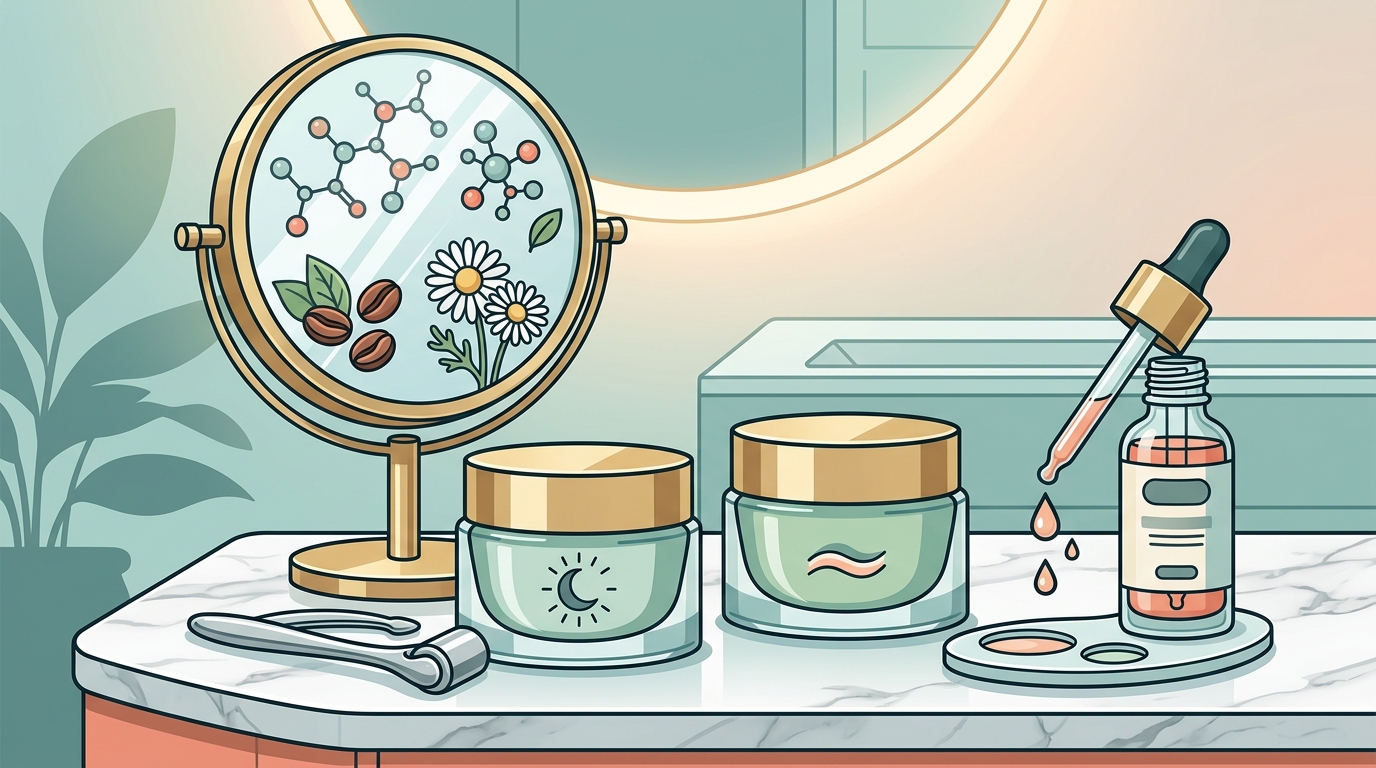
Caffeine
Caffeine is a vasoconstrictor that temporarily narrows blood vessels, reducing the bluish tint that shows through thin under-eye skin. It also has anti-inflammatory properties that help with puffiness. Look for formulations with around 3% caffeine for noticeable depuffing effects.
Peptides and Retinol
Peptides are amino acid chains that signal your skin to produce more collagen. They are gentle enough for daily use around the delicate eye area. Retinol supports skin renewal and smooths texture, though it should be introduced gradually and always paired with SPF during the day. Forever Bloom's EyeFinity Bloom Cream combines clinically backed peptides with botanical extracts and antioxidants for a multi-target approach.
Vitamin C and Niacinamide
Vitamin C is essential for collagen biosynthesis and helps brighten pigmented dark circles. Niacinamide strengthens the skin barrier and reduces the appearance of wrinkles. Together, these ingredients even out skin tone and protect against environmental stressors. The Vitamin C Bloom Cream from Forever Bloom uses a highly stable form of vitamin C with a fast absorption rate for maximum effectiveness.
Ingredient Comparison Table
| Ingredient | Best For | How It Works | Time to Results |
|---|---|---|---|
| Caffeine | Puffiness, vascular dark circles | Constricts blood vessels, reduces fluid retention | Minutes to hours |
| Peptides | Fine lines, firmness | Signals collagen production | 4 to 8 weeks |
| Retinol | Wrinkles, skin renewal | Accelerates cell turnover | 6 to 12 weeks |
| Vitamin C | Pigmented dark circles, brightness | Inhibits melanin, boosts collagen | 6 to 12 weeks |
| Niacinamide | Discoloration, barrier repair | Strengthens skin barrier, evens tone | 4 to 8 weeks |
| Hyaluronic Acid | Dryness, plumping | Draws and locks in moisture | Immediate to days |
How to Match an Eye Cream to Your Skin Type
Not every eye cream suits every skin type. The wrong texture or formula can clog pores, cause irritation, or simply fail to deliver results. Here is how to match your eye cream to your needs:
Oily or blemish-prone skin: Choose lightweight gels with caffeine for puffiness and stabilized vitamin C or niacinamide for dark circles. Avoid heavy oils that can contribute to breakouts around the eye area.
Dry or sensitive skin: Opt for creams with hyaluronic acid, ceramides, and peptides. The EyeFinity Bloom Cream delivers multi-layer hydration and reinforces the skin's moisture barrier, making it ideal for dry or reactive skin types.
Mature skin: Reach for retinol or peptide formulas at night and vitamin C with hyaluronic acid in the morning. Pairing your eye cream with a nourishing night treatment like the Nourishing Night Glow Advanced Night Cream helps firm and hydrate while you sleep.
Application Tips for Maximum Results
How you apply your eye cream matters as much as which one you choose. Use a rice-grain-sized amount per eye and gently tap (never rub) with your ring finger along the orbital bone. The ring finger applies the least pressure, protecting the fragile under-eye skin.
Morning routine: Apply a caffeine-based eye cream to calm puffiness, then follow with sunscreen to prevent pigmentation. A foundation with built-in SPF, such as the Biomimic Foundation 4-in-1, provides an extra layer of UV protection throughout the day.
Evening routine: Apply a peptide-rich or retinol-based cream for collagen support and fine-line reduction. Seal with a light moisturizer if needed. Consistency is critical; most brightening ingredients take 6 to 12 weeks of daily use to show visible results.
Lifestyle Habits That Complement Your Eye Cream
Even the best eye cream works better when supported by healthy habits. According to the Cleveland Clinic, elevating your head with extra pillows at night can prevent fluid from collecting under the eyes and help reduce puffiness.
Aim for 7 to 8 hours of quality sleep each night. Reduce sodium intake, stay hydrated, and manage allergies promptly. Before cleansing around the eye area, use a gentle remover like the Dual Action Eye Makeup Remover from Forever Bloom, which is formulated at a pH close to tears for a calming, non-irritating experience.
Protecting the under-eye area from UV exposure is also vital. Sun damage stimulates melanin production, making pigmented dark circles appear darker over time.
Key Takeaways
- Identify your type of dark circle (vascular, pigmented, or structural) before selecting a cream.
- Caffeine is the fastest-acting ingredient for depuffing; brightening actives like vitamin C require 6 to 12 weeks.
- Peptides and retinol support collagen production and skin renewal for long-term improvement.
- Match your eye cream texture to your skin type: gels for oily skin, richer creams for dry skin.
- Apply with your ring finger using gentle tapping motions along the orbital bone.
- Pair your eye cream with sunscreen during the day and a nourishing night cream in the evening.
- Lifestyle habits like quality sleep, hydration, and low sodium intake amplify product results.
Frequently Asked Questions
What is the main cause of dark circles under the eyes?
Dark circles have multiple causes, including aging, genetics, fatigue, allergies, and dehydration. As you age, the skin beneath your eyes thins, making underlying blood vessels more visible. Genetics also play a significant role, as the tendency toward under-eye pigmentation can be hereditary.
Can an eye cream permanently remove dark circles?
Eye creams can temporarily minimize the appearance of dark circles but cannot permanently eliminate them. Consistent use of the right active ingredients, such as caffeine, vitamin C, and peptides, can significantly reduce their visibility over time.
How long does it take for an eye cream to work?
Caffeine-based products can reduce puffiness within minutes. However, brightening and anti-aging ingredients like vitamin C and retinol typically need 6 to 12 weeks of consistent daily use to show measurable results.
Is caffeine good for under-eye puffiness?
Yes. Caffeine is a vasoconstrictor that narrows blood vessels and reduces fluid retention, making it one of the most effective topical ingredients for depuffing. Research suggests caffeine can also reduce the appearance of dark circles.
What ingredients should I avoid in eye creams?
Avoid fragrances, alcohol, and overly high concentrations of retinoids in products not specifically formulated for the eye area. These can cause irritation, redness, and dryness on the ultra-thin periorbital skin.
Should I use different eye creams in the morning and at night?
Many dermatologists suggest using a caffeine or antioxidant formula in the morning to target puffiness, followed by sunscreen. At night, a retinol or peptide cream supports repair and collagen production while you sleep.
What makes the EyeFinity Bloom Cream different from other eye creams?
EyeFinity Bloom Cream is an advanced eye renewal formula that combines clinically backed peptides, brightening botanicals, and potent antioxidants. It targets dark circles, wrinkles, and puffiness in one lightweight formula suitable for all skin types, and comes with a 100% satisfaction guarantee.
Can lifestyle changes alone fix dark circles?
Lifestyle changes like better sleep, hydration, and reduced sodium intake can improve mild dark circles and puffiness. However, for persistent or genetically driven dark circles, a targeted eye cream with active ingredients will deliver more noticeable results.
Ready to Refresh Your Under-Eye Area?
If you are ready to tackle dark circles and puffiness with science-backed ingredients, explore the EyeFinity Bloom Cream and the full Forever Bloom skincare collection. Your brighter, more refreshed eyes are just one step away.