

Your skin is your body's largest organ, and what you apply to it matters far more than most people realize. The average person uses nine personal care products daily, exposing themselves to over 126 unique chemical ingredients. Many of those chemicals have been linked to hormone disruption, skin irritation, and long-term cellular damage. The good news? Science-backed natural alternatives now exist that actively support skin cellular health instead of undermining it. This guide breaks down the worst offenders, the best replacements, and how biomimetic technology is changing the game for anyone serious about non-toxic skincare.
Why Toxic Skincare Ingredients Harm Cellular Health
Cellular health is the foundation of youthful, resilient skin. Cellular health refers to the ability of your skin cells to regenerate, repair, and defend themselves against environmental stressors like UV rays, pollution, and oxidative damage. When synthetic chemicals interfere with these processes, they do not just cause surface irritation; they compromise the very biology of your skin.
According to the Environmental Working Group (EWG), biomonitoring studies have found cosmetics ingredients like phthalate plasticizers, paraben preservatives, and synthetic musks as common pollutants in human bodies. Many of these are potential hormone disruptors that can alter how skin cells communicate and regenerate.
The U.S. government does not require health studies or premarket testing of chemicals in personal care products, which means consumers must become their own advocates. Tools like the EWG Skin Deep database, which covers over 130,000 products, can help you evaluate what you are putting on your skin every day.
The Worst Offenders: Ingredients to Avoid
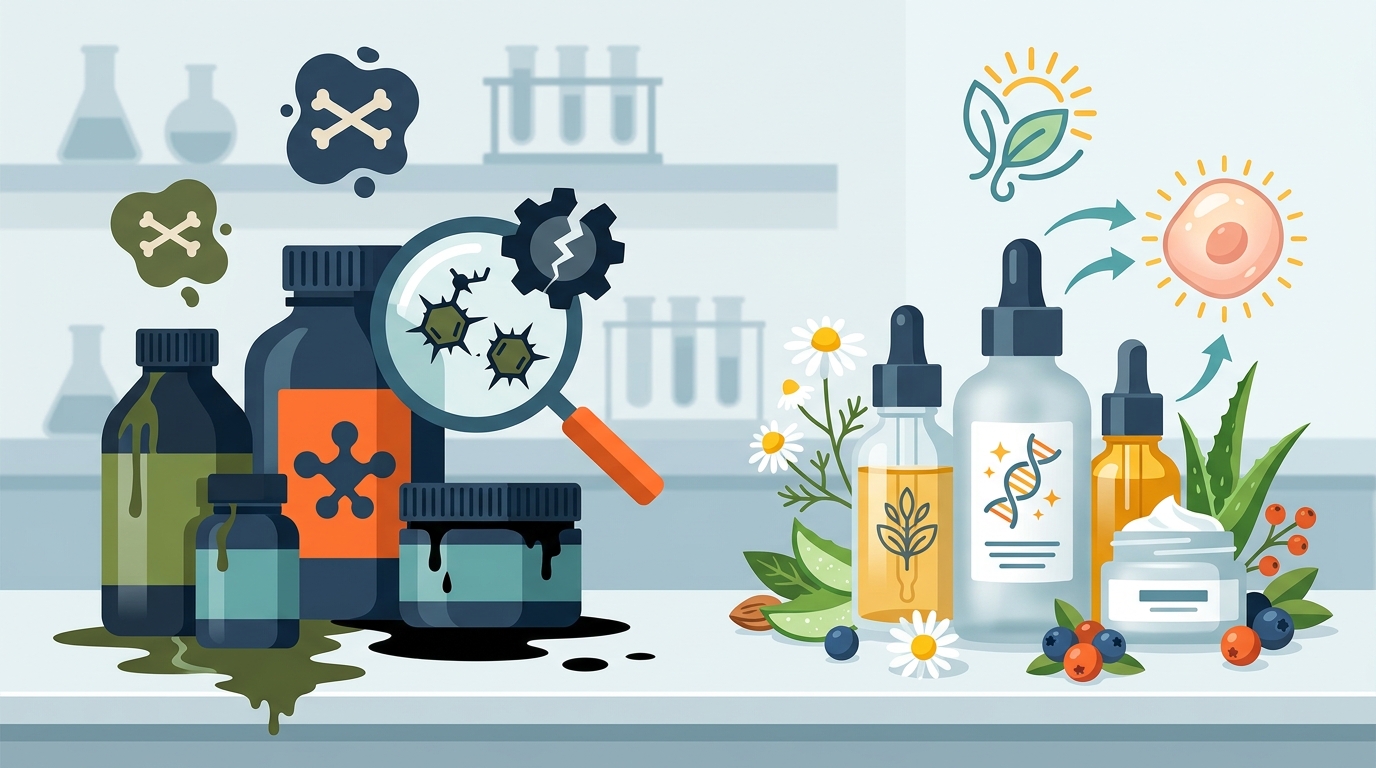
Not every synthetic ingredient is harmful, but certain categories consistently show up as red flags. Here is a comparison of the most common toxic ingredients and their natural replacements:
| Toxic Ingredient | Found In | Health Concern | Natural Alternative |
|---|---|---|---|
| Parabens (methyl-, propyl-, butyl-) | Moisturizers, makeup | Endocrine disruption; detected in breast tumor tissue | Vitamin E, rosemary extract |
| Phthalates | Fragranced products, nail polish | Reproductive issues, hormone disruption | Essential oil-based scents |
| SLS/SLES | Cleansers, body washes | Strips natural oils, causes irritation | Coconut-derived surfactants |
| Formaldehyde releasers | Nail polish, some shampoos | Known carcinogen | Plant-derived preservatives |
| Synthetic fragrance ("parfum") | Nearly all conventional products | Hides hundreds of undisclosed chemicals | Pure essential oils or fragrance-free formulas |
| Chemical UV filters (oxybenzone) | Sunscreens, SPF moisturizers | Hormone disruption, coral reef damage | Zinc oxide, titanium dioxide (mineral SPF) |
Parabens are synthetic preservatives that mimic estrogen in the body, and a 2004 study found them in breast tumor tissue. Formaldehyde releasers are chemicals like DMDM hydantoin and quaternium-15 that slowly release formaldehyde over time. The European Union has banned over 1,000 cosmetic ingredients that remain legal in the United States, highlighting a significant regulatory gap.
Proven Natural Alternatives That Support Skin Cells
Peptides and Growth Factors
Biomimetic peptides are small protein fragments that mimic the growth factors naturally present in skin, boosting collagen and elastin production. They signal your cells to behave as if they are younger, supporting firmness and elasticity at the cellular level. The Biomimic Lifting Serum from Forever Bloom uses these biomimetic actives to stimulate core extracellular matrix components including collagen types I and III, hyaluronic acid, and elastin.
Plant Stem Cells and Botanical Antioxidants
Plant stem cells are extracts derived from nature's most regenerative botanicals, supporting skin resilience and youthfulness at the source. Ingredients like grape seed extract provide phenol-rich antioxidant protection against free radicals. The Vitamin C Bloom Cream combines aloe vera, grape seed extract, and hyaluronic acid to strengthen the skin barrier and improve hydration.
Bakuchiol and Vitamin C
Bakuchiol is a plant-based retinol alternative that has shown similar anti-aging benefits in clinical studies without causing photosensitivity or irritation. A published 2019 human randomized controlled trial (Dhaliwal et al.) demonstrated comparable improvements in wrinkle depth and pigmentation versus retinol. Vitamin C, meanwhile, strengthens the skin barrier and provides antioxidant defense essential for cellular repair.
Biomimic Technology: The Future of Cellular Skincare
Biomimic technology is a biotech approach that replicates the natural processes of healing, protection, and regeneration found in the natural world. Forever Bloom, a California biotech leader in peptide biomimic research, uses this approach across its entire product line.
Their research lab, Bloom Research Innovation and Technology Inc. (BRITE), develops formulas designed to work in harmony with your skin's natural biology. Products are crafted to be biocompatible, meaning they are biologically aligned with human skin to nurture renewal without disruption. From the Nourishing Night Glow Advanced Night Cream that works on collagens I, III, and IV to the Biomimic Foundation with SPF 50 and zero parabens or phthalates, every formula prioritizes long-term cellular health over quick fixes.
This approach aligns with a larger industry trend. The clean beauty market is projected to reach $39 billion by 2033, driven by growing demand for science-backed, non-toxic solutions and biotechnology-derived actives.
How to Switch Your Routine Without Overwhelm
Transitioning to non-toxic skincare does not require an overnight overhaul. Focus first on products that sit on your skin the longest, like your daily moisturizer, serum, and foundation, since these have the most contact time and the greatest potential for absorption.
Start by reading ingredient labels and checking products against the EWG Skin Deep database. Replace one product at a time as each runs out. Look for certifications like EWG Verified or MADE SAFE, and prioritize brands that publish full ingredient lists with transparency about sourcing.
If you want to ask scientists directly about ingredient safety and skincare myths, Forever Bloom offers a unique Learn the Truth resource where members can submit questions to research scientists.
Key Takeaways
- The average person is exposed to 126 unique chemical ingredients daily from personal care products alone.
- Parabens, phthalates, SLS, formaldehyde releasers, and synthetic fragrances are the most common toxic offenders in conventional skincare.
- The EU has banned over 1,000 cosmetic ingredients still legal in the U.S., making consumer awareness critical.
- Biomimetic peptides, plant stem cells, bakuchiol, and vitamin C are proven natural alternatives that actively support cellular regeneration.
- Biomimic technology replicates the skin's natural healing processes for results that work with your biology, not against it.
- Replace leave-on products first (serums, moisturizers, foundation) for the biggest impact when switching routines.
- Use the EWG Skin Deep database to verify the safety of any product before purchase.
Frequently Asked Questions
What does "non-toxic skincare" actually mean?
Non-toxic skincare is a philosophy built on choosing products that avoid ingredients known or suspected to cause harm, such as parabens, phthalates, and synthetic fragrances. The term is not legally regulated, so look for third-party certifications and transparent ingredient lists rather than relying on label claims alone.
Can natural skincare products really be as effective as conventional ones?
Yes. Ingredients like bakuchiol have been clinically proven to deliver anti-aging results comparable to retinol without the side effects. Biomimetic peptides stimulate collagen and elastin production at the cellular level, and vitamin C is a well-documented antioxidant for skin repair and brightening.
What is Biomimic technology?
Biomimic technology is a biotech approach that uses the principles of cell biology to mimic natural processes of healing, protection, and regeneration. Forever Bloom's BRITE lab developed this technology to create formulas that are biologically aligned with human skin.
Which toxic ingredients should I avoid first?
Prioritize eliminating parabens, phthalates, formaldehyde-releasing preservatives, synthetic fragrance, and chemical sunscreen filters like oxybenzone. These have the strongest evidence linking them to endocrine disruption and cellular damage.
How do I know if a product is truly clean?
Check the full ingredient list against the EWG Skin Deep database. Look for third-party certifications such as EWG Verified, MADE SAFE, or COSMOS. Be cautious of vague terms like "natural" or "clean" that have no regulated definition.
Is mineral sunscreen better than chemical sunscreen for skin health?
Mineral sunscreens use zinc oxide or titanium dioxide, which sit on top of the skin and physically block UV rays. Chemical filters like oxybenzone absorb into the skin and have been linked to hormone disruption. Forever Bloom's Biomimic Foundation includes SPF 50 using a non-toxic physical sunscreen approach.
What is the clean beauty market size in 2026?
The clean beauty industry is projected to reach $39 billion by 2033. In the United States alone, the natural skincare market is expected to grow from $8.5 billion in 2025 to $16 billion by 2035, reflecting surging consumer demand for safer products.
Where can I browse Forever Bloom's full non-toxic product line?
You can explore the complete collection of Biomimic skincare and foundation products on the Forever Bloom product page, including serums, creams, and SPF 50 foundations.
Start Your Cellular Skincare Journey
Your skin cells deserve ingredients that support regeneration, not ones that disrupt it. If you are ready to make the switch to science-backed, non-toxic skincare that works with your biology, explore the Forever Bloom de-aging collection and experience what cellular skincare rooted in nature and science can do for your skin.