
How to Choose the Right Cream for Dark Circles and Puffiness
Standing in the skincare aisle — or scrolling an endless online catalog — trying to pick an eye cream can feel paralyzing. Dozens of jars promise to banish dark circles and deflate puffy under-eyes overnight, yet most dermatologists agree that no single product works for everyone. The secret is matching the right active ingredients to the specific cause of your under-eye concerns. This guide walks you through every decision point so you leave with a cream that actually delivers.
Step 1: Understand Why You Need a Dedicated Eye Cream
The skin surrounding your eyes is structurally different from the rest of your face. It is up to 10 times thinner, contains fewer oil glands, and shows signs of aging first. That thinness, combined with declining collagen and a weaker barrier over time, makes the area more prone to puffiness, dark circles, and fine lines. A regular facial moisturizer may contain concentrations of actives that are too harsh for this delicate zone, and its texture can trigger milia (tiny white bumps). Eye-specific formulas use gentler concentrations, lighter textures, and targeted actives designed for periorbital skin.
Step 2: Identify What Is Actually Causing Your Dark Circles
Before you compare ingredient lists, you need a diagnosis. Dark circles have at least three distinct origins, and the ideal cream depends on which one — or which combination — applies to you.
A. Hyperpigmentation
Sun exposure and genetics can darken the skin itself. If pressing on the area does not lighten the color, pigmentation is likely the culprit. Brightening ingredients such as vitamin C, niacinamide, and ginseng are most effective here, typically requiring 8–12 weeks of consistent use to produce visible fading.

B. Thin Skin Revealing Blood Vessels
A bluish-purple hue that lightens when you press on it usually means blood vessels are visible through very thin skin. Caffeine is a go-to ingredient for this type because it constricts blood vessels, reducing the bluish tint that shows through the under-eye area. Peptides and retinol can thicken the skin over 12–16 weeks, addressing the deeper issue.
C. Volume Loss and Hollowing
Shadows cast by a sunken tear trough can mimic pigmentation even when the skin itself is not discolored. While topical creams can hydrate and plump slightly, genuine structural hollowing typically requires cosmetic procedures such as hyaluronic-acid-based fillers. Be honest with yourself about this cause — no cream can fully replace lost volume.
Step 3: Pinpoint the Source of Your Puffiness
Puffiness is typically caused by fluid retention stemming from allergies, high sodium intake, lack of sleep, or the natural loosening of the orbital septum with age. In younger people the swelling is usually temporary and lifestyle-related; in older individuals the fat pads under the eyes can shift forward due to weakening connective tissue, making puffiness more persistent. Eye creams with caffeine and cooling formulas work best for the temporary kind, while persistent structural bags may benefit more from professional evaluation.
Step 4: Match Ingredients to Your Concern
Here is a practical cheat sheet of the ingredients dermatologists recommend most frequently, organized by the problem they solve.
| Concern | Star Ingredients | How They Work |
|---|---|---|
| Dark circles (pigmentation) | Vitamin C, niacinamide, arbutin, kojic acid, licorice root | Inhibit melanin production and brighten existing discoloration |
| Dark circles (visible vessels) | Caffeine, vitamin K | Constrict blood vessels and improve microcirculation |
| Puffiness / fluid retention | Caffeine, EGCG (green tea), cooling gel textures | Reduce fluid accumulation and inflammation; caffeine constricts vessels within 10–15 minutes |
| Fine lines & skin thickening | Retinol (0.25–0.5%), peptides (Matrixyl, Argireline, copper peptides) | Boost collagen production, increase cell turnover, firm skin |
| Dryness & barrier repair | Hyaluronic acid, ceramides, squalane, panthenol | Attract and lock in moisture; reinforce the skin barrier |
Pro tip: Many modern formulas combine several of these actives — for example, caffeine plus vitamin C plus peptides — so you can address dark circles and puffiness simultaneously without layering multiple products.
Step 5: Factor In Your Skin Type
The best active ingredients in the world will not help if the formula disagrees with your skin.
- Oily or combination skin: Opt for lightweight gels or gel-creams. Heavy balms can cause milia or feel greasy under makeup.
- Dry skin: Richer creams with ceramides, squalane, or shea butter seal in moisture overnight.
- Sensitive skin: Avoid fragrance, essential oils, and high-strength retinol. Dermatologists suggest calming formulas with niacinamide or ceramides that support barrier function while treating dark circles. Encapsulated retinoids release the active gradually and are better tolerated.
- Mature skin: Prioritize peptides and retinol for collagen stimulation plus hyaluronic acid for plumping. Consider products that also address crow’s feet and crepiness.
Step 6: Build an AM / PM Eye-Care Routine
Dermatologists recommend applying eye cream twice daily — morning and night. An ideal approach uses two complementary products:
- Morning: A lighter, brightening or de-puffing formula — ideally with caffeine and antioxidants like vitamin C. This tackles overnight fluid buildup and preps the area for concealer.
- Evening: A richer, treatment-focused cream with retinol or peptides that works in sync with the skin’s natural nighttime repair cycle, when regeneration is at its peak.
Application Technique
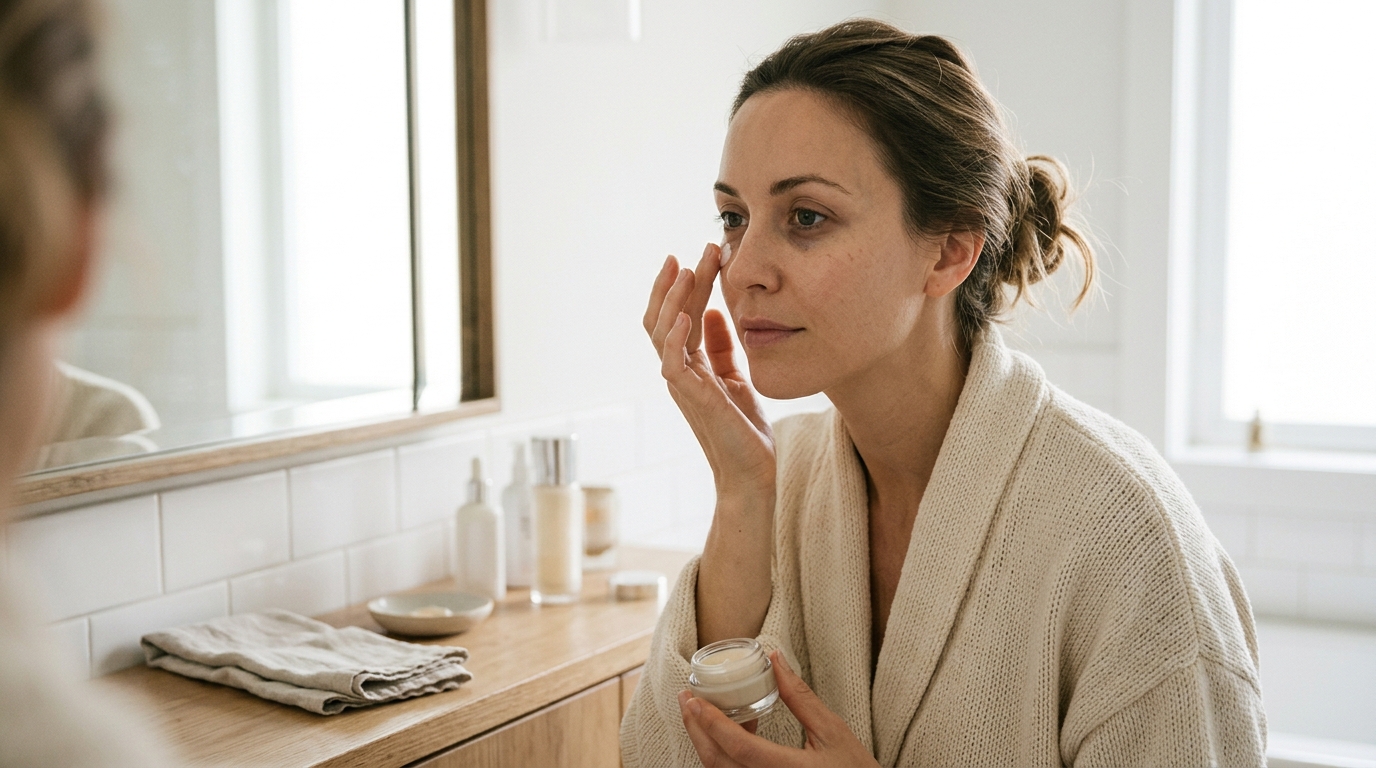
Dispense a pea-sized amount onto your ring finger (it applies the least pressure). Tap — never rub — in small dots along the orbital bone, starting from the inner corner and sweeping outward. Include the brow bone and crow’s-feet area. Allow 10–15 minutes for absorption before applying makeup or sunscreen.
Step 7: Set Realistic Expectations
No topical product can completely eliminate deep-set wrinkles or genetically determined dark circles. However, the right formula used consistently can significantly improve appearance. Here is a general timeline:
- Days 1–7: Caffeine-based creams can visibly reduce puffiness almost immediately, with effects lasting 4–6 hours per application.
- Weeks 2–4: Hydrating ingredients plump fine lines; early brightening may become noticeable.
- Weeks 6–8: Consistent use of vitamin C or niacinamide begins to measurably fade pigmentation-based dark circles.
- Weeks 12–16: Retinol and peptides produce their full collagen-boosting effects, thickening thin skin and softening lines.
Taking a photo of your under-eyes in natural morning light before starting treatment helps you track subtle improvements that are easy to miss day-to-day.
Step 8: Price vs. Performance — What the Evidence Says
Luxury eye creams can cost hundreds of dollars, but effective drugstore options with caffeine and niacinamide can be just as impactful. The key is consistency and choosing formulas suited to your specific type of dark circles, not the prestige of the brand. Look for ophthalmologist-tested and fragrance-free labels, especially if you wear contact lenses or have sensitive eyes.
Key Takeaways
- Diagnose before you shop — dark circles from pigmentation, visible vessels, and volume loss each need different ingredients.
- Caffeine is the single most versatile eye-area active, addressing both dark circles from blood vessels and morning puffiness.
- Vitamin C plus niacinamide is the go-to combination for pigmentation-based darkness.
- Retinol and peptides are the long-game actives that thicken thin skin and build collagen over 12+ weeks.
- Sensitive skin should prioritize fragrance-free, ceramide-rich, or encapsulated-retinoid formulas.
- Apply eye cream twice daily with gentle tapping motions; give any product at least 6–8 weeks before judging results.
- Expensive does not always mean better — ingredient quality and consistency matter more than price.
Frequently Asked Questions
What ingredient is best for dark circles caused by thin skin?
Caffeine is highly effective because it constricts blood vessels and reduces the bluish tint visible through thin under-eye skin. For a longer-term fix, peptides and retinol can help thicken the skin over several months.
Can I just use my regular moisturizer instead of an eye cream?
Eye creams are specifically formulated for the delicate periorbital area with gentler concentrations and lighter textures. Regular moisturizers may contain ingredients in concentrations that are too harsh for this zone and could cause irritation or milia.
How long does it take for an eye cream to work?
Caffeine delivers temporary de-puffing within minutes. Brightening agents like vitamin C typically need 6–8 weeks. Retinol and peptides require 12–16 weeks of consistent nightly use for full collagen-boosting results.
Is caffeine eye cream effective for puffiness?
Yes. Topical caffeine constricts blood vessels within 10–15 minutes of application and reduces fluid retention. The de-puffing effect is temporary — typically lasting 4–6 hours — but reliable with daily use.
Should I use different eye creams in the morning and at night?
Ideally, yes. A lighter gel with caffeine and antioxidants in the morning addresses puffiness and brightens, while a richer cream with retinol or peptides at night supports the skin’s overnight repair cycle.
Do expensive eye creams work better than drugstore options?
Not necessarily. Ingredient quality and concentration matter more than brand prestige. Affordable creams with proven actives like caffeine, niacinamide, and hyaluronic acid can deliver comparable results to luxury counterparts when used consistently.
When should I start using an eye cream?
There is no exact age, but many dermatologists suggest introducing a basic hydrating eye cream in your 20s or 30s as a preventative measure. Adjust the formula as your concerns evolve with age.